
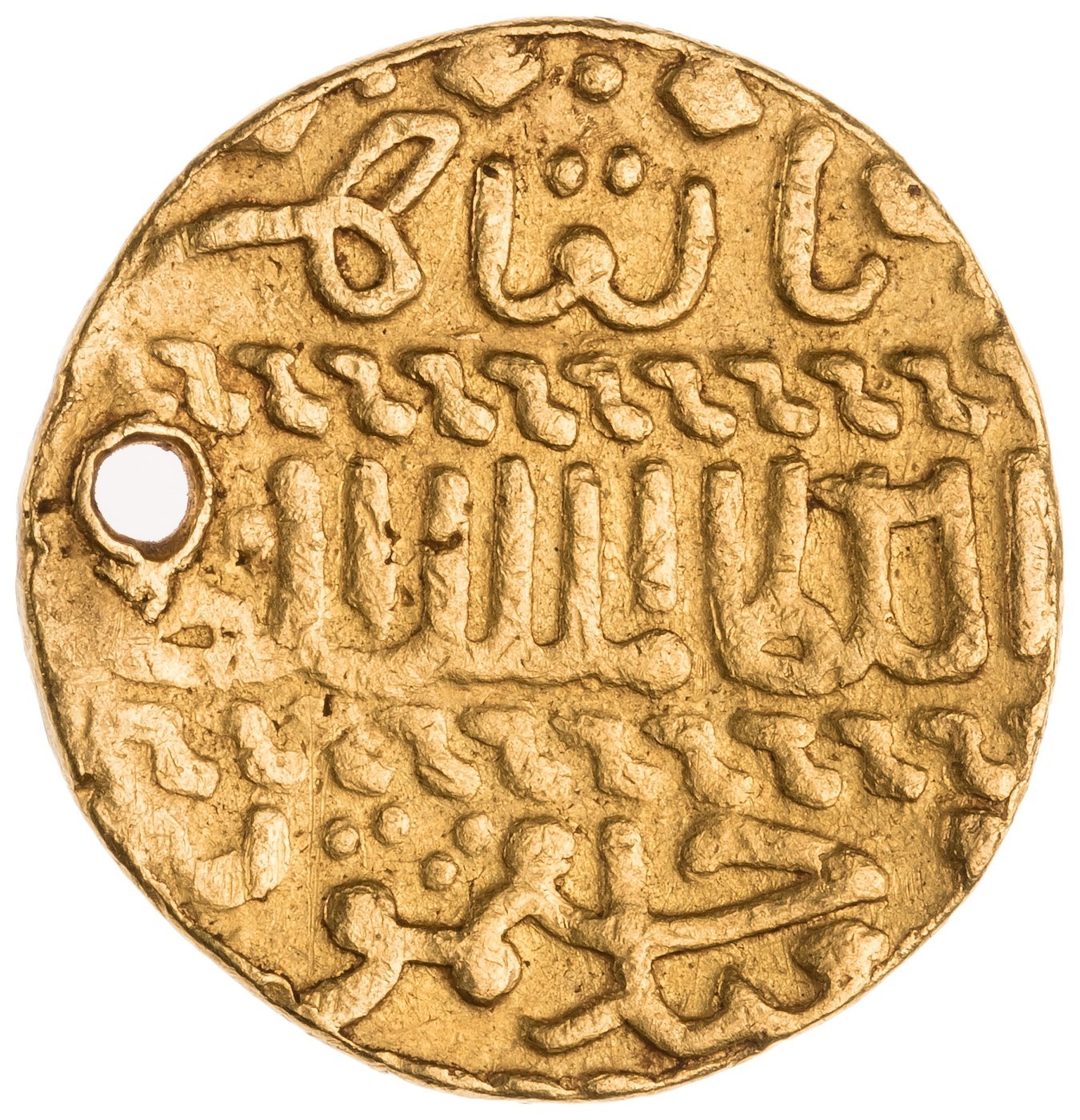
Gold Dinar of Jaqmaq
A hand-struck Mamluk gold dinar of Sultan al-Zahir Jaqmaq (r. 1438-1453 CE), covered in Arabic calligraphy with no figural imagery; this example is pierced.
- Country
- Egypt (Mamluk)
- Denomination
- Dinar
- Metal
- Gold
Got a coin like this?
Identify any coin from a photo, free.
Overview
The Gold Dinar of Jaqmaq is a hand-struck gold coin of the Burji (Circassian) Mamluk Sultanate, issued in the name of Sultan al-Zahir Sayf al-Din Jaqmaq, who ruled Egypt and Syria from 1438 to 1453 CE. Both faces are filled with Arabic calligraphy set within decorative borders, and this particular example has been pierced with a hole, most likely so it could be worn or mounted as an ornament.
The dinar was the gold denomination of the Islamic monetary system, ranking above the silver dirham and the copper fals. Under the later Mamluks the gold coinage is often described as the ashrafi, a lighter gold standard introduced in the reign of Barsbay and continued by his successors, including Jaqmaq. The coin carries the sultan's name and titles together with religious formulas rather than any portrait.
Like essentially all Mamluk coinage, the piece is entirely aniconic: it bears no image of the ruler and no figural device, only inscriptions naming the sultan, invoking his sovereignty and piety, and recording the mint and date of striking.
History & Background
The Burji Mamluks were a dynasty of soldier-rulers, largely of Circassian origin, who governed Egypt and Syria from the late 14th century until the Ottoman conquest of 1517. Jaqmaq rose through the ranks of the Mamluk military elite and took the throne in 1438, reigning until 1453 under the regnal title al-Zahir. His reign is remembered as a relatively stable and pious interlude between more turbulent sultanates.
Jaqmaq's gold coinage continued the ashrafi standard established by Sultan Barsbay in 1425, a lighter dinar introduced partly in response to the wide circulation of the Venetian ducat in the eastern Mediterranean. Mamluk gold of this period was struck chiefly at the great mints of Cairo and Damascus, and the coins served both as high-value trade money and as a public statement of the ruling sultan's authority.
Because the reign spanned 1438 to 1453 CE, dinars in Jaqmaq's name fall within this range. The presence of a piercing on the example shown reflects a common later history for gold coins: many were removed from circulation and adapted into jewelry or amulets, holed so they could be sewn onto clothing or strung on a necklace.
How to Identify
A gold dinar of Jaqmaq is a thin, hand-struck gold coin, typically roughly circular but often slightly irregular because each piece was struck individually between dies. It is warm yellow in tone consistent with a high gold content, and its weight follows the reduced ashrafi standard rather than the heavier classical dinar.
Both faces are covered in Arabic script arranged in horizontal lines and circular marginal legends, framed by decorative borders. The inscriptions name the sultan, al-Zahir Jaqmaq, together with his honorific titles and pious formulas, while the mint-and-date formula records where and when the coin was struck. The date is expressed in written Arabic words rather than numerals. On this example a pierced hole passes through the flan, and the piercing may interrupt part of the legend.
The surest way to attribute the coin is to read the Arabic legends: the sultan's name and titulature identify the ruler, and the mint name ties the piece to Cairo, Damascus, or another Mamluk mint. The complete absence of any portrait, animal, or Latin lettering, together with the bright gold surface and the epigraphic ashrafi style, distinguishes it from European gold coins and from earlier or later Islamic issues.
Value & Collectibility
Mamluk gold dinars are genuinely scarce and desirable coins, valued both for their gold content and for their historical association with a named medieval sultan. Intact, well-struck examples with full, legible legends command strong collector interest, and pricing generally sits well above that of common Islamic silver or copper.
The piercing on this example is an important value factor. A holed coin is treated as damaged in the numismatic market and typically sells for a fraction of the price of an equivalent undamaged piece, though it retains its gold (bullion) value and can still be historically interesting and attractive as a wearable object. Condition, the completeness of the legends, the mint, and how neatly the piercing was made all affect desirability.
Because prices turn on grade, mint, legibility, and the presence of damage such as the hole, figures should be treated as general context rather than fixed quotes. For a coin like this, a clear reading of the sultan's name, the mint, and the date, alongside an honest assessment of the piercing, is the biggest factor in determining its interest and value.
Frequently asked questions
Who was Jaqmaq?
Al-Zahir Sayf al-Din Jaqmaq was a Burji (Circassian) Mamluk sultan who ruled Egypt and Syria from 1438 to 1453 CE. His name and titles appear in the Arabic legends of this gold dinar.
What is an ashrafi dinar?
The ashrafi was a lighter gold dinar standard introduced under Sultan Barsbay in 1425 and continued by Jaqmaq. It was created partly to compete with the Venetian ducat in Mediterranean trade.
Why is there a hole in the coin?
Gold coins were often pierced so they could be worn as jewelry or amulets, sewn onto clothing or strung on a necklace. The hole on this example reflects such reuse after the coin left circulation.
Does the piercing lower the value?
Yes. A holed coin is considered damaged and generally sells for well below an undamaged example, though it keeps its gold value and can still be attractive and historically interesting as a wearable piece.
Why are there no pictures on the coin?
Mamluk coinage is aniconic by design, avoiding portraits and figural images. Instead it carries Arabic inscriptions naming the sultan and invoking religious formulas, along with the mint and date.
Gold Dinar of Jaqmaq guides
In-depth guides for identifying, valuing, and collecting Gold Dinar of Jaqmaq.
Other coins you may enjoy
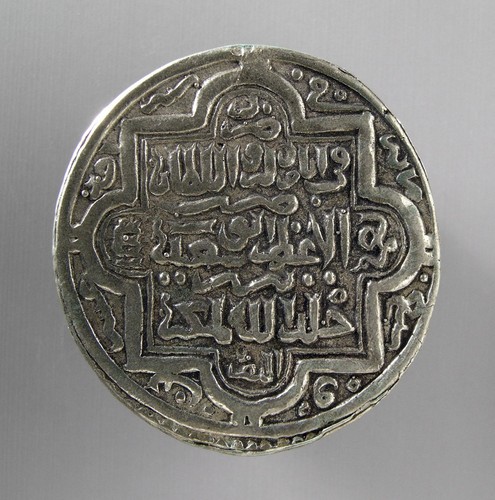
Ilkhanid Dirham
13th–14th century (Ilkhanate, c. 1256–1335 CE)
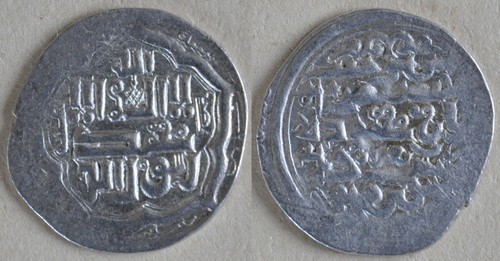
Ilkhanid Dirham of Ghazan
14th century (c. 1295-1304 CE)
Gold Dinar of al-Muqtadi
c. 467-475 AH (1074-1082 CE)
Gold Dinar of al-Hafiz li-Din Allah
AH 544 (AD 1149–1150)
Samanid Dirham
9th–10th century CE (roughly AH 3rd–4th century)
Copper Fals of Barquq
1382–1389 CE (first reign of Barquq)
Copper Fals of as-Salih Salih
Mid-14th century CE (reign of as-Salih Salih, AH 752–755 / 1351–1354 CE)
Gold Dinar of Malik Shah I
AH 465–485 (1072–1092 CE)
Ilkhanid Dirham of Abu Said
c. 1316-1335 CE (AH 716-736)
Silver Dirham of Salm ibn Ziyad
c. 682-683 CE
Silver Dirham (LACMA M.2002.1.437)
8th century CE (roughly AH 80s–190s)
Imitation Abbasid Dirham
8th–9th century CE