
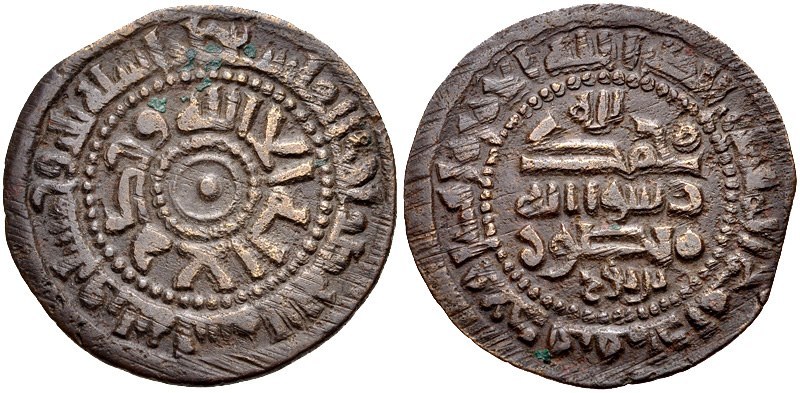
Samanid Dirham
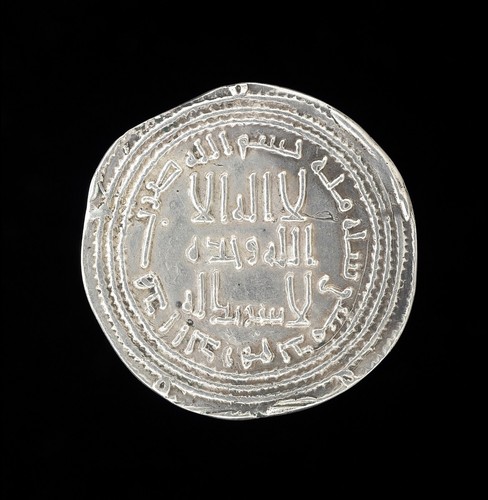
A hand-struck silver dirham of the Samanid dynasty, covered on both sides in Arabic Kufic script naming God, the caliph and the mint — no images at all.
- Country
- Islamic Caliphate
- Denomination
- Dirham
- Metal
- Silver
Got a coin like this?
Identify any coin from a photo, free.
Overview
The Samanid dirham is a broad, thin, hand-struck silver coin issued by the Samanid dynasty, a Persian Muslim ruling house that governed Transoxiana and Khurasan under the nominal authority of the Abbasid caliphate during the 9th and 10th centuries CE. The example shown carries Arabic inscriptions inside a decorative border on the obverse and further concentric circular inscriptions naming religious and political authority on the reverse.
Like other classical Islamic coins, it is entirely aniconic: there is no portrait, animal, or figural image anywhere on the coin, only Arabic calligraphy arranged in a central field and surrounding marginal legends. The text records declarations of faith, the names of the caliph and the local Samanid ruler, and the mint and date at which the coin was struck.
Samanid dirhams were produced in enormous numbers and traveled far beyond their homeland. They are among the most commonly encountered medieval Islamic silver coins today and are especially familiar to collectors because so many were carried north along trade routes into the Volga region, the Baltic and Scandinavia.
History & Background
The Samanids rose to power in the 9th century as governors for the Abbasid caliphate and became effectively independent rulers of a wealthy state centered on Bukhara and Samarqand. Their era, spanning roughly the late 800s into the late 900s CE, was a high point of Persian cultural and commercial life, and their silver coinage was a central instrument of a vast trade network.
The dirham was the standard silver denomination of the Islamic world, inherited from earlier Umayyad and Abbasid reforms that established a purely inscriptional coinage. Samanid dirhams follow this tradition, naming the reigning Abbasid caliph as the ultimate authority alongside the Samanid amir who actually governed, a convention that reflected the coins' role as a statement of legitimacy as much as a medium of exchange.
Samanid silver became a major export. Huge quantities flowed north through Volga Bulgar intermediaries to the Rus and Viking worlds in exchange for furs, slaves and other goods, and Samanid dirhams are found in large numbers in hoards across Eastern Europe and Scandinavia. This long-distance circulation is one reason the coinage survives so abundantly and is so widely studied.
How to Identify
A Samanid dirham is a comparatively large but thin silver coin, typically somewhere in the range of about 24–30 mm across, often with a slightly irregular or wavy edge because it was struck by hand from dies onto a hammered blank. Weights vary more than on tightly controlled coinages, commonly falling roughly in the 2.5–4 gram range for a dirham-standard piece.
Both faces are filled with Arabic Kufic script and carry no images. The design is arranged as a central inscription in several lines surrounded by one or more concentric circular marginal legends, usually separated by beaded or linear borders. The central fields typically carry parts of the Islamic declaration of faith, while the margins record the mint, the date, and Qur'anic phrases; the names of the caliph and the Samanid ruler appear in the field legends. Reading these names and the mint-and-date margin is how a specialist attributes the coin to a particular ruler and year.
There is no Latin lettering, no portrait, and no coat of arms — only angular Arabic calligraphy. The combination of a thin, broad silver flan, dense multi-line Kufic script, and concentric circular border legends is highly characteristic of Samanid and related early Islamic dirhams and separates them from later, smaller, or thicker Islamic coins.
Value & Collectibility
Samanid dirhams are among the more affordable medieval Islamic silver coins because they were minted in vast quantities and survive in large numbers, including many recovered from northern trade hoards. Ordinary circulated examples with legible but incomplete legends generally trade at modest prices, closer to their status as common collectible silver than to scarce-coin levels.
Value within the series is driven by the specific ruler, the mint, the date, and the completeness and sharpness of the inscriptions. Coins from scarce mints or short reigns, pieces with fully legible margins, and unusually well-struck, well-centered examples command higher prices, while weakly struck or clipped coins with missing legends are worth less.
Because these are hand-struck coins with variable strikes, precise pricing depends heavily on grade, legibility and specialist demand, so figures here are general context rather than fixed values. An accurate reading of the ruler, mint and date is the single biggest factor in placing a given Samanid dirham within the market.
Frequently asked questions
Who issued the Samanid dirham?
It was issued by the Samanid dynasty, a Persian Muslim ruling house that governed Transoxiana and Khurasan in the 9th and 10th centuries CE under the nominal authority of the Abbasid caliphate. The coins name both the caliph and the local Samanid ruler.
Is the Samanid dirham real silver?
Yes. The dirham was the standard silver denomination of the Islamic world, and Samanid dirhams are silver coins struck to that tradition, typically thin, broad pieces in the low single grams of weight.
Why are there no pictures on the coin?
Classical Islamic coinage was aniconic, avoiding portraits and figural images. Instead the coin is covered on both sides with Arabic Kufic inscriptions naming God, the caliph, the ruler, and the mint and date.
Why are Samanid dirhams found in Scandinavia and Eastern Europe?
Samanid silver was a major export along northern trade routes. Large quantities passed through Volga Bulgar intermediaries to the Rus and Viking worlds, so Samanid dirhams turn up in many hoards far from Central Asia.
Are Samanid dirhams rare or valuable?
Most are common because they were minted in huge numbers and survive abundantly, so ordinary examples are relatively affordable. Scarce mints, rare rulers or dates, and exceptionally legible, well-struck coins are worth considerably more.
Samanid Dirham guides
In-depth guides for identifying, valuing, and collecting Samanid Dirham.
Other coins you may enjoy
Gold Dinar of Jaqmaq
1438-1453 CE
Ilkhanid Dirham
13th–14th century (Ilkhanate, c. 1256–1335 CE)
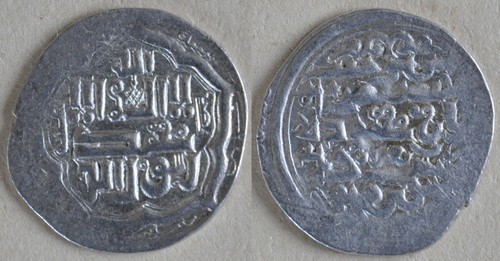
Ilkhanid Dirham of Ghazan
14th century (c. 1295-1304 CE)
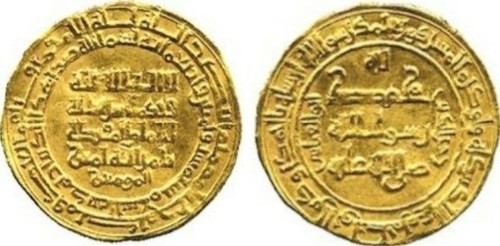
Gold Dinar of al-Muqtadi
c. 467-475 AH (1074-1082 CE)
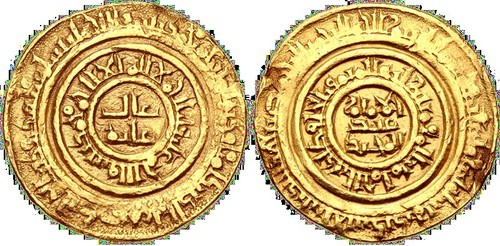
Gold Dinar of al-Hafiz li-Din Allah
AH 544 (AD 1149–1150)
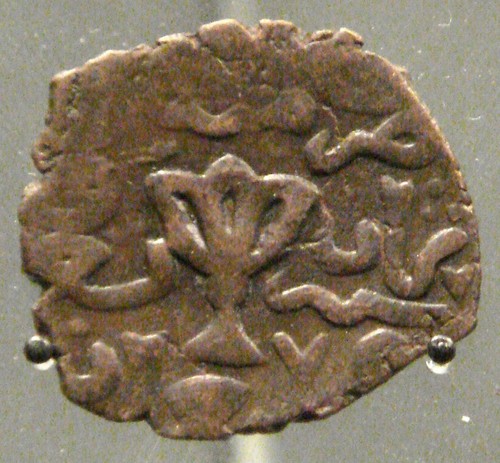
Copper Fals of Barquq
1382–1389 CE (first reign of Barquq)
Copper Fals of as-Salih Salih
Mid-14th century CE (reign of as-Salih Salih, AH 752–755 / 1351–1354 CE)
Gold Dinar of Malik Shah I
AH 465–485 (1072–1092 CE)
Ilkhanid Dirham of Abu Said
c. 1316-1335 CE (AH 716-736)
Silver Dirham of Salm ibn Ziyad
c. 682-683 CE
Silver Dirham (LACMA M.2002.1.437)
8th century CE (roughly AH 80s–190s)
Imitation Abbasid Dirham
8th–9th century CE