
How to Identify the Samanid Dirham
A collector's guide to attributing a Samanid silver dirham: reading the Kufic fields and circular margins, checking size and metal, and spotting look-alikes.
Read the full Samanid Dirham encyclopedia entry →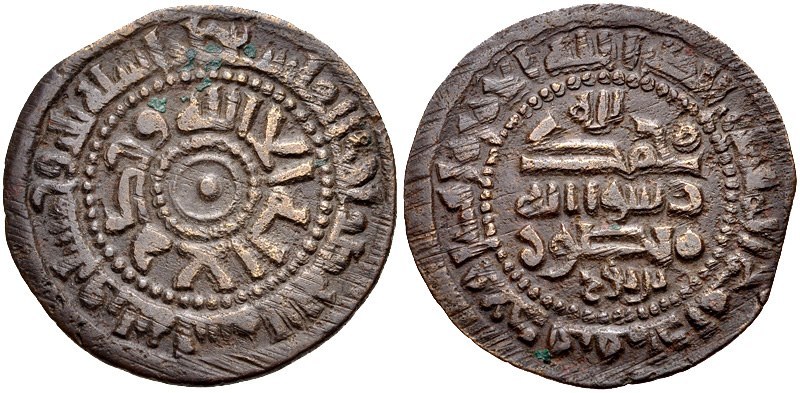
Start with the physical coin. A Samanid dirham should be silver, thin and fairly broad — commonly around 24–30 mm across — with a modest weight usually in the low single grams. The edge is often slightly irregular or wavy and the strike may be uneven, which is normal for a hand-hammered coin. A piece that is thick and small, magnetic, or obviously base metal is more likely a different Islamic denomination, a later issue, or a modern replica.
Read the layout before the words. Both faces carry only Arabic Kufic script and no images. Look for a central inscription of several lines surrounded by one or more concentric circular marginal legends, usually divided by beaded or linear borders. This central-field-plus-circular-margin arrangement is the signature look of Samanid and related early Islamic dirhams and immediately separates them from coins that bear portraits, Latin letters, or heraldry.
Attribution depends on the inscriptions, not the images. The central fields typically carry the Islamic declaration of faith, while the field legends name the reigning Abbasid caliph and the Samanid amir, and the outer margin gives Qur'anic text together with the mint and date. Identifying the ruler's name and reading the mint-and-date margin is what pins the coin to a specific reign, mint city and year — and rarity within the series depends far more on that mint and date than on the dynasty alone.
Be careful with look-alikes. Abbasid, Buyid, Saffarid, Ghaznavid and other contemporary dynasties struck very similar aniconic silver dirhams in the same broad, Kufic-covered style, so an old Islamic silver coin should never be assumed to be Samanid without reading the names in the legend. The general format persisted for a long time and across many mints, making careful epigraphic reading essential.
Watch for authentication problems. Genuine dirhams are struck, not cast, so casting seams, surface bubbles, a soft mushy appearance, or a mold line around the rim are warning signs. Tooled or added inscriptions, wrong weight and diameter, and non-silver metal are further red flags. When unsure, weigh and measure the coin, photograph both faces clearly, and have the Kufic legend read by someone familiar with Islamic numismatics or checked against standard references.
Frequently asked questions
How do I tell a Samanid dirham from another Islamic dirham?
The overall aniconic Kufic style is shared by many dynasties, so you must read the names in the field legends. A Samanid dirham names the Abbasid caliph together with a Samanid amir; the ruler and mint in the legend are the definitive identifiers.
Where are the mint and date on the coin?
They appear in the circular marginal legend, usually in the outer ring of one face, alongside Qur'anic phrases. Reading that margin gives the mint city and year and is the most important step in a serious attribution.
Why is my coin thin, wavy, and partly weakly struck?
That is typical of hand-struck medieval Islamic silver. The blank was hammered and the strike is often uneven, so many dirhams show soft or off-center areas and slightly irregular edges rather than a perfectly round, even coin.
How can I spot a fake?
Genuine dirhams are struck, not cast, so watch for casting seams, air bubbles, a grainy or soft surface, a mold line at the rim, incorrect weight or diameter, and non-silver or magnetic metal. When in doubt, verify the weight and have the legend checked against references.