
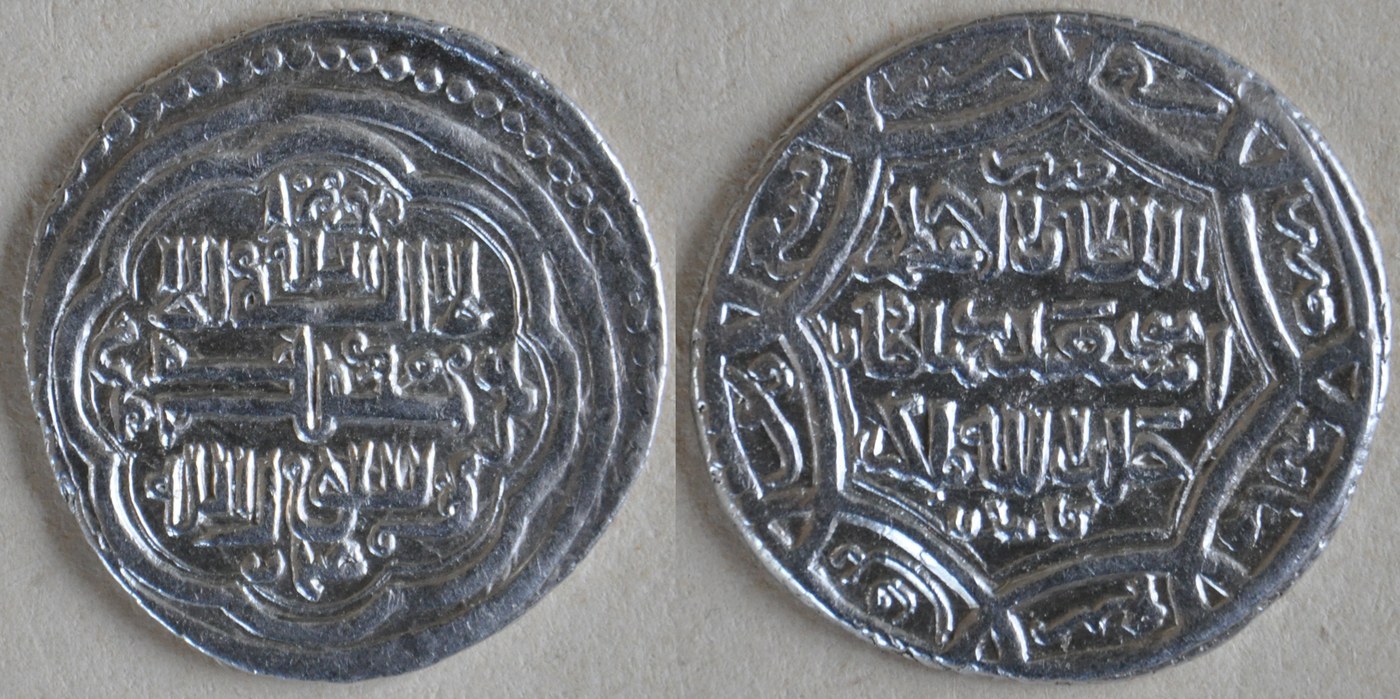
Ilkhanid Dirham of Abu Said
A hand-struck Mongol Ilkhanate silver dirham of Abu Sa'id Bahadur Khan, with the ruler's titles set in a cartouche and religious inscriptions in concentric bands.
- Country
- Ilkhanate
- Denomination
- Dirham
- Metal
- Silver
Got a coin like this?
Identify any coin from a photo, free.
Overview
The Ilkhanid Dirham of Abu Sa'id is a medieval Islamic silver coin struck under Abu Sa'id Bahadur Khan, the last effective ruler of the Mongol Ilkhanate in Persia. Like the piece photographed here, these coins are fully inscriptional: the obverse carries the ruler's name and titles enclosed in a decorative cartouche, while the reverse arranges religious formulae in concentric circular bands.
Although the Ilkhans were Mongols descended from Genghis Khan, by Abu Sa'id's reign the dynasty had converted to Islam, and its coinage follows the aniconic Islamic tradition — Arabic calligraphy only, with no portrait or figure. The interplay of a framed title panel on one face and ringed Quranic and creedal text on the other is characteristic of Ilkhanid design.
Abu Sa'id's dirhams were produced at many mints across a vast realm and survive in reasonable numbers, making them one of the more approachable entry points into Mongol and medieval Islamic silver coinage.
History & Background
Abu Sa'id Bahadur Khan (reigned 1316–1335 CE, AH 716–736) was the ninth Ilkhan and the last of Hulagu Khan's line to hold real power over the Ilkhanate, the Mongol state that governed Iran, Iraq, the Caucasus and much of Anatolia after the Mongol conquests of the 13th century. He came to the throne as a boy and ruled through powerful ministers and emirs; his death without a strong heir led to the rapid fragmentation of the Ilkhanate.
His reign is notable numismatically for continuing and revising the coinage reforms begun under his predecessors Ghazan and Öljeitü. Ilkhanid silver was struck to changing weight standards over these decades, and Abu Sa'id's mints issued a sequence of distinct dirham types, differing in the shape of the central frame — cartouches, squares, hexafoils and octofoils — and in the arrangement of the surrounding legends.
As a Sunni Muslim ruler, Abu Sa'id's coins commonly pair the Islamic declaration of faith with the names of the four Rightly Guided Caliphs, alongside his own titulature. Because the Ilkhanate spanned so many provinces, his dirhams were minted from Anatolia to eastern Iran and circulated widely across the medieval Islamic and trade worlds.
How to Identify
The coin is a small, hand-struck silver disc, aniconic, with Arabic inscriptions filling both faces and no portrait or figure of any kind. The single most diagnostic feature is the layout seen on this example: on the obverse the ruler's name and titles sit inside a defined cartouche or geometric frame, while the reverse presents its inscriptions as concentric circular bands rather than a framed panel.
The obverse legend names the sultan and his titles — formulae such as 'al-Sultan al-'adil' (the just Sultan) and 'Abu Sa'id Bahadur Khan', often with an invocation for the perpetuation of his reign. The reverse typically carries the kalima (declaration of faith) with the names of the four caliphs in the margins, and the mint city and Hijri year appear in the marginal legend, which is how a specific coin is dated and attributed.
Ilkhanid dirhams of this era are generally modest in size, roughly 15–22 mm across and around 1.4–2.9 grams depending on the weight standard and whether the piece is a single or double dirham, on a slightly irregular flan. The script is a neat cursive naskh rather than the angular Kufic of earlier Islamic dirhams — a useful clue that a coin belongs to the later medieval Mongol period rather than the early caliphates.
Value & Collectibility
Ilkhanid dirhams of Abu Sa'id were struck in large numbers at many mints and survive relatively well, so as a group they are among the more affordable medieval Islamic silver coins. Ordinary, legible examples in average condition generally trade at modest collector prices rather than at the level of great rarities.
Value within the series is driven mainly by the mint, the exact Hijri year, the specific coin type (the shape of the central frame and the legend arrangement), the completeness and sharpness of the inscriptions, and overall preservation. Coins from scarce or short-lived mints, unusual types, and exceptionally well-centered, fully struck pieces command higher premiums than common issues.
Because these are hand-struck coins with many mint-and-date combinations, precise value depends on grade, eye appeal and specialist demand, so any figures are general context rather than fixed prices. An accurate reading of the mint and date in the marginal legend is the single most important factor in placing an example within the market.
Frequently asked questions
Who was Abu Sa'id?
Abu Sa'id Bahadur Khan (reigned 1316–1335 CE) was the ninth ruler of the Mongol Ilkhanate in Persia and the last of Hulagu's line to hold effective power. His death without a strong successor led to the breakup of the Ilkhanate.
What was the Ilkhanate?
The Ilkhanate was a Mongol khanate founded by Hulagu Khan in the 13th century that ruled Iran, Iraq, the Caucasus and much of Anatolia. By Abu Sa'id's reign its rulers had converted to Islam, which is reflected in the coinage.
Why does the coin have only writing and no picture?
As Muslim rulers, the later Ilkhans followed the aniconic Islamic coinage tradition. Abu Sa'id's dirhams carry only Arabic inscriptions — the ruler's titles and religious formulae — with no portrait or figural image.
How do I find out where and when it was struck?
The mint city and the Hijri (AH) year are recorded in the marginal legend, usually on the reverse. Reading that band identifies the specific mint and date, which is essential for attributing and valuing the coin.
Are these dirhams rare or valuable?
Most are relatively common and affordable because they were minted in quantity across many mints. Scarce mints, unusual types, and exceptionally well-preserved, fully struck examples are worth more.
Ilkhanid Dirham of Abu Said guides
In-depth guides for identifying, valuing, and collecting Ilkhanid Dirham of Abu Said.
Other coins you may enjoy
Gold Dinar of Jaqmaq
1438-1453 CE
Ilkhanid Dirham
13th–14th century (Ilkhanate, c. 1256–1335 CE)
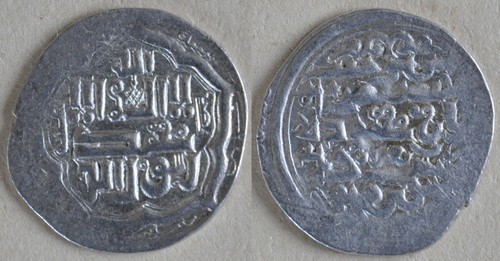
Ilkhanid Dirham of Ghazan
14th century (c. 1295-1304 CE)
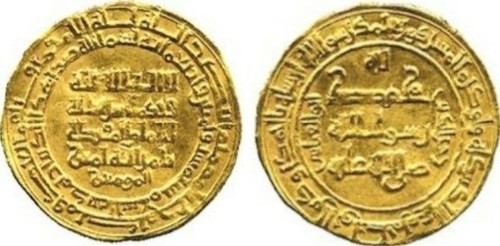
Gold Dinar of al-Muqtadi
c. 467-475 AH (1074-1082 CE)
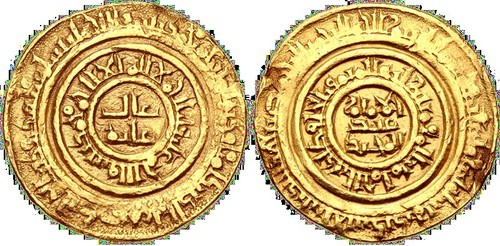
Gold Dinar of al-Hafiz li-Din Allah
AH 544 (AD 1149–1150)
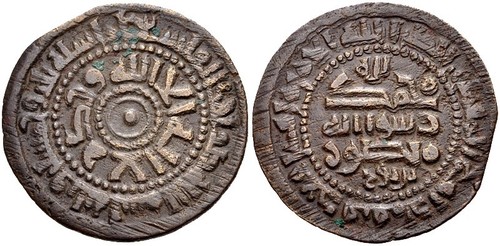
Samanid Dirham
9th–10th century CE (roughly AH 3rd–4th century)
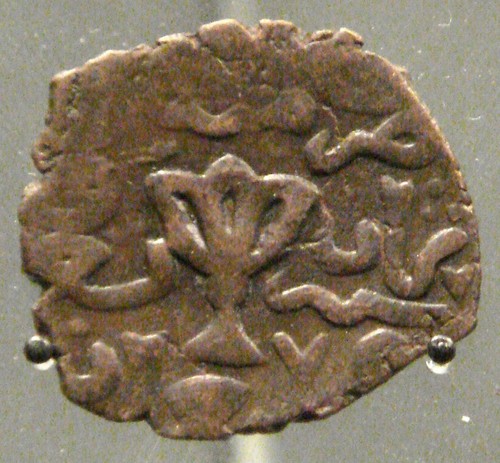
Copper Fals of Barquq
1382–1389 CE (first reign of Barquq)
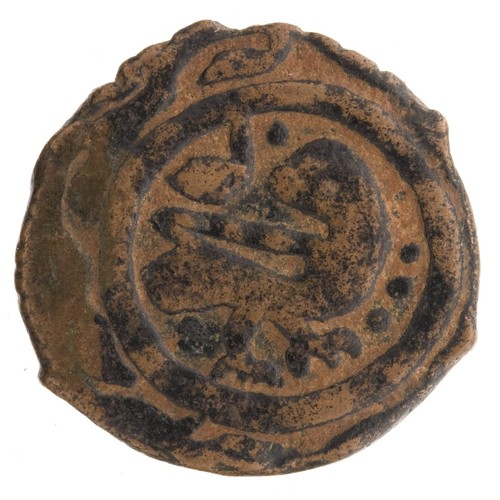
Copper Fals of as-Salih Salih
Mid-14th century CE (reign of as-Salih Salih, AH 752–755 / 1351–1354 CE)
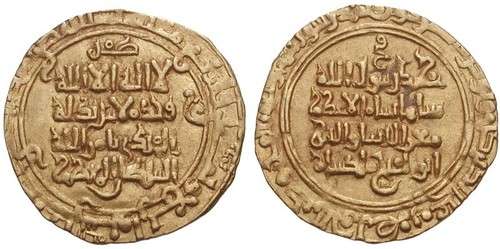
Gold Dinar of Malik Shah I
AH 465–485 (1072–1092 CE)
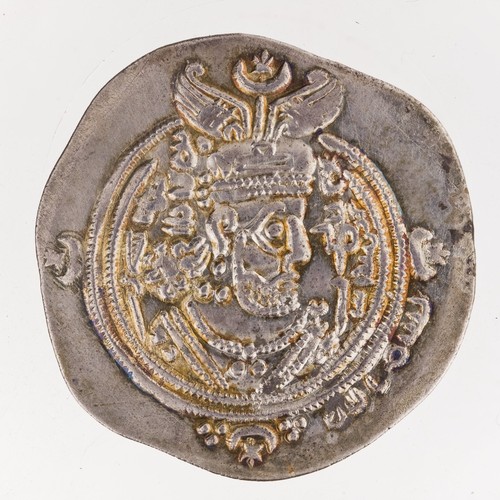
Silver Dirham of Salm ibn Ziyad
c. 682-683 CE
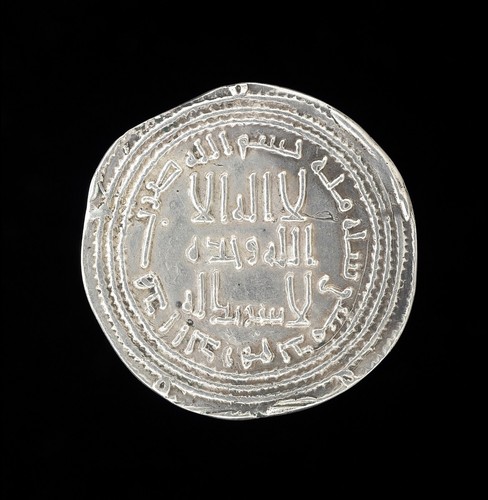
Silver Dirham (LACMA M.2002.1.437)
8th century CE (roughly AH 80s–190s)
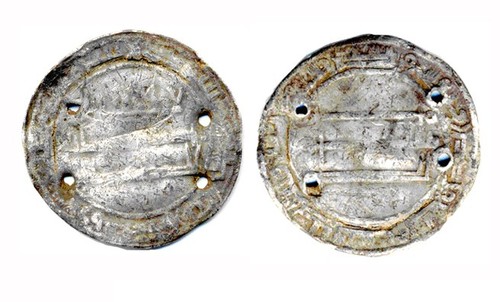
Imitation Abbasid Dirham
8th–9th century CE