
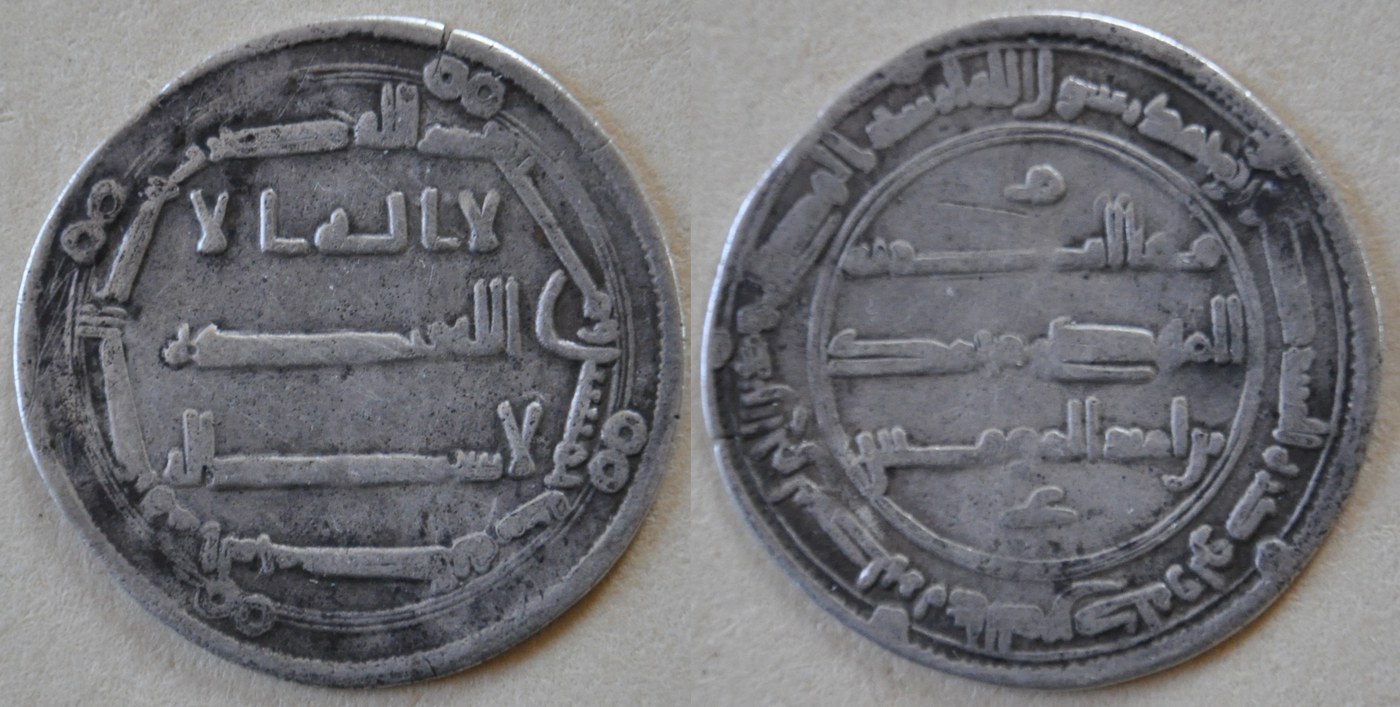
Dirham of Caliph al-Mansur
An Abbasid silver dirham dated AH 150 (767 CE), from the reign of Caliph al-Mansur, bearing purely Arabic religious inscriptions and a named mint.
- Country
- Islamic Caliphate (Abbasid)
- Denomination
- Dirham
- Metal
- Silver
Got a coin like this?
Identify any coin from a photo, free.
Overview
The Dirham of Caliph al-Mansur is an early Abbasid silver coin struck during the reign of Abu Ja'far al-Mansur, the second Abbasid caliph (reigned 754–775 CE). The example photographed is dated AH 150 (767 CE) and follows the fully aniconic 'reform' format: both faces carry only linear Arabic inscriptions, with no portrait or figural imagery. The obverse presents a central religious legend enclosed by a decorative border, while the reverse adds a further inscription together with the mint designation.
This type belongs to the standardized inscriptional dirham that dominated Islamic silver coinage for centuries. The central field states the Islamic profession of faith, and the surrounding marginal legends carry Qur'anic phrases along with the mint name and the year of striking, expressed as an Anno Hegirae (AH) date. It is a thin, broad, hand-struck silver disc.
Because the coinage is anonymous by design — it does not name the caliph — the coin is placed in al-Mansur's reign by its date and by the reform format established a few decades earlier. It is a widely collected representative of classical Abbasid silver.
History & Background
Al-Mansur founded the city of Baghdad (Madinat al-Salam, the 'City of Peace') in 762 CE and consolidated Abbasid authority after the dynasty's rise to power in 750 CE. His reign is regarded as a formative period for the Abbasid state, its administration, and its economy, in which silver dirhams were a principal medium of trade across a vast territory.
The dirham itself carried on the reformed, purely inscriptional design introduced under the Umayyad caliph Abd al-Malik around 79 AH (698 CE). That reform had swept away all imagery in favor of Arabic religious text, and the Abbasids retained the template largely unchanged in its essentials, so a dirham of AH 150 looks broadly similar in layout to earlier reform silver. The coins name the mint and year but, following convention, do not name the ruling caliph.
The silver dirham of this era traces its weight tradition to the pre-Islamic Sasanian drachm and was struck at numerous mints across the caliphate. Coins of al-Mansur's reign document the monetary system of the early Abbasid golden age and circulated widely, including in long-distance trade that carried Islamic silver far beyond the caliphate's borders.
How to Identify
The defining feature of this type is that both faces bear only linear Arabic inscriptions — there is no portrait, figure, or pictorial device. The obverse shows a multi-line central legend (the Islamic declaration of faith) ringed by a marginal inscription within a decorative border; the reverse carries a further central legend with marginal text that includes the mint name and the AH date. Reading that reverse margin is how the mint and year — here AH 150 — are established.
The coin is struck in silver as a broad, thin flan, typically on the order of roughly 2.7–3.0 grams and about 24–26 mm across, with slightly irregular edges and centering characteristic of hand striking. The script is early Kufic-style Arabic. Because each coin was struck individually, strike quality, centering and legend completeness vary from piece to piece, and part of the marginal legend is often off the flan.
Attribution to al-Mansur's reign rests on the AH date read from the coin combined with the standardized reform layout; the coinage is anonymous and does not name the caliph. Specialists read the full legends, mint name and date to place a given dirham precisely within the Abbasid series and to distinguish it from Umayyad reform dirhams of similar appearance.
Value & Collectibility
Abbasid silver dirhams of the early period survive in considerable numbers, so common issues are among the more affordable ancient Islamic coins and often trade for modest sums, well above their small silver content but accessible to collectors. Value rises with strong strike, full and legible legends, good centering, and desirable or scarcer mints.
Condition and completeness of the inscriptions matter more than metal weight, since the appeal lies in the legible mint, date and religious legends. A well-centered coin with a clearly readable AH 150 date and mint name is more desirable than a weakly struck example with much of the margin missing. Scarcer mints and unusually well-preserved pieces command premiums, while worn or clipped coins bring less.
Because the type is broadly standardized and dates and mints are read from the Arabic legends, accurate attribution affects value. Examples with the mint and date confirmed by a specialist, and with documented provenance, are easier to place and to sell. As with any medieval coin, buyers should be cautious of cast reproductions and unattributed pieces.
Frequently asked questions
Who was Caliph al-Mansur?
Abu Ja'far al-Mansur was the second Abbasid caliph, reigning from 754 to 775 CE. He founded Baghdad in 762 CE and is regarded as a key organizer of the early Abbasid state and its economy.
Why doesn't the coin show the caliph's name or portrait?
By this period Islamic coinage was aniconic and anonymous by convention. The dirham carries only Arabic religious inscriptions plus the mint and date; it does not depict or name the ruling caliph, so the reign is inferred from the AH date.
What does AH 150 mean?
AH stands for Anno Hegirae, the Islamic lunar calendar counted from the Hijra of 622 CE. AH 150 corresponds to roughly 767 CE, within al-Mansur's reign.
How is this different from an Umayyad reform dirham?
Both share the same purely inscriptional layout introduced under Abd al-Malik. They are told apart mainly by the mint, the AH date and small details of the legends; an AH 150 date places this coin in the Abbasid period under al-Mansur.
Are these dirhams rare?
Common Abbasid dirhams of this era survive in large numbers and are quite collectible and affordable, though scarcer mints and exceptionally well-preserved, fully legible examples are more sought after.
Dirham of Caliph al-Mansur guides
In-depth guides for identifying, valuing, and collecting Dirham of Caliph al-Mansur.
Other coins you may enjoy
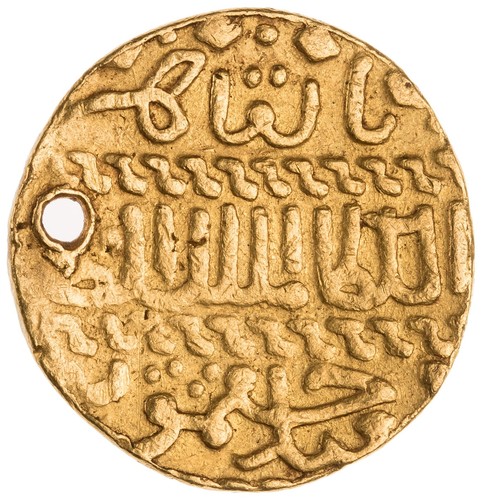
Gold Dinar of Jaqmaq
1438-1453 CE
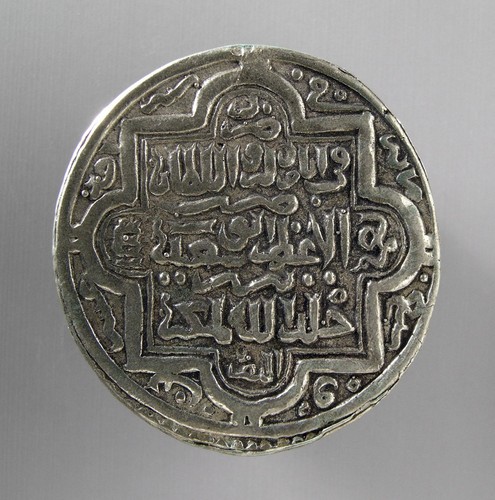
Ilkhanid Dirham
13th–14th century (Ilkhanate, c. 1256–1335 CE)
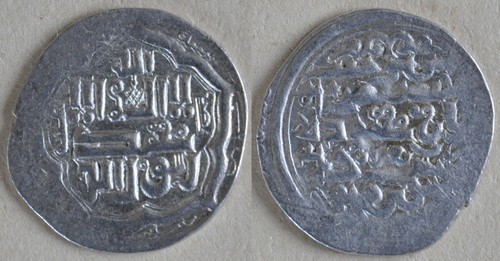
Ilkhanid Dirham of Ghazan
14th century (c. 1295-1304 CE)
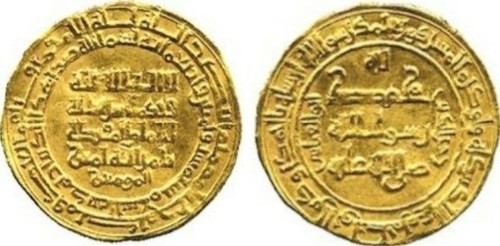
Gold Dinar of al-Muqtadi
c. 467-475 AH (1074-1082 CE)
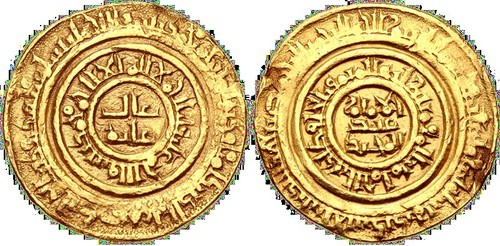
Gold Dinar of al-Hafiz li-Din Allah
AH 544 (AD 1149–1150)
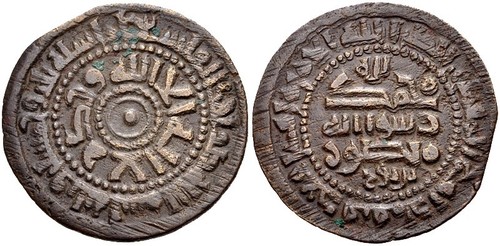
Samanid Dirham
9th–10th century CE (roughly AH 3rd–4th century)
Copper Fals of Barquq
1382–1389 CE (first reign of Barquq)
Copper Fals of as-Salih Salih
Mid-14th century CE (reign of as-Salih Salih, AH 752–755 / 1351–1354 CE)
Gold Dinar of Malik Shah I
AH 465–485 (1072–1092 CE)
Ilkhanid Dirham of Abu Said
c. 1316-1335 CE (AH 716-736)
Silver Dirham of Salm ibn Ziyad
c. 682-683 CE
Silver Dirham (LACMA M.2002.1.437)
8th century CE (roughly AH 80s–190s)