
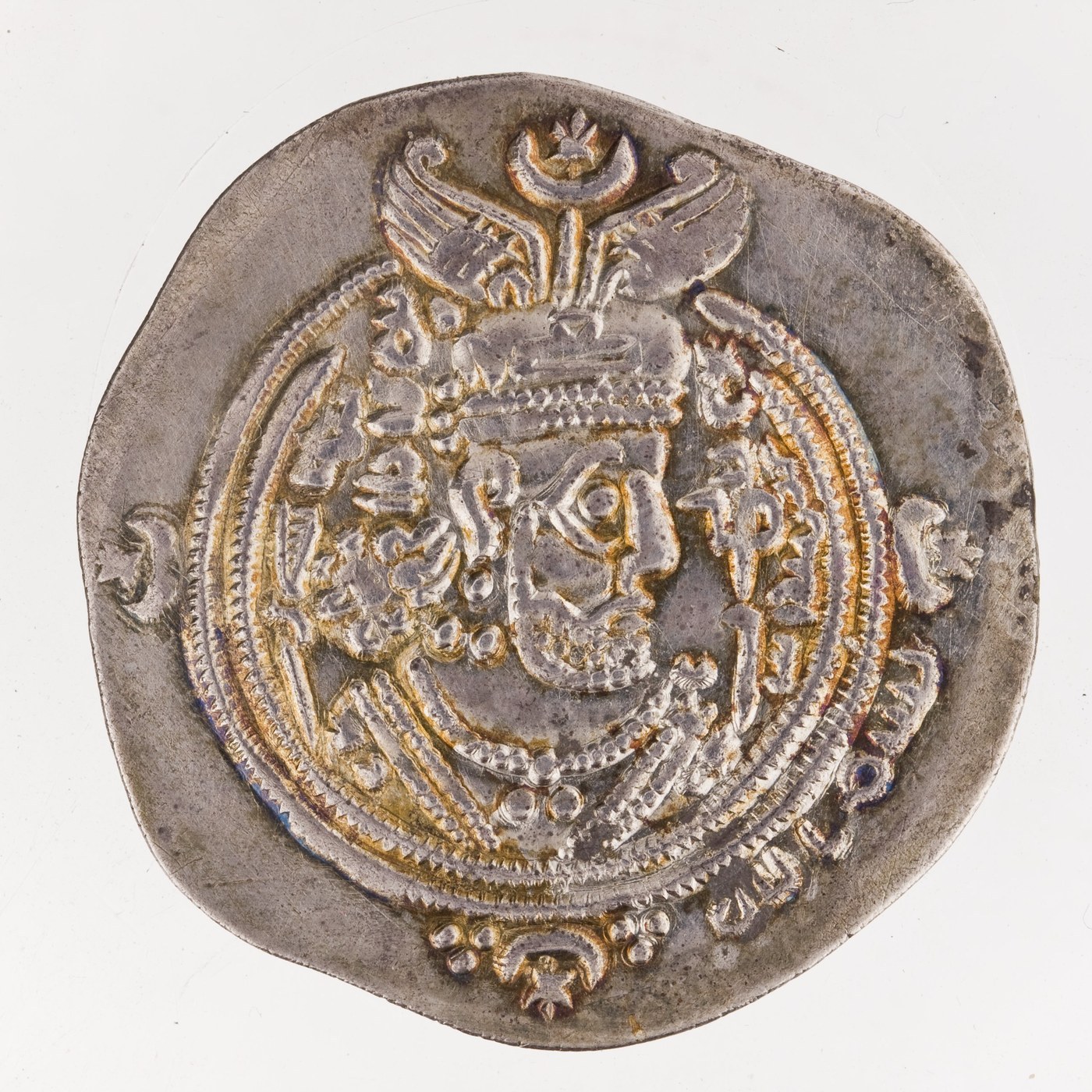
Silver Dirham of Salm ibn Ziyad
An Arab-Sasanian silver dirham struck for the Umayyad governor Salm ibn Ziyad, with a Sasanian-style bust and fire-altar reverse plus Arabic marginal inscriptions.
- Country
- Islamic Caliphate
- Denomination
- Dirham
- Metal
- Silver
Got a coin like this?
Identify any coin from a photo, free.
Overview
The Silver Dirham of Salm ibn Ziyad is an Arab-Sasanian coin struck in the eastern provinces of the early Umayyad caliphate around 682-683 CE, during the governorship of Salm ibn Ziyad. The example photographed follows the standard Arab-Sasanian format: the obverse carries a crowned royal head in profile ringed by a calligraphic border, while the reverse shows a symmetrical design built around a Zoroastrian fire altar with attendants and surrounding decorative elements. It is a thin, broad silver coin struck by hand.
Coins of this kind are not a new Islamic design but an adaptation of the older Sasanian Persian drachm. After the Arab conquest of the Sasanian empire, the caliphate kept the familiar Sasanian coin type in circulation and simply added Arabic phrases and the name of the ruling Muslim governor, so commerce could continue without disruption. Salm ibn Ziyad's dirhams belong to this transitional phase, before the fully Arabic, image-free reform coinage was introduced.
Because it pairs a Persian imperial portrait and fire-altar imagery with Arabic religious wording and a governor's name, the coin is a compact record of the moment when Islamic administration was taking over the old Persian monetary system in the east.
History & Background
Salm ibn Ziyad was a son of Ziyad ibn Abihi and served as an Umayyad governor of the far-eastern provinces of Khurasan and Sistan, appointed under the caliph Yazid I (reigned 680-683 CE). From this base he was active in campaigns across the frontier regions of Central Asia. His governorship coincided with the closing years of Yazid's reign and the onset of the turbulent period of civil war that followed the caliph's death.
The dirhams issued in his name are Arab-Sasanian pieces, meaning they continue the coinage of the defeated Sasanian Persian empire. The Sasanian silver drachm had been the dominant currency of Iran and the east, and rather than replace it overnight, Arab governors struck coins in the same fabric and design, adding their own names in Pahlavi (Middle Persian) script and short Arabic invocations such as the phrase 'in the name of God'. Salm's issues, dated around 682-683 CE, sit within this system.
This governor-name coinage was a stopgap. Only later, under the caliph Abd al-Malik, was the currency reformed into purely inscriptional Islamic dirhams bearing no images at all. Arab-Sasanian coins like Salm ibn Ziyad's therefore document an intermediate stage in which conquered Persian coin design and new Islamic authority coexisted on the same piece of silver.
How to Identify
An Arab-Sasanian dirham of Salm ibn Ziyad is a thin, broad silver coin in the Sasanian tradition, typically around 28-33 mm across but only about 3.5-4.1 grams in weight, because the flan is wide and flat rather than thick. Hand striking means the coins are often slightly off-center and the outer legends may be incomplete.
The obverse shows a crowned royal bust in profile, copied from Sasanian models, framed by a border of script and usually enclosed within circular beaded rings and crescent-and-star ornaments. The governor's name appears in Pahlavi (Middle Persian) lettering beside the bust, and an Arabic phrase is commonly added in the margin. The reverse carries the characteristic Sasanian fire altar flanked by two attendant figures, a broadly symmetrical or 'mirror' composition, with the mint abbreviation and a date rendered in Pahlavi to either side.
Attribution to Salm ibn Ziyad depends on reading the Pahlavi governor's name on the obverse, since the general type was shared by many Arab governors and by the preceding Sasanian kings. The presence of Arabic wording alongside the Persian bust and fire altar is what marks the coin as an Islamic-period Arab-Sasanian issue rather than a purely Sasanian drachm.
Value & Collectibility
Arab-Sasanian dirhams are collected as historically important early Islamic silver, and pieces that can be firmly attributed to a named governor such as Salm ibn Ziyad carry interest beyond their modest silver content. As a group these coins are more affordable than early Islamic gold, but individual values vary widely with the governor, mint, date, and state of preservation.
Condition and legibility drive price within the series. A well-centered coin with a clear bust, sharp fire altar, and readable Pahlavi name, mint and date is worth considerably more than a weakly struck or corroded example where the crucial legends cannot be read. Scarcer mint-and-date combinations and coins of historically notable governors also command premiums.
Because accurate attribution rests on reading the Pahlavi and Arabic legends, precise valuation is a specialist task and figures here are general context rather than fixed prices. As with any early hand-struck silver, an example should be judged individually on grade, completeness of legend, and authenticity.
Frequently asked questions
Who was Salm ibn Ziyad?
Salm ibn Ziyad was an Umayyad governor of the eastern provinces of Khurasan and Sistan under the caliph Yazid I, active in the early 680s CE. Silver dirhams were struck in his name during his governorship.
Why does the coin look Persian rather than Islamic?
It is an Arab-Sasanian type, meaning it continues the design of the conquered Sasanian Persian empire. Arab governors kept the familiar bust and fire-altar coin and added their own name and short Arabic phrases, so this piece blends Persian imagery with Islamic authority.
What is the design on each side?
The obverse shows a crowned royal bust in profile surrounded by a calligraphic border; the reverse shows a Zoroastrian fire altar flanked by two attendants, a broadly mirror-like design, with mint and date in Pahlavi script.
Is the dirham made of real silver?
Yes. Like the Sasanian drachms it derives from, it is a silver coin, struck thin and broad to a weight of roughly 3.5-4.1 grams rather than as a small thick disc.
How is it dated to 682-683 CE?
Arab-Sasanian coins carry a date written in Pahlavi on the reverse. Reading that date, together with the governor's name, places these dirhams of Salm ibn Ziyad in the early 680s CE, near the end of Yazid I's reign.
Silver Dirham of Salm ibn Ziyad guides
In-depth guides for identifying, valuing, and collecting Silver Dirham of Salm ibn Ziyad.
Other coins you may enjoy
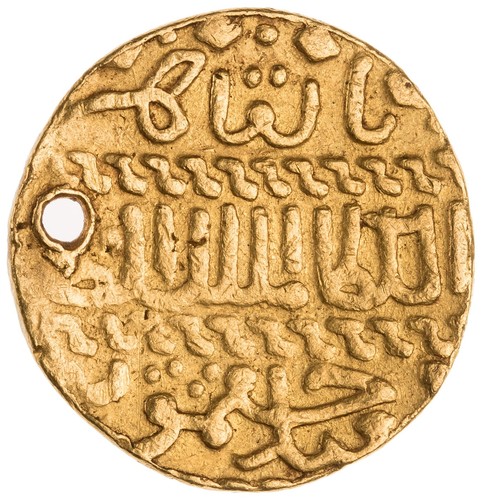
Gold Dinar of Jaqmaq
1438-1453 CE
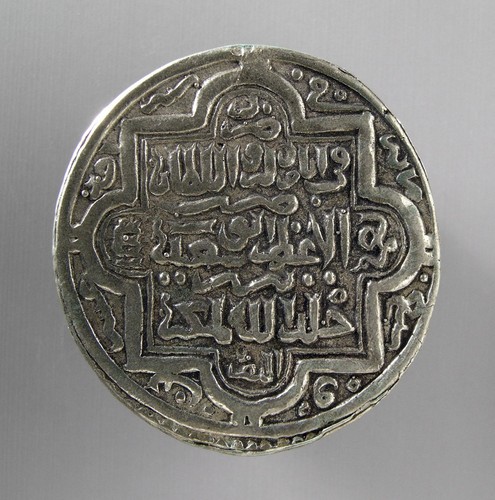
Ilkhanid Dirham
13th–14th century (Ilkhanate, c. 1256–1335 CE)
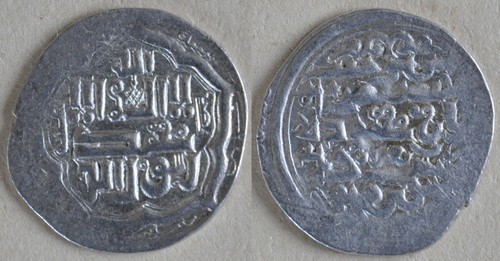
Ilkhanid Dirham of Ghazan
14th century (c. 1295-1304 CE)
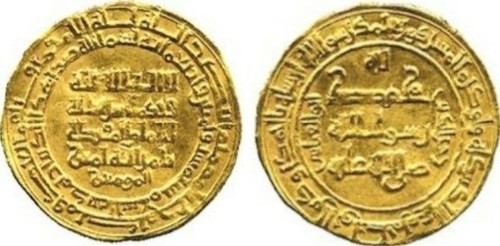
Gold Dinar of al-Muqtadi
c. 467-475 AH (1074-1082 CE)
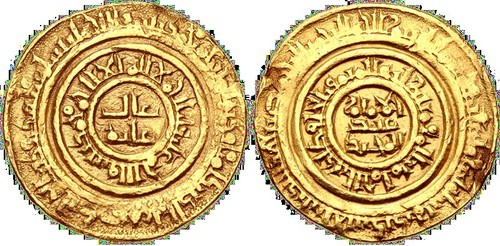
Gold Dinar of al-Hafiz li-Din Allah
AH 544 (AD 1149–1150)
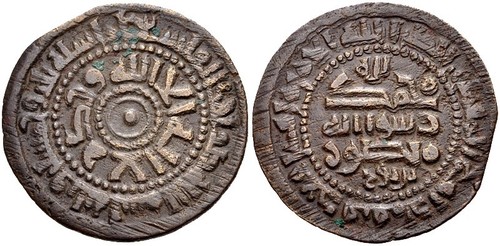
Samanid Dirham
9th–10th century CE (roughly AH 3rd–4th century)
Copper Fals of Barquq
1382–1389 CE (first reign of Barquq)
Copper Fals of as-Salih Salih
Mid-14th century CE (reign of as-Salih Salih, AH 752–755 / 1351–1354 CE)
Gold Dinar of Malik Shah I
AH 465–485 (1072–1092 CE)
Ilkhanid Dirham of Abu Said
c. 1316-1335 CE (AH 716-736)
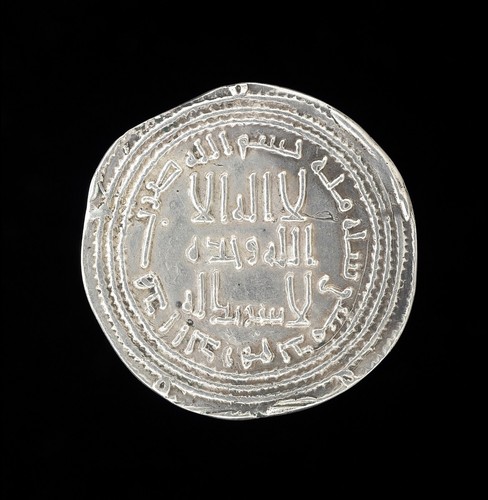
Silver Dirham (LACMA M.2002.1.437)
8th century CE (roughly AH 80s–190s)
Imitation Abbasid Dirham
8th–9th century CE