
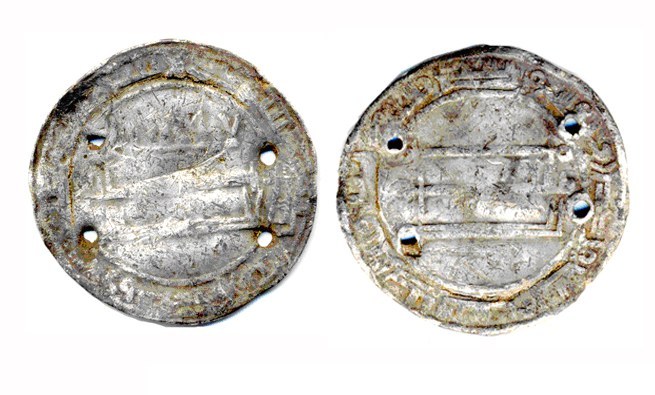
Imitation Abbasid Dirham
A thin, broad silver coin that copies an Abbasid dirham but was struck in northern Europe, with blundered pseudo-Kufic script and a piercing for wear.
- Country
- Northern Europe
- Denomination
- Dirham (imitation)
- Metal
- Silver
Got a coin like this?
Identify any coin from a photo, free.
Overview
The Imitation Abbasid Dirham is a locally made silver coin that copies the design of a genuine Abbasid dirham but was produced outside the Islamic world, in northern and eastern Europe. The example shown carries linear Arabic-style inscriptions inside a beaded border on the obverse and further linear legends with decorative elements on the reverse, and it has been pierced — a perforation added so the coin could be worn or sewn onto clothing.
These pieces reflect the massive flow of Islamic silver dirhams into the Baltic and Scandinavian world during the Viking Age, when Abbasid coins reached northern Europe in enormous numbers along the eastern river trade routes. Local silversmiths and workshops copied the familiar dirham, but without a reader of Arabic to guide them the inscriptions were reproduced as decorative, often garbled script.
Rather than a specific dated issue of a named caliph, this is an imitative coin: aniconic, all-lettering, and instantly recognizable as a dirham copy even though its legends usually do not spell out a coherent mint, date or ruler.
History & Background
From the later 8th century onward, silver dirhams struck across the Abbasid Caliphate travelled north through the lands of the Volga Bulgars, Khazars and Rus, entering the Baltic and Scandinavia in vast quantities. To Viking-Age societies this silver was valued largely by weight as bullion, and dirhams are among the most common Islamic coins found in northern European hoards.
Alongside genuine imports, local imitations were produced in these northern and eastern regions. Because the craftsmen copying the coins generally could not read Arabic, they reproduced the Kufic legends as pattern rather than text, resulting in the blundered or "pseudo-Kufic" inscriptions that characterize the type. Such imitations circulated in the same bullion economy as the authentic coins they mimicked.
Many surviving examples, including pierced pieces like the one shown, were adapted for personal adornment — hung as pendants, strung into necklaces, or attached to garments. This dual life as both currency-by-weight and ornament is typical of how imported and imitated Islamic silver functioned in the Viking world of the 8th and 9th centuries.
How to Identify
An imitation Abbasid dirham is a thin, broad, roughly circular silver coin, generally lighter and often more irregular than the official dirhams it copies; genuine Abbasid dirhams sit near 2.7–3.0 grams and around 23–28 mm, and imitations approximate that format with some variation. Both faces carry only Arabic-style linear inscriptions arranged in horizontal lines within a border of dots or circles — there is no portrait or figural image.
The defining clue is the script. On a genuine dirham the Kufic legends spell out the Islamic declaration of faith together with a legible mint and Hijri date; on an imitation the same layout appears but the letters are frequently malformed, repeated, reversed or reduced to decorative strokes, so the text cannot be read as coherent Arabic. Decorative elements or stray marks may appear where meaningful legend should be.
The piercing seen on this example is itself diagnostic of use in the northern trade world, where dirhams and their copies were worn as ornaments. A hole, loop mount, or edge wear from suspension points strongly toward this Viking-Age context. Taken together — thin silver flan, dirham-style aniconic layout, garbled pseudo-Kufic legend, and often a mounting hole — these features separate a northern imitation from an official Abbasid strike.
Value & Collectibility
Value for these coins depends heavily on whether the piece is a genuine period imitation and on its condition, silver quality, and eye appeal. As a class, Viking-Age and eastern European imitation dirhams are collected both as Islamic-adjacent silver and as artifacts of the Viking trade network, and interest in the latter market can add a premium beyond simple bullion.
Condition factors matter: a clear, well-preserved flan with crisp pseudo-Kufic detail is more desirable than a worn, cracked, or heavily corroded example. A piercing is a double-edged trait — it confirms the coin's use as ornament and can add historical interest, but a hole is generally considered damage that lowers the price relative to an unholed coin of similar quality.
Because imitations are irregular and hard to attribute precisely, and because deliberate modern fakes of Viking-era silver exist, prices are best treated as ranges tied to a specific coin rather than fixed figures. A confident attribution and, where warranted, a specialist opinion have a large effect on where a given piece sits in the market.
Frequently asked questions
What is an imitation Abbasid dirham?
It is a silver coin that copies the design of an official Abbasid dirham but was struck outside the Islamic world, in northern or eastern Europe. It imitates the layout and Kufic script of a real dirham without being an authentic Islamic issue.
Why is the coin pierced?
The hole was added so the coin could be worn. In the Viking Age, dirhams and their imitations were often used as pendants or dress ornaments as well as bullion, and pierced examples like this one reflect that use.
Why can't the Arabic writing be read?
The craftsmen who made these copies generally could not read Arabic, so they reproduced the Kufic legends as decorative pattern. The result is blundered or pseudo-Kufic script that does not spell out a coherent ruler, mint or date.
Is it made of real silver?
These imitations are silver coins, echoing the high-silver dirhams they copy, though the exact fineness and weight can vary more than on official Abbasid issues. In the northern trade economy they were valued largely by silver weight.
Where were these coins made and used?
They were produced in northern and eastern Europe along the trade routes linking the Islamic world to the Baltic and Scandinavia, and circulated in the same 8th–9th century bullion economy as the genuine dirhams flooding into the Viking world.
Imitation Abbasid Dirham guides
In-depth guides for identifying, valuing, and collecting Imitation Abbasid Dirham.
Other coins you may enjoy
Gold Dinar of Jaqmaq
1438-1453 CE
Ilkhanid Dirham
13th–14th century (Ilkhanate, c. 1256–1335 CE)
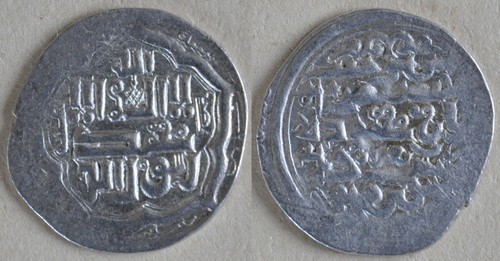
Ilkhanid Dirham of Ghazan
14th century (c. 1295-1304 CE)
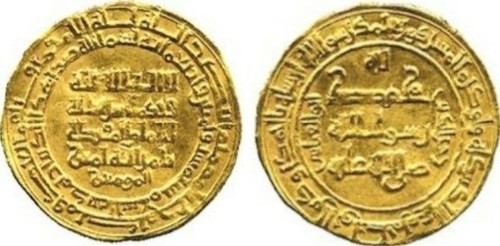
Gold Dinar of al-Muqtadi
c. 467-475 AH (1074-1082 CE)
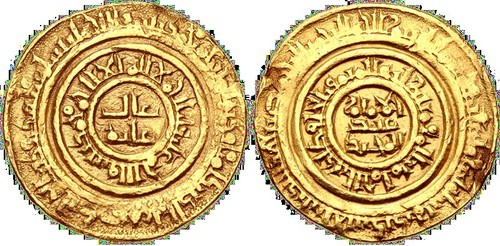
Gold Dinar of al-Hafiz li-Din Allah
AH 544 (AD 1149–1150)
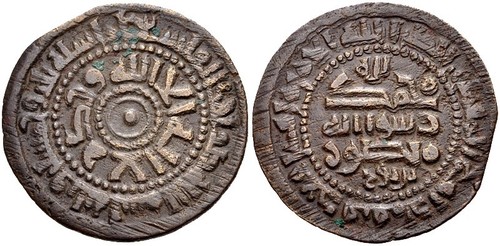
Samanid Dirham
9th–10th century CE (roughly AH 3rd–4th century)
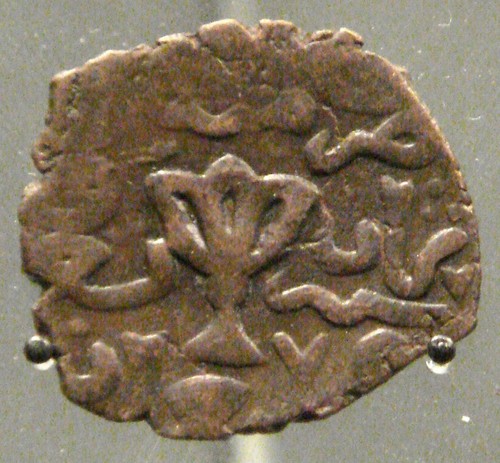
Copper Fals of Barquq
1382–1389 CE (first reign of Barquq)
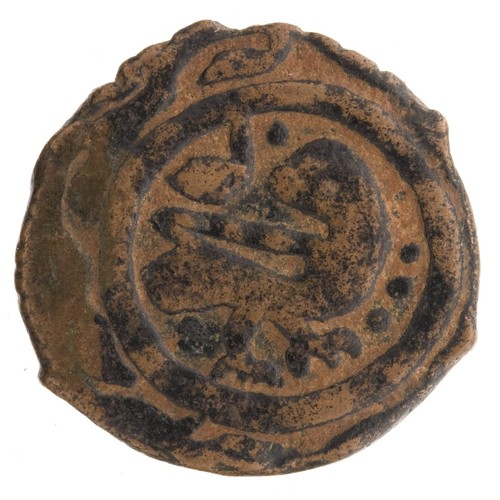
Copper Fals of as-Salih Salih
Mid-14th century CE (reign of as-Salih Salih, AH 752–755 / 1351–1354 CE)
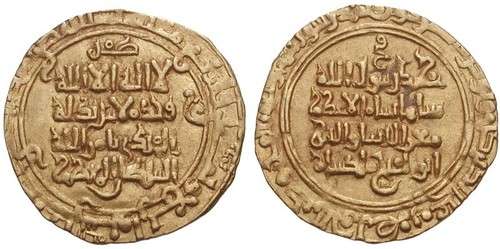
Gold Dinar of Malik Shah I
AH 465–485 (1072–1092 CE)
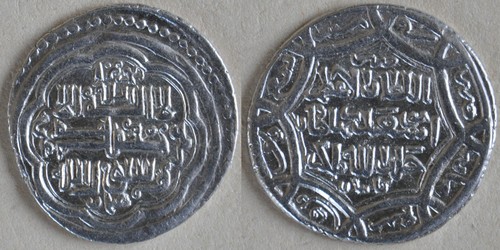
Ilkhanid Dirham of Abu Said
c. 1316-1335 CE (AH 716-736)
Silver Dirham of Salm ibn Ziyad
c. 682-683 CE
Silver Dirham (LACMA M.2002.1.437)
8th century CE (roughly AH 80s–190s)