
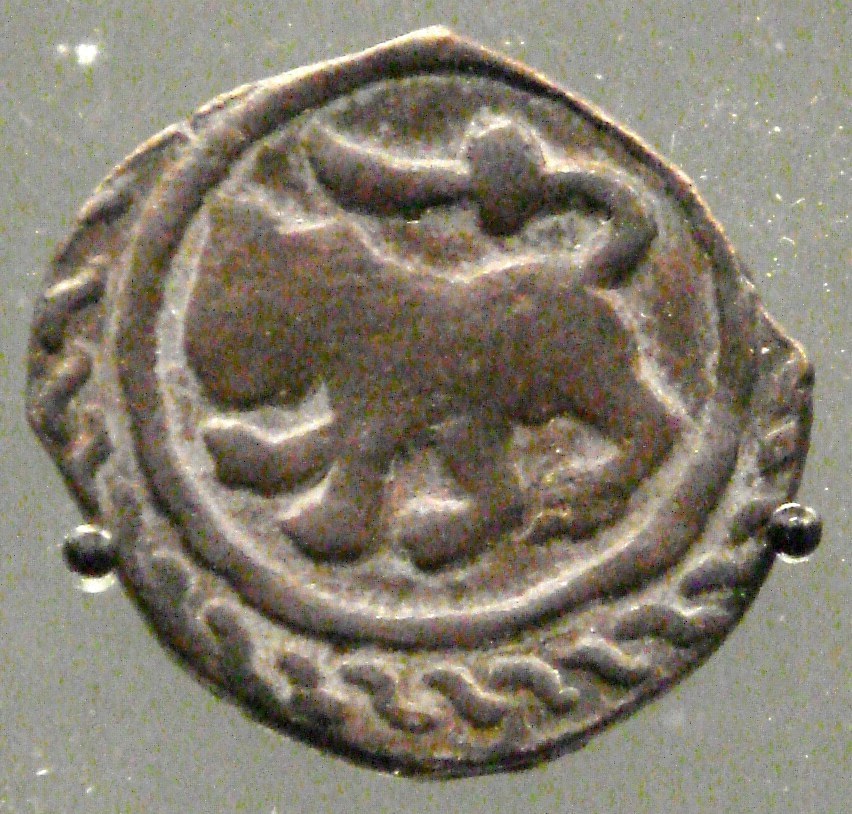
Copper Fals of Shaban II
A Mamluk copper fals struck under Sultan al-Ashraf Sha'ban II of Egypt, decorated with geometric ornament and Arabic legends rather than any figural image.
- Country
- Egypt (Mamluk)
- Denomination
- Fals
- Metal
- Copper
Got a coin like this?
Identify any coin from a photo, free.
Overview
The Copper Fals of Shaban II is a base-metal Mamluk coin issued during the reign of al-Ashraf Zayn al-Din Sha'ban II, sultan of Egypt and Syria in the later 14th century. Like other fulus (singular fals), it served as everyday small change in the markets of Cairo and the wider Mamluk realm, circulating far below the silver dirham and gold dinar. The example shown is aniconic: the obverse presents geometric ornament, while the reverse combines geometric patterning with Arabic text.
Mamluk copper coinage of this era is well known for its decorative, ornamental style. Rather than relying on a simple ring of calligraphy, many fulus were laid out around geometric fields — interlace, lozenges, cartouches, and star or rosette shapes — into which the legends were fitted. This coin belongs to that tradition, using pattern and script together instead of any portrait or living figure.
Because copper fulus were struck locally in large numbers and to loosely controlled standards, individual pieces vary in how much of the design and inscription survives. This entry treats the coin as a representative copper fals of Sha'ban II's reign, identified by its Mamluk ornamental style and its Arabic legends rather than by a single precise die or date.
History & Background
Al-Ashraf Sha'ban II came to the Mamluk throne as a boy in 1363 CE (764 AH) and reigned until his death in 1377 CE (778 AH), one of the Bahri Mamluk sultans who ruled Egypt and Syria from Cairo. His reign fell in a period when the copper fals had grown into a heavily used part of daily commerce, at times issued in such quantity that its value against silver fluctuated in the marketplace.
The fals itself descends from the Byzantine copper follis, whose name it Arabized. Following the early Islamic move to purely epigraphic coinage, gold, silver, and copper were all designed around Arabic script rather than images. Mamluk mints, however, developed a distinctive decorative approach for their copper, framing the legends within elaborate geometric compositions that make the coinage of this dynasty visually recognizable.
Under Sha'ban II and his contemporaries, fulus were struck at major mints such as Cairo (al-Qahira), Damascus, and Aleppo. As humble token money, they were produced to varying weights and often circulated worn and clipped, so surviving examples range widely in quality. This coin sits within that broad output of Mamluk copper small change rather than being a rare presentation piece.
How to Identify
This is a small, thick copper coin with an irregular, hand-struck outline, as expected of a Mamluk fals struck from cut or cast blanks. Medieval fulus commonly fall in the rough range of 15–25 mm and a few grams, but Mamluk copper standards varied considerably by mint and issue, so size and weight are supporting clues rather than proof of a single type.
The design is aniconic and ornamental. The obverse shows geometric patterning — interlaced lines, lozenge or cartouche shapes, or star and rosette motifs — with no portrait, animal, or Latin lettering. The reverse combines similar geometric ornament with Arabic legends, which on Mamluk fulus of this period typically name the sultan with his regnal titles (such as al-Ashraf and al-Sultan) and may include the mint city and, less reliably on copper, a Hijri date.
Attribution to Sha'ban II specifically rests on reading the ruler's name and titles within the legend. Where the inscription is worn, off-flan, or filled with ornament, the coin may only be classifiable as a Mamluk copper fals of the general period. Clear, high-resolution images of both faces, checked against Mamluk coin references, are the best way to confirm the sultan, mint, and any surviving date.
Value & Collectibility
Mamluk copper fulus, including those of Sha'ban II, are among the more affordable Islamic coins as a class. They were produced in large numbers as base-metal small change, so typical worn examples usually trade at modest prices rather than at scarce-coin levels.
Value within the group is driven mainly by how much of the legend and geometric design is legible and well struck, by surface condition and patina, and by whether the coin can be firmly tied to Sha'ban II and to a named mint. A piece whose inscription clearly names the sultan and its mint is more desirable than a worn example read only as a generic Mamluk fals.
Because exact prices depend heavily on grade, attribution, and specialist demand, figures here are general context rather than fixed values. An accurate reading of the Arabic legend — confirming the ruler and mint — is the single biggest factor in placing a coin like this within the market.
Frequently asked questions
Who was Shaban II?
Al-Ashraf Zayn al-Din Sha'ban II was a Bahri Mamluk sultan who ruled Egypt and Syria from Cairo between 1363 and 1377 CE (764–778 AH). Copper fulus bearing his name and titles were struck for everyday use during his reign.
What is a fals?
A fals (plural fulus) was the copper coin of the medieval Islamic monetary system — the small change used below the silver dirham and gold dinar. The name derives from the Byzantine copper follis.
Why does the coin show geometric patterns instead of a portrait?
Islamic coinage was aniconic, avoiding portraits and living figures. Mamluk mints in particular favored ornamental designs, arranging Arabic legends within geometric fields of interlace, lozenges, and rosettes, as seen on this fals.
Can this coin be dated to an exact year?
Only within Sha'ban II's reign (1363–1377 CE) from the ruler's name. A precise year needs a legible Hijri date and mint in the legend, which is often worn or off-flan on copper fulus.
Is a copper fals of Shaban II valuable?
Most are modestly priced because Mamluk fulus were common small change. Value rises with a legible legend that names the sultan and mint, a well-struck geometric design, and good surface condition.
Copper Fals of Shaban II guides
In-depth guides for identifying, valuing, and collecting Copper Fals of Shaban II.
Other coins you may enjoy
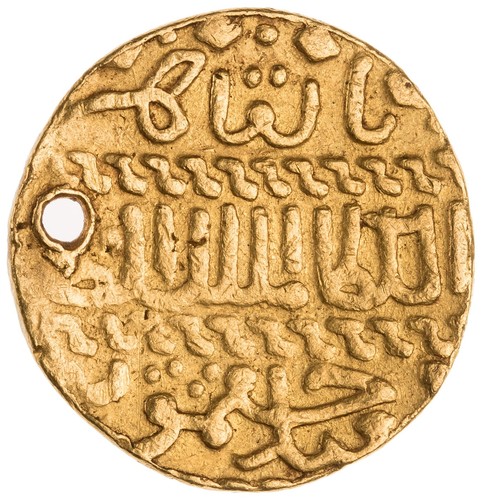
Gold Dinar of Jaqmaq
1438-1453 CE
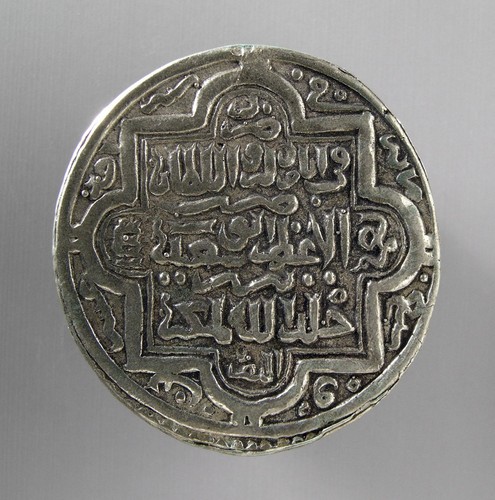
Ilkhanid Dirham
13th–14th century (Ilkhanate, c. 1256–1335 CE)
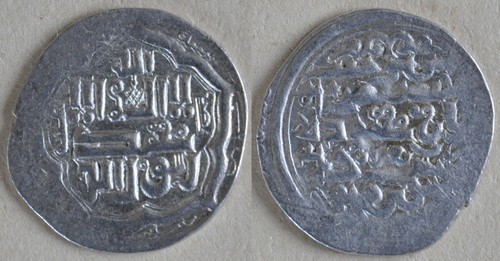
Ilkhanid Dirham of Ghazan
14th century (c. 1295-1304 CE)
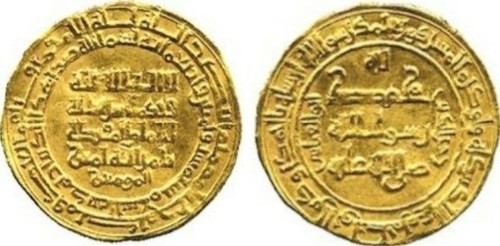
Gold Dinar of al-Muqtadi
c. 467-475 AH (1074-1082 CE)
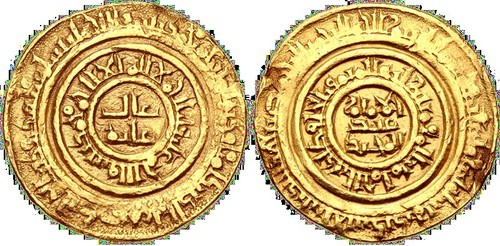
Gold Dinar of al-Hafiz li-Din Allah
AH 544 (AD 1149–1150)
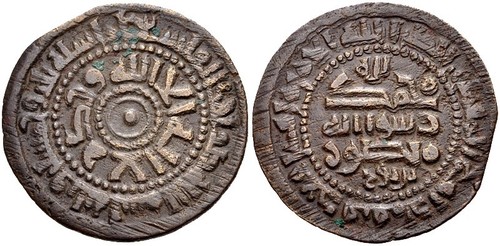
Samanid Dirham
9th–10th century CE (roughly AH 3rd–4th century)
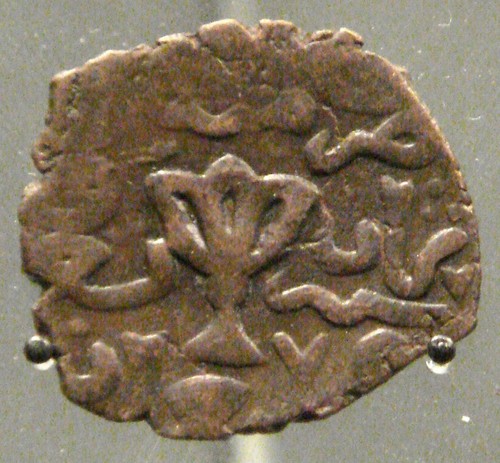
Copper Fals of Barquq
1382–1389 CE (first reign of Barquq)
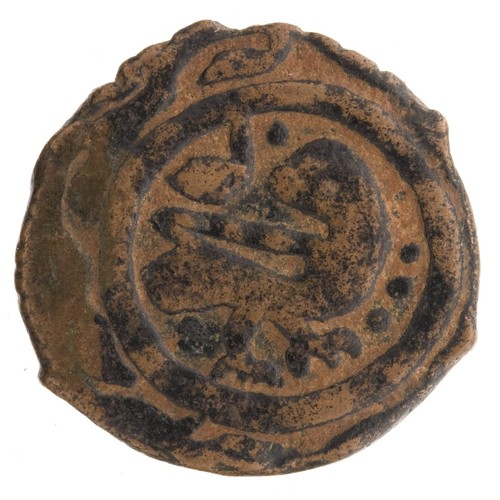
Copper Fals of as-Salih Salih
Mid-14th century CE (reign of as-Salih Salih, AH 752–755 / 1351–1354 CE)
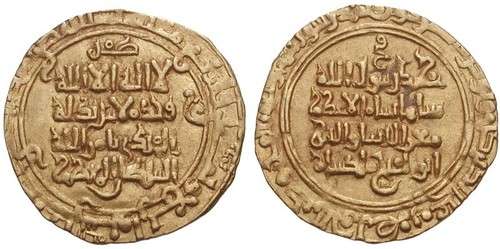
Gold Dinar of Malik Shah I
AH 465–485 (1072–1092 CE)
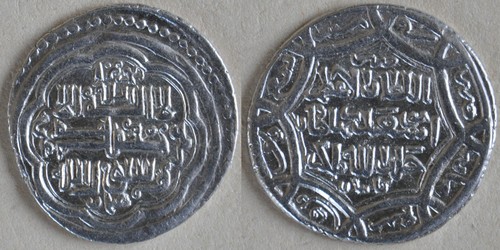
Ilkhanid Dirham of Abu Said
c. 1316-1335 CE (AH 716-736)
Silver Dirham of Salm ibn Ziyad
c. 682-683 CE
Silver Dirham (LACMA M.2002.1.437)
8th century CE (roughly AH 80s–190s)