
How to Identify the Copper Fals of Shaban II
A collector's guide to recognizing a Mamluk copper fals of Sha'ban II by its geometric ornament, Arabic legend naming the sultan, size and metal.
Read the full Copper Fals of Shaban II encyclopedia entry →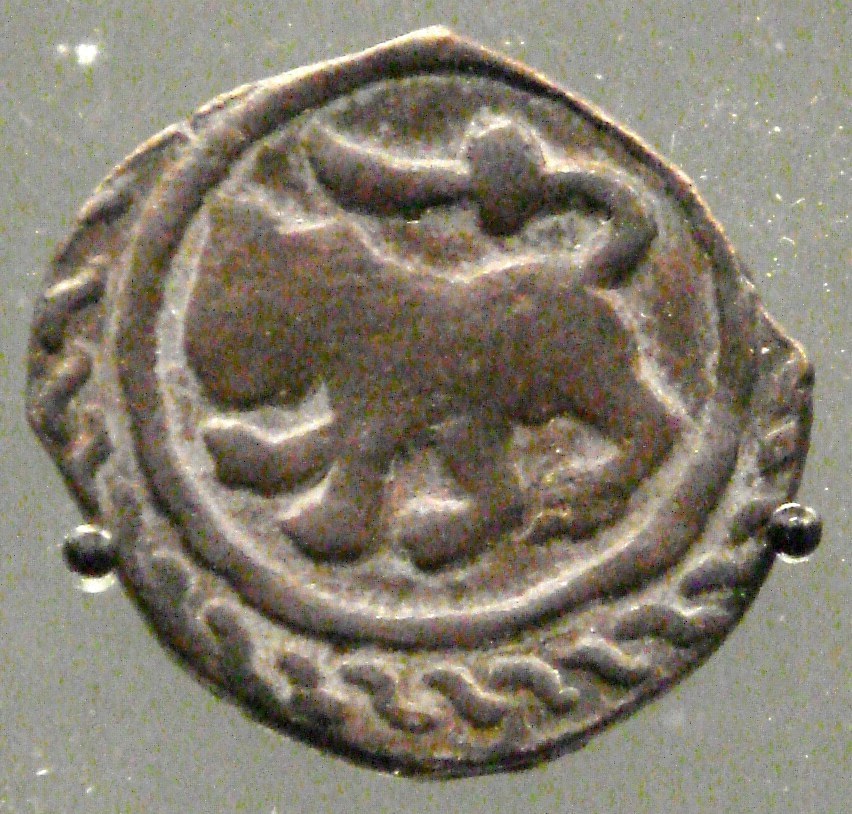
Start with metal and fabric. A fals is copper or a copper alloy, so expect a brown, reddish, or green-patinated surface, a fairly thick flan, and an irregular, hand-struck outline rather than a neat modern circle. Most medieval fulus fall in the rough range of 15–25 mm and a few grams, but Mamluk copper standards varied by mint and issue, so treat size and weight as supporting clues rather than proof. A magnetic coin, a bright uniform modern finish, or casting seams and bubbles are warning signs.
The key visual trait of this type is its ornamental layout. Mamluk fulus of Sha'ban II's era are aniconic and frame their Arabic legends within geometric fields — interlace, lozenge or cartouche shapes, and star or rosette motifs. Expect geometric patterning on the obverse and a mix of ornament and script on the reverse. There should be no portrait, animal, or Latin lettering; if you see any of those, it is not this coin.
To attribute the coin to Sha'ban II specifically, read the legend for the ruler's name and titles. Mamluk fulus commonly carry honorifics such as al-Sultan and al-Ashraf together with the sultan's name; finding al-Ashraf Sha'ban points to this reign. Look also for a mint city such as Cairo (al-Qahira), Damascus, or Aleppo, and for a Hijri date, though dates are often absent or illegible on copper. Where ornament crowds out the text or the margin is off-flan, you may only be able to classify the piece as a Mamluk fals of the general period.
Be aware of look-alikes and cautions. Many Mamluk sultans issued ornamental copper fulus that resemble one another at a glance, so never assign a coin to Sha'ban II from geometric style alone — the legend is what distinguishes them. Genuine fulus are struck, so a mold seam, air bubbles, a soft mushy surface, or an artificially bright green coating suggests a cast copy. Harsh cleaning that strips the natural patina both lowers value and can erase the faint diagnostic detail you need.
When in doubt, weigh and measure the coin, record its diameter, and photograph both faces in sharp, raking light so the geometric fields and script stand out. Comparing those images against Mamluk coin references, or having the Arabic read by someone familiar with Islamic epigraphy, is the most reliable way to confirm the sultan, the mint, and where the coin stands among common and scarcer issues.
Frequently asked questions
How do I know it is a fals and not a dirham?
Metal is the quickest test. A fals is copper, with a brown, red, or green patina and a thick, irregular flan, while a Mamluk dirham is silver and usually thinner and broader. Base-metal copper means a fals.
Where in the legend does it name Shaban II?
Look for the sultan's titles and name in the Arabic inscription, often as al-Sultan al-Ashraf followed by Sha'ban. These honorifics and the name are what tie the coin to his reign rather than the geometric ornament alone.
My coin's design is crowded and the writing is hard to read — is that normal?
Yes. Mamluk fulus pack legends into geometric fields and were struck by hand on blanks smaller than the dies, so text is often crowded, worn, or partly off-flan. It does not make the coin fake, but it can limit precise attribution.
How can I spot a cast fake?
Genuine fulus are struck, not cast. Watch for a seam around the edge, tiny air bubbles, a soft or grainy surface, and an unnaturally bright or uniform green coating. Odd weight or magnetic metal are also red flags.