
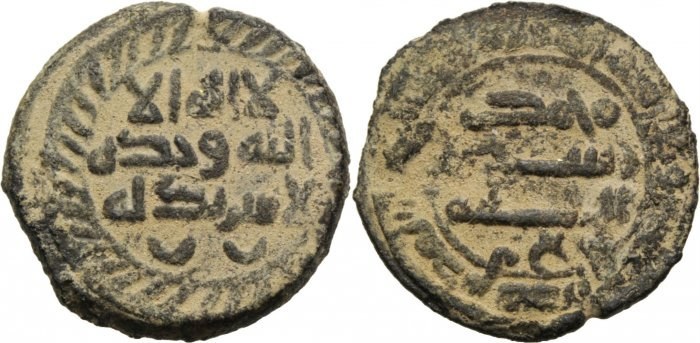
Abbasid Copper Fals
A hand-struck Abbasid copper fals dated AH 219 (834–835 CE), covered entirely in linear Arabic inscriptions with no portrait or figural imagery.
- Country
- Islamic Caliphate
- Denomination
- Fals
- Metal
- Copper
Got a coin like this?
Identify any coin from a photo, free.
Overview
The Abbasid copper fals is a small base-metal coin of the Abbasid Caliphate, the dynasty that ruled much of the Islamic world from the mid-8th century onward. The example shown carries linear Arabic inscriptions on both faces, with decorative elements framing the obverse text and a mint designation worked into the reverse legend, and is dated AH 219 (834–835 CE).
The fals (plural fulus) was the everyday copper denomination of the Islamic monetary system, ranking below the silver dirham and the gold dinar. It served as small change for daily transactions in markets and towns, and unlike the precious-metal coins its weight and size were never rigidly standardized, so individual fulus vary considerably.
Like nearly all early Islamic coinage, this piece is entirely aniconic: it bears no ruler's portrait or figural imagery, only Arabic calligraphy expressing religious formulas together with the mint and date. The AH 219 date places it firmly within the classical Abbasid period.
History & Background
The Abbasid dynasty came to power in 750 CE and presided over a vast empire during what is often called the golden age of Islamic civilization. Its coinage inherited and continued the reformed, purely epigraphic style established under the earlier Umayyad caliphs, in which coins carry sacred and administrative text in place of images.
Copper fulus were the local small change of this system. Where the gold dinar and silver dirham were high-value coins tied to careful weight standards, the copper fals was a token of convenience whose production was often handled at the provincial and city level. As a result, fulus differ widely from mint to mint in size, weight, and the exact arrangement of their legends.
A date of AH 219 corresponds to 834–835 CE, within the early ninth century, a period when the Abbasid caliphate was still a major power ruling from its heartland in Iraq. Coins of this era typically bear religious declarations along with the name of the mint and the year of striking, reflecting both the devotional and the administrative purposes of Islamic coinage.
How to Identify
An Abbasid copper fals is a small, hand-struck coin, usually roughly circular but often somewhat irregular in shape because each piece was struck individually from dies. Copper fulus of this period are typically modest in size and weight and can show uneven, off-center striking, so part of the legend may run off the flan.
Both faces are covered in linear Arabic script rather than imagery. The obverse of this coin shows Arabic inscriptions with decorative elements, generally a central religious statement encircled or accompanied by additional text; the reverse carries further Arabic text that includes the mint designation, which names where the coin was struck. The date AH 219 is expressed in written Arabic words within the mint-and-date formula, not as numerals.
The surest way to attribute the coin is to read the Arabic legends: the religious formulas mark it as an Islamic issue, while the mint name and the Hijri year on the reverse tie it to a specific place and time within the Abbasid period. The complete absence of any portrait, animal, or Latin lettering, combined with the reddish-brown tone of oxidized copper, distinguishes it from later or non-Islamic coinages.
Value & Collectibility
Abbasid copper fulus are, as a class, among the more affordable early Islamic coins. Copper was the metal of everyday small change and enormous quantities were struck across many mints, so ordinary circulated examples generally trade at modest prices rather than at scarce-coin levels.
Value within the series depends heavily on the mint, the date, the completeness and legibility of the inscriptions, and the state of preservation. Well-centered strikes with full, sharp legends, pieces from scarce or historically interesting mints, and coins with attractive, stable surfaces are more desirable than worn, corroded, or partially struck examples where the text cannot be read.
Because copper coins are prone to corrosion and because pricing turns on grade, mint, and demand among specialists, figures should be treated as general context rather than fixed quotes. For a coin like this, a clear reading of the mint and the AH date is the single biggest factor in determining its interest and value.
Frequently asked questions
What is a fals?
A fals (plural fulus) was the copper coin of the Islamic monetary system, used as everyday small change. It ranked below the silver dirham and gold dinar and served for minor daily transactions.
How old is this coin?
It is dated AH 219 in the Islamic (Hijri) calendar, which corresponds to 834–835 CE, placing it in the early ninth century during the classical Abbasid period.
Why are there no pictures on the coin?
Early Islamic coinage is aniconic by design, avoiding portraits and figural images. Instead it carries Arabic inscriptions with religious formulas along with the mint name and date.
Is an Abbasid copper fals valuable?
Most copper fulus are common and affordable because they were struck in large numbers as small change. Value depends mainly on the mint, the date, legibility, and how well the coin has survived corrosion.
What does AH mean?
AH stands for Anno Hegirae, the Islamic Hijri calendar counted from the emigration of the Prophet Muhammad in 622 CE. AH 219 converts to about 834–835 CE.
Abbasid Copper Fals guides
In-depth guides for identifying, valuing, and collecting Abbasid Copper Fals.
Other coins you may enjoy
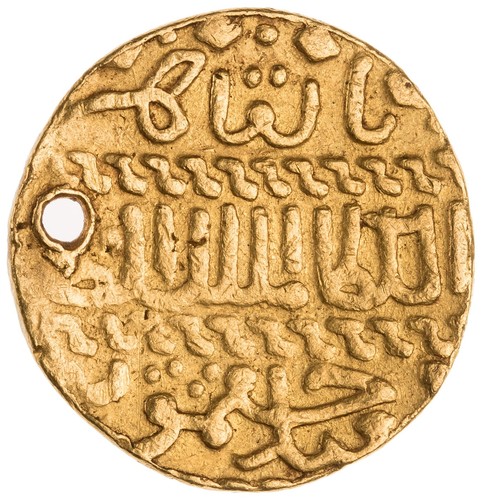
Gold Dinar of Jaqmaq
1438-1453 CE
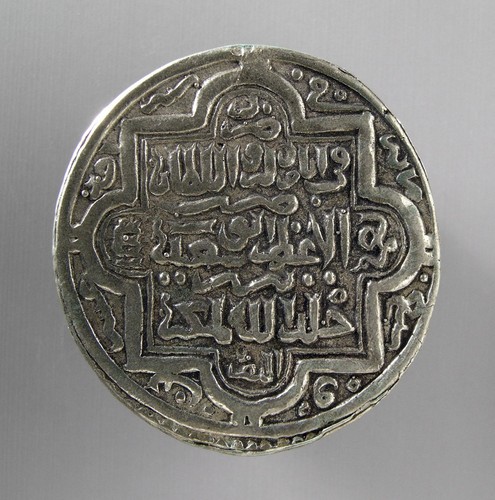
Ilkhanid Dirham
13th–14th century (Ilkhanate, c. 1256–1335 CE)
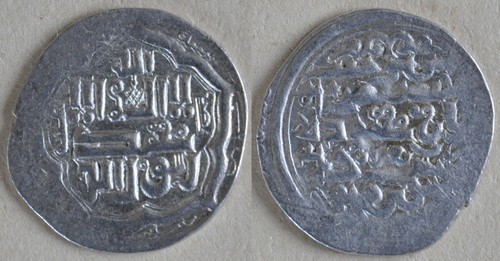
Ilkhanid Dirham of Ghazan
14th century (c. 1295-1304 CE)
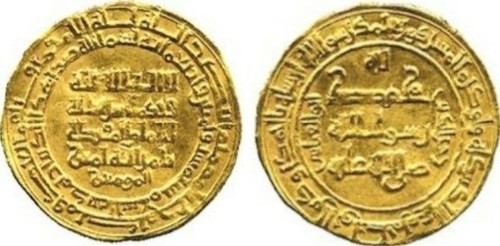
Gold Dinar of al-Muqtadi
c. 467-475 AH (1074-1082 CE)
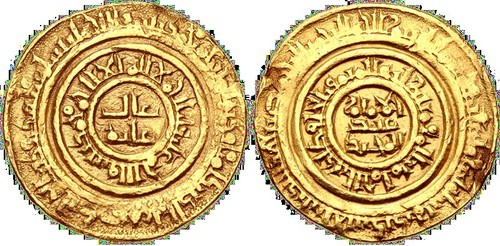
Gold Dinar of al-Hafiz li-Din Allah
AH 544 (AD 1149–1150)
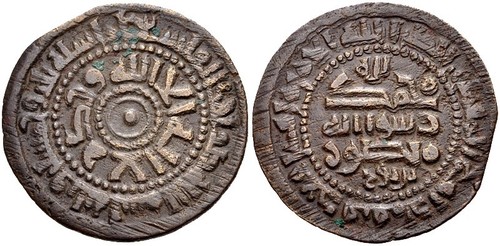
Samanid Dirham
9th–10th century CE (roughly AH 3rd–4th century)
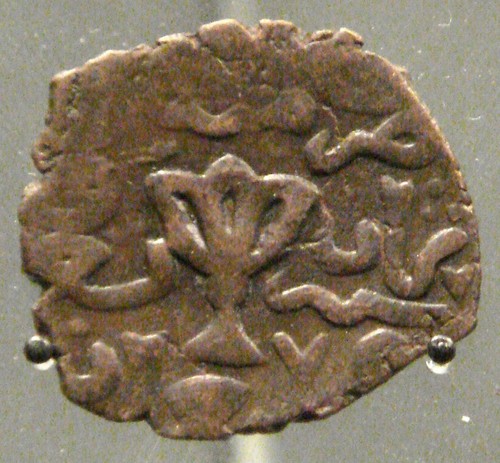
Copper Fals of Barquq
1382–1389 CE (first reign of Barquq)
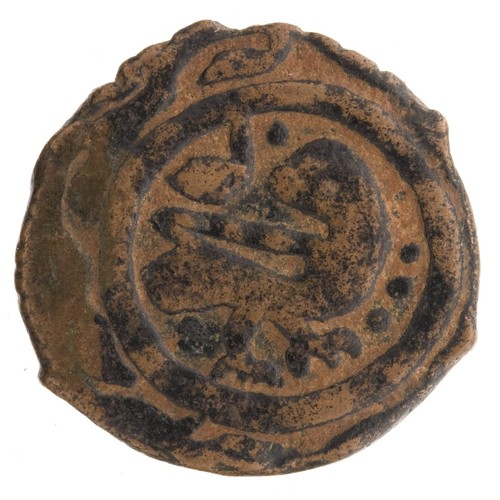
Copper Fals of as-Salih Salih
Mid-14th century CE (reign of as-Salih Salih, AH 752–755 / 1351–1354 CE)
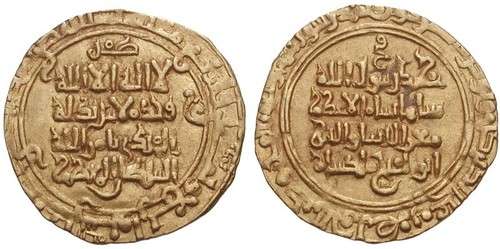
Gold Dinar of Malik Shah I
AH 465–485 (1072–1092 CE)
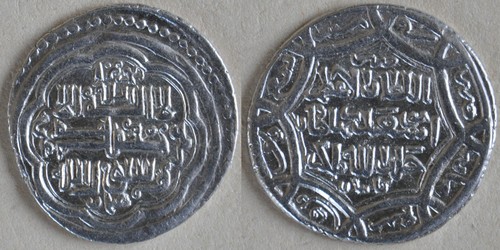
Ilkhanid Dirham of Abu Said
c. 1316-1335 CE (AH 716-736)
Silver Dirham of Salm ibn Ziyad
c. 682-683 CE
Silver Dirham (LACMA M.2002.1.437)
8th century CE (roughly AH 80s–190s)