
How to Identify the Ilkhanid Dirham of Abu Said
A collector's guide to the Mongol Ilkhanate dirham of Abu Sa'id: the titled cartouche, concentric reverse legends, size and weight, mints and fakes.
Read the full Ilkhanid Dirham of Abu Said encyclopedia entry →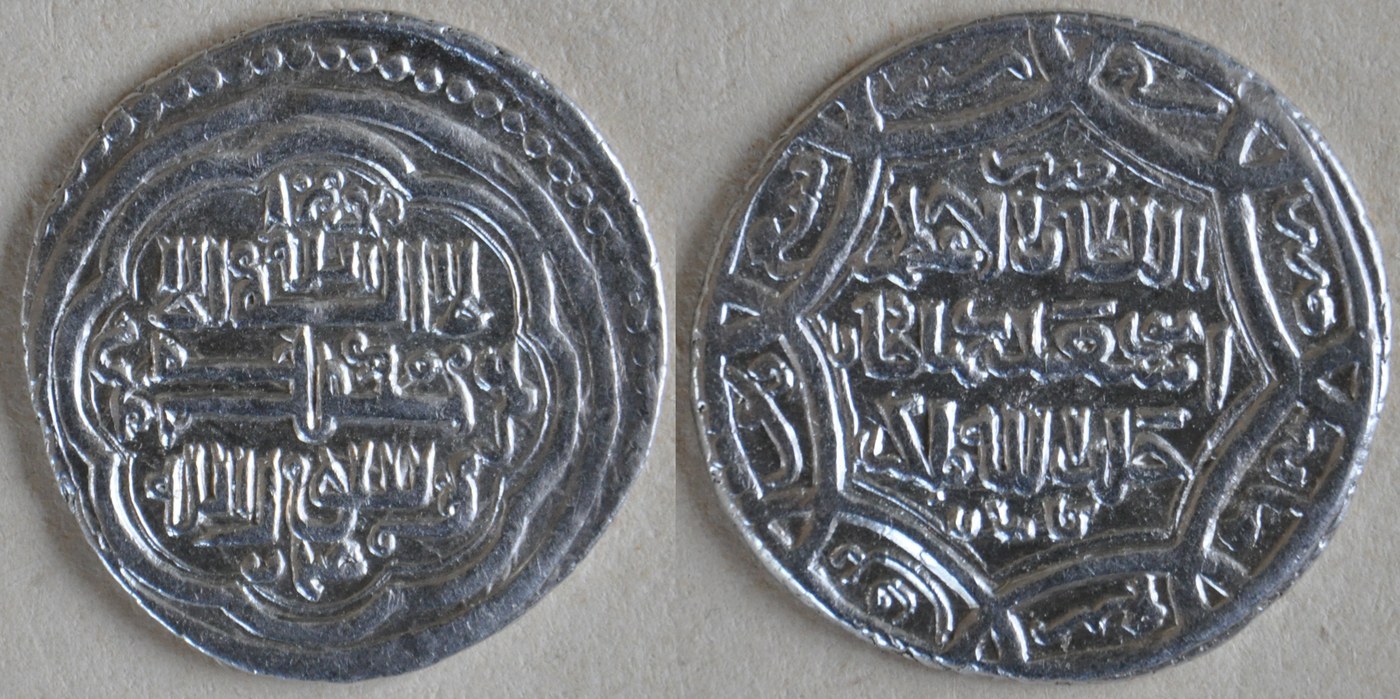
Begin with the layout, because it is the clearest fingerprint of the type. On this coin the obverse holds the ruler's name and titles inside a cartouche or geometric frame, while the reverse spreads its inscriptions across concentric circular bands. That pairing of a framed title panel on one side and ringed religious text on the other is characteristic of Ilkhanid dirhams of Abu Sa'id, and it separates them from earlier Islamic dirhams that are text-only on both faces without a decorative central frame.
Read the script style and the legends. The lettering is a flowing cursive naskh, not the angular Kufic of the early caliphate — a quick way to place the coin in the later medieval Mongol period. The obverse names the sultan with titles such as 'the just Sultan' and 'Abu Sa'id Bahadur Khan'; the reverse typically carries the declaration of faith with the four Rightly Guided Caliphs named in the margin. You do not need to translate every word, but the presence of these formulae with a named sultan, rather than a caliph, confirms an Ilkhanid attribution.
Check size, metal and weight. These are silver coins, generally around 15–22 mm across and roughly 1.4–2.9 grams depending on the standard in force and whether the piece is a single or double dirham, on a slightly irregular hand-struck flan. A coin of this size that feels heavy, is magnetic, or is obviously base metal is not a genuine Ilkhanid silver dirham. Toning to grey is normal for old silver.
Use the marginal legend to pin down mint and date, and watch for look-alikes. The outer band names the mint city and the Hijri year; reading it is what distinguishes one type, mint and reign-year from another. Abu Sa'id issued several distinct dirham types over his reign, and coins of neighboring Ilkhans (Ghazan, Öljeitü, and the fragmentary rulers after him) and of successor dynasties share the same general style. Never assume a Mongol-era Arabic-script silver coin is an Abu Sa'id issue without reading the ruler's name and mint formula.
Apply sensible authentication caution. Genuine dirhams are struck from dies, not cast, so casting seams, surface bubbles, a soft or grainy texture, a raised mold line at the edge, or an off-standard weight are warning signs. Tourist-market copies and modern fakes exist. When in doubt, weigh and measure the coin, photograph both faces clearly, and have the legend read against standard Ilkhanid references or by someone familiar with Islamic numismatics.
Frequently asked questions
How do I tell an Abu Sa'id dirham from an earlier Islamic dirham?
Look for a named sultan and a decorative central cartouche or frame with cursive naskh script, plus a reverse in concentric bands. Early caliphal dirhams are angular Kufic, text-only on both faces, and name a caliph rather than a Mongol sultan.
Where are the mint and date on the coin?
In the marginal legend, usually on the reverse, which records the mint city and the Hijri (AH) year. Reading that band is the key step in attributing the exact mint, type and reign-year of the coin.
What should a genuine dirham weigh?
Ilkhanid silver dirhams of this era generally run about 1.4–2.9 grams and 15–22 mm across, depending on the weight standard and whether it is a single or double dirham. A markedly heavy, thick or magnetic piece should be treated with suspicion.
How can I spot a cast fake?
Genuine dirhams were struck from dies, not poured into molds. Look for casting seams, surface bubbles, a mushy or grainy surface, a raised mold line at the edge, or an incorrect weight, and verify the legend against reference material when unsure.