
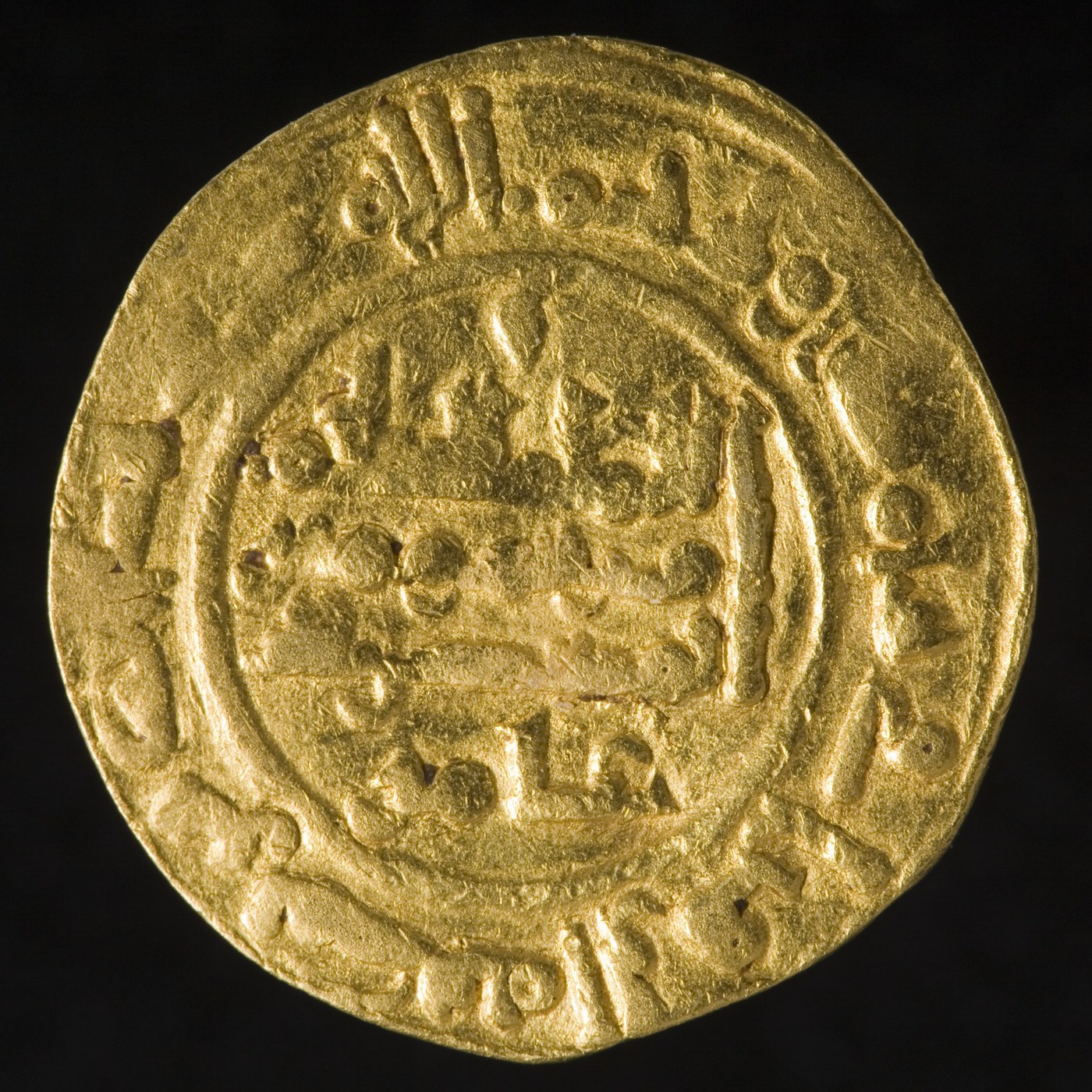
Islamic Gold Dinar (LACMA M.2006.143.8)
A medieval Islamic gold dinar in the LACMA collection, struck with purely calligraphic Arabic legends and a decorative border — the classic imageless coin of the caliphates.
- Country
- Islamic
- Denomination
- Dinar
- Metal
- Gold
Got a coin like this?
Identify any coin from a photo, free.
Overview
This is a medieval Islamic gold dinar catalogued in the Los Angeles County Museum of Art (LACMA) under accession number M.2006.143.8. Like the standard gold coinage of the Islamic world, it carries no portrait or figure: both faces are given over entirely to Arabic calligraphy, the aniconic tradition that has defined Islamic money since the late seventh century.
On the piece photographed, the obverse presents Arabic calligraphic inscriptions, and the reverse continues the text-based design within a decorative border. The legends would ordinarily combine religious formulae — the profession of faith and Qur'anic phrases — with the name of the ruling authority and, in the margins, the mint and year of striking. Reading those lines is what turns a generic dinar into a specific dated, attributed issue.
Because dinars of this general form were produced by many dynasties across a wide territory over several centuries, this entry describes the coin as it appears — a calligraphic, decoratively bordered medieval gold dinar held by LACMA — rather than assigning it firmly to one ruler or mint. Precise attribution rests on transcribing the inscriptions and consulting specialist references and the museum's own catalogue record.
History & Background
The dinar takes its name from the late Roman denarius aureus and became a distinctly Islamic coin under the Umayyad caliph Abd al-Malik, whose reform around 77 AH (696–697 CE) replaced image-bearing gold with a purely inscriptional design of a standard weight near 4.25 grams. That aniconic, calligraphic formula set the template for Islamic gold for centuries.
Across the medieval period, gold dinars were struck by successive and rival powers — Umayyads, Abbasids, the Fatimids of Egypt and North Africa, the Buyids, and numerous regional dynasties — each naming its own caliph, sovereign or overlord in the legends and often enclosing them in ornamental borders like the one seen on this reverse. The dinar served as high-value money for trade, taxation and treasure across the Mediterranean and Near East, and its reliable gold content made it a widely trusted international currency.
This particular specimen entered the LACMA collection in 2006, as its accession number indicates, joining the museum's holdings of Islamic art. Its exact dynasty, mint and year can only be settled by reading its inscriptions and consulting the museum record, since the broad calligraphic style was shared so widely that visual form alone does not fix the issuer.
How to Identify
Confirm first that the coin is entirely calligraphic. This dinar carries Arabic legends with no portrait or figural image; the obverse shows inscriptions and the reverse continues the text with a decorative border framing it. That imageless, text-only layout is the defining feature of an Islamic dinar and separates it at a glance from Roman, Byzantine or later European gold.
Work through the legends systematically. The central fields typically carry the Islamic profession of faith and religious phrases, while a marginal band often records the mint city and the year of striking in Arabic words, together with the ruling caliph or dynast. Transcribe or photograph every line — inner field and outer margin, on both faces — because the wording is what identifies the issuer, mint and date. For a museum piece, the LACMA catalogue entry for M.2006.143.8 is the primary reference for any attribution it carries.
Record the physical coin as well: diameter, thickness and especially weight, since classical dinars cluster near a standard of roughly 4.2–4.3 grams, though many issues vary. Gold color alone does not prove gold content, and flan shape and strike are often irregular on hand-struck medieval coins. This description reflects the piece as photographed; confirm the specific attribution and metal through the museum record or a specialist before relying on any single identification.
Value & Collectibility
This specimen is a museum object in the LACMA collection and is not itself a market item, so no price attaches to it directly. For comparable medieval Islamic dinars, value depends heavily on exactly which issue a coin is — the dynasty, ruler, mint and year read from the legends — as well as on gold weight, condition and provenance. Attribution matters far more here than for a generic gold coin: a common dinar of a widely struck ruler is valued very differently from a rare mint, a scarce date or a historically significant issuer.
Any genuine gold dinar carries at least a bullion value set by its weight and fineness, with numismatic premium resting on rarity, legibility of the legends, strike quality, preservation and documented history. Well-struck, clearly attributable dinars of desirable dynasties can command significant premiums over their metal content.
Because Islamic gold is an area where modern forgeries, cast copies and misattributions occur, treat any figure as general context only. For a coin in hand, have it weighed and measured, its metal independently tested, and its legends read by a specialist in Islamic numismatics before assigning a value or paying a premium.
Frequently asked questions
What is LACMA M.2006.143.8?
It is the accession number for this gold dinar in the Los Angeles County Museum of Art. The number records that the coin entered the museum's collection in 2006; the museum's catalogue is the authority for any attribution and details it carries.
Why does the coin have no picture, only writing?
Islamic coinage became aniconic after the Umayyad reforms of the late 7th century, replacing images with Arabic inscriptions. A dinar's entire design is calligraphy — religious phrases and the names, mint and date of the issuing authority — rather than any portrait or figure.
Which dynasty or caliphate struck this dinar?
That can only be determined by reading the legends and checking the museum record. Dinars of this calligraphic form were issued by many powers, including the Umayyads, Abbasids and Fatimids; the inscriptions name the ruler, mint and year.
How much does a dinar weigh?
The classical dinar standard is close to 4.25 grams of gold, set by the Umayyad reform, though individual issues vary. Recording the exact weight and diameter is an important step in identifying and authenticating any such coin.
Is it definitely solid gold?
It is described as a gold dinar based on type and appearance, but color alone does not prove gold content. Only weighing, measuring and professional metal testing can confirm the metal for a coin in hand.
Islamic Gold Dinar (LACMA M.2006.143.8) guides
In-depth guides for identifying, valuing, and collecting Islamic Gold Dinar (LACMA M.2006.143.8).
Other coins you may enjoy
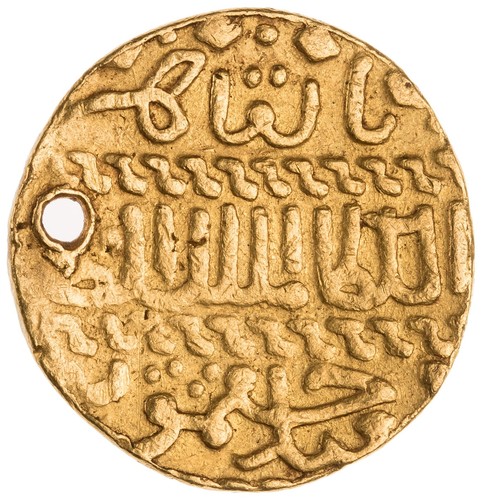
Gold Dinar of Jaqmaq
1438-1453 CE
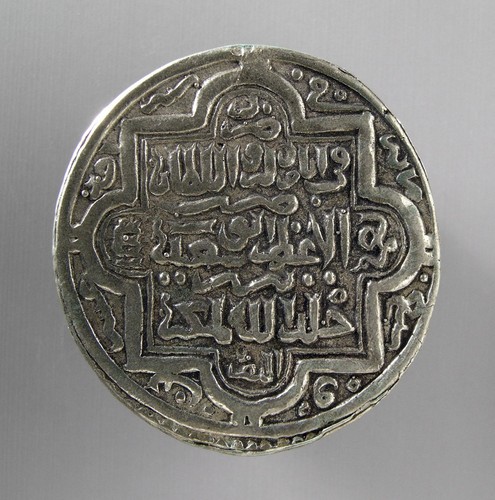
Ilkhanid Dirham
13th–14th century (Ilkhanate, c. 1256–1335 CE)
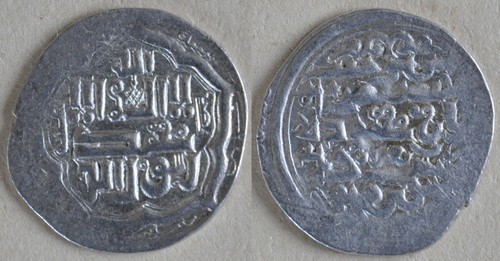
Ilkhanid Dirham of Ghazan
14th century (c. 1295-1304 CE)
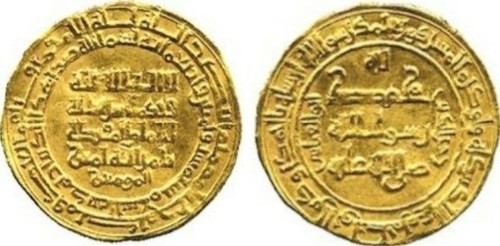
Gold Dinar of al-Muqtadi
c. 467-475 AH (1074-1082 CE)
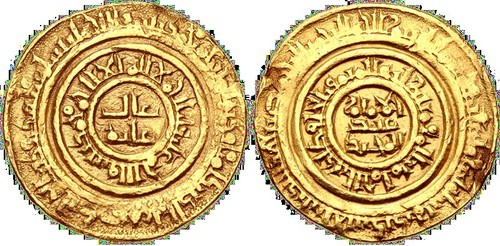
Gold Dinar of al-Hafiz li-Din Allah
AH 544 (AD 1149–1150)
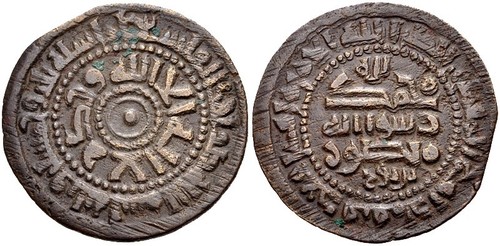
Samanid Dirham
9th–10th century CE (roughly AH 3rd–4th century)
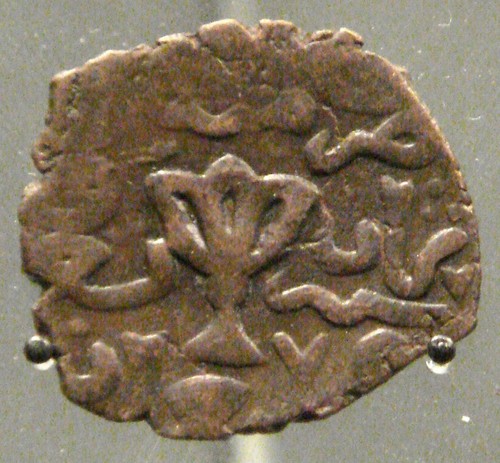
Copper Fals of Barquq
1382–1389 CE (first reign of Barquq)
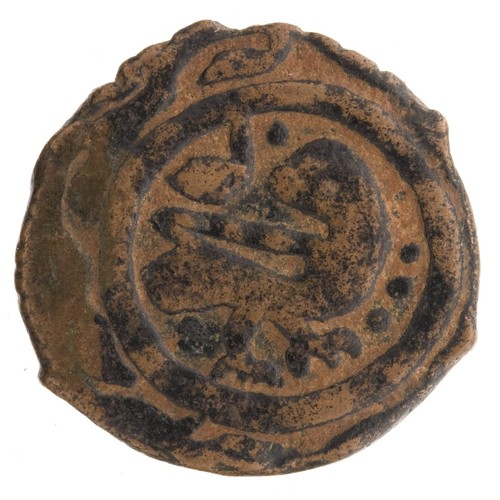
Copper Fals of as-Salih Salih
Mid-14th century CE (reign of as-Salih Salih, AH 752–755 / 1351–1354 CE)
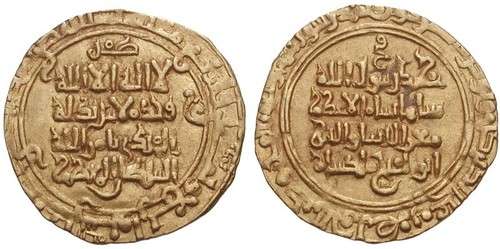
Gold Dinar of Malik Shah I
AH 465–485 (1072–1092 CE)
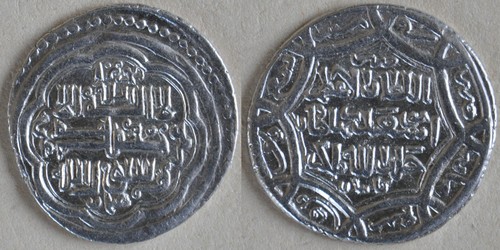
Ilkhanid Dirham of Abu Said
c. 1316-1335 CE (AH 716-736)
Silver Dirham of Salm ibn Ziyad
c. 682-683 CE
Silver Dirham (LACMA M.2002.1.437)
8th century CE (roughly AH 80s–190s)