
How to Identify the Gold Dinar of Jaqmaq
A collector's guide to attributing a Mamluk gold dinar of Jaqmaq: reading its Arabic legends, sultan's name, mint and date, judging the gold, and spotting piercings.
Read the full Gold Dinar of Jaqmaq encyclopedia entry →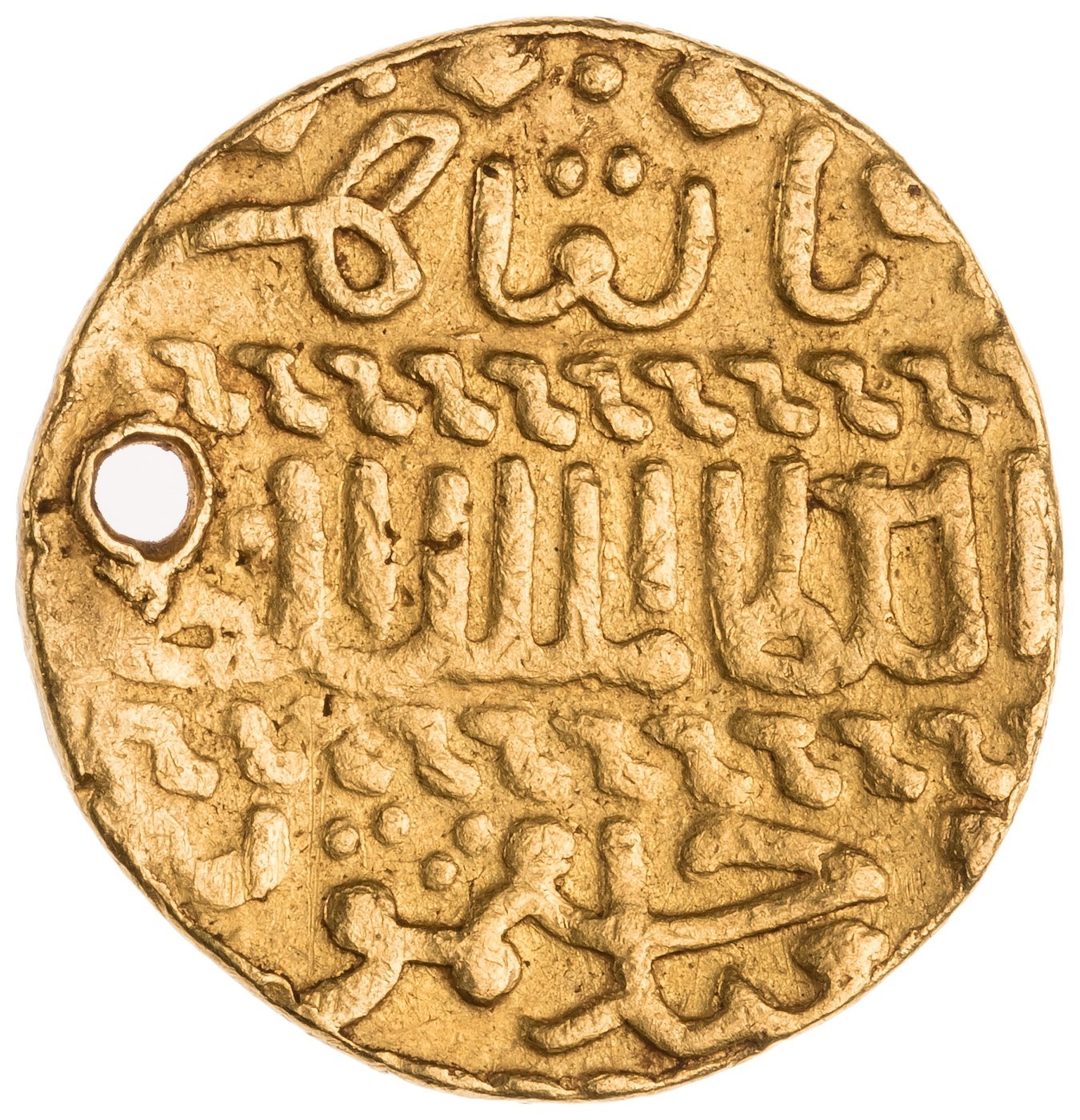
Begin by confirming the coin is entirely epigraphic gold. A dinar of Jaqmaq carries only Arabic script on both faces, arranged in horizontal lines with circular marginal legends and framed by decorative borders. There is no portrait, animal, or figural device and no Latin lettering. The metal is warm yellow gold, thin and hand-struck, so expect a slightly irregular flan and the uneven relief of individual die striking rather than the crisp uniformity of a machine-made coin.
Read the legends to attribute the piece to Jaqmaq specifically. The key is the sultan's name and titulature: look for al-Zahir and the name Jaqmaq worked into the inscriptions, alongside standard pious and sovereign formulas. Many Mamluk sultans issued visually similar all-Arabic gold, so it is the ruler's name — not the general look — that pins the coin to Jaqmaq rather than to Barsbay, Inal, or another sultan. The mint-and-date formula, giving the mint (commonly Cairo or Damascus) and the year in written Arabic words, further narrows the attribution within the 1438-1453 reign.
Check the physical characteristics. Weight and diameter should follow the reduced ashrafi gold standard rather than the heavier classical dinar; a coin markedly heavier than the ashrafi range may be a different issue or a modern fabrication. Genuine gold has a soft, dense feel and a consistent warm color with no coppery or greenish tinge at wear points. Note any piercing: the example illustrated is holed, and a hole can interrupt part of the legend, so account for missing letters when reading the inscriptions.
Watch for look-alikes and later reuse. Beyond other Mamluk sultans, the ashrafi was deliberately close in weight to the Venetian ducat, and unrelated gold coins circulated alongside it, so match the actual Arabic legends against a reference rather than relying on size and color. Coins that have been mounted, holed, bent, or smoothed for jewelry are common; such handling is honest history but must be described as damage.
Apply sensible authentication checks. Mamluk gold has been reproduced, so be cautious of cast copies with soft, blurry detail, seams, or air bubbles, and of pieces whose weight or gold color is wrong for the ashrafi standard. A neatly struck coin with legible legends, correct weight, and an unambiguous reading of Jaqmaq's name and a plausible mint is the goal; when the legend cannot be read with confidence — especially where a piercing has removed text — compare against a specialist catalog of Mamluk coinage or seek an expert opinion before accepting a firm attribution.
Frequently asked questions
How do I know the coin names Jaqmaq and not another sultan?
Look for the regnal title al-Zahir together with the name Jaqmaq in the Arabic legends. Many Mamluk sultans struck similar all-Arabic gold, so the specific name and titulature, not the overall appearance, is what identifies the ruler.
Where are the mint and date?
They appear together in the mint-and-date formula within the legends, with the mint (often Cairo or Damascus) named and the year spelled out in Arabic words rather than numerals. Reading them fixes the coin within the 1438-1453 reign.
How does the piercing affect identification and value?
A hole marks the coin as damaged and lowers its market value, though it keeps its gold content. The piercing can also remove part of the legend, so allow for missing letters when reading and attributing the coin.
How can I spot a fake Mamluk gold dinar?
Check that weight and gold color match the ashrafi standard and that detail shows struck, not cast, relief. Beware seams, bubbles, mushy lettering, or an incorrect weight, and verify doubtful pieces against a specialist catalog of Mamluk coinage.