
How to Identify the Gold Dinar of Malik Shah I
A collector's guide to attributing a Seljuk gold dinar of Malik Shah I: reading its Arabic legends, ornamental cartouche, mint and Hijri date, and spotting fakes.
Read the full Gold Dinar of Malik Shah I encyclopedia entry →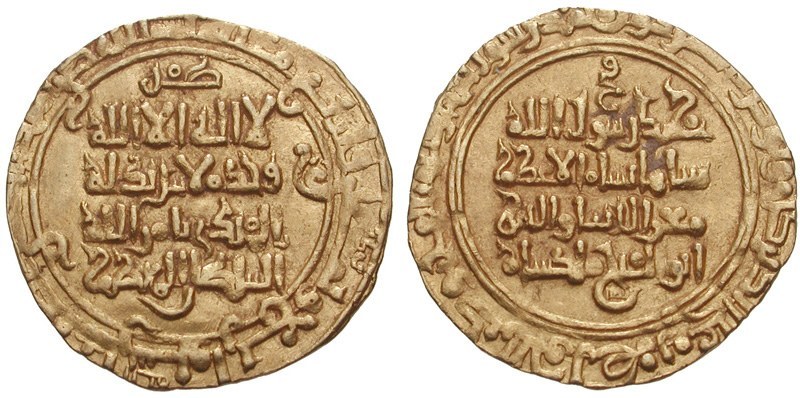
Start by confirming the coin is gold and entirely epigraphic. A dinar of Malik Shah I is struck in gold, so it has a warm, untarnished yellow tone, and it carries only Arabic script on both faces with no portrait, animal, or figural device. If you see any human or animal image, or any Latin lettering, you are not looking at a Seljuk dinar.
Examine the layout of the two faces. On this type the obverse shows circular inscriptions arranged in concentric bands, carrying the ruler's titles and genealogy around a central religious statement. The reverse is distinguished by a central ornamental cartouche that frames the ruler's name, with additional inscriptions around it. This cartouche-and-legend arrangement is a useful diagnostic for the type and helps separate it from plainer dinar layouts.
Read the legends to attribute the piece. The names and titles are the key: a genuine dinar of this reign names Malik Shah as sultan and typically also names the reigning Abbasid caliph, reflecting Seljuk recognition of the caliph's spiritual authority. The mint-and-date formula, spelled out in Arabic words rather than numerals, ties the coin to a specific mint and Hijri year within AH 465–485 (1072–1092 CE). Matching the ruler's name, mint, and date against a specialist reference is what pins the attribution.
Check the physical coin and weight. Hand-struck dinars are often slightly irregular in outline and can be unevenly centered, with part of the outer legend running off the flan. Gold dinars were struck to a customary weight standard, so a piece that is markedly light, clipped, or of suspect colour warrants caution; genuine gold will not show the toning or corrosion of silver or copper.
Watch for look-alikes and fakes. Other Seljuk sultans, successor dynasties, and neighbouring rulers struck superficially similar all-Arabic gold dinars, so the specific names and titles — not the general appearance — are what identify the coin as Malik Shah's. Because the metal is valuable, be especially alert to cast copies with soft, blurry detail, seams, or bubbles, to modern struck forgeries, and to gilt base-metal imitations. When the legends cannot be read with confidence, or the piece is of high value, compare it against a catalog of Seljuk coinage or seek an expert opinion before accepting a firm attribution.
Frequently asked questions
How do I confirm the coin names Malik Shah?
Read the Arabic legends, especially the ruler's name in the reverse cartouche and the titles in the obverse bands. A genuine dinar of this reign names Malik Shah as sultan, usually alongside the reigning Abbasid caliph. Matching the name against a reference confirms it.
Where are the mint and date shown?
They appear within the mint-and-date formula in the coin's inscriptions, written out in Arabic words rather than numerals. The year is given in the Hijri (AH) calendar and falls within AH 465–485 (1072–1092 CE) for this reign.
How can I tell it apart from other Islamic gold dinars?
Many dynasties struck similar all-Arabic gold dinars, so appearance alone is not enough. The specific ruler's name and titles, the caliph named, and the ornamental cartouche layout, together with the mint and date, are what identify it as a dinar of Malik Shah I.
How do I spot a fake gold dinar?
Because the gold makes forgery worthwhile, watch for cast copies with casting seams, bubbles, or mushy detail, for modern struck fakes, and for gilt base-metal imitations that are the wrong weight or colour. Verify high-value or doubtful pieces against a specialist catalog or with an expert.