
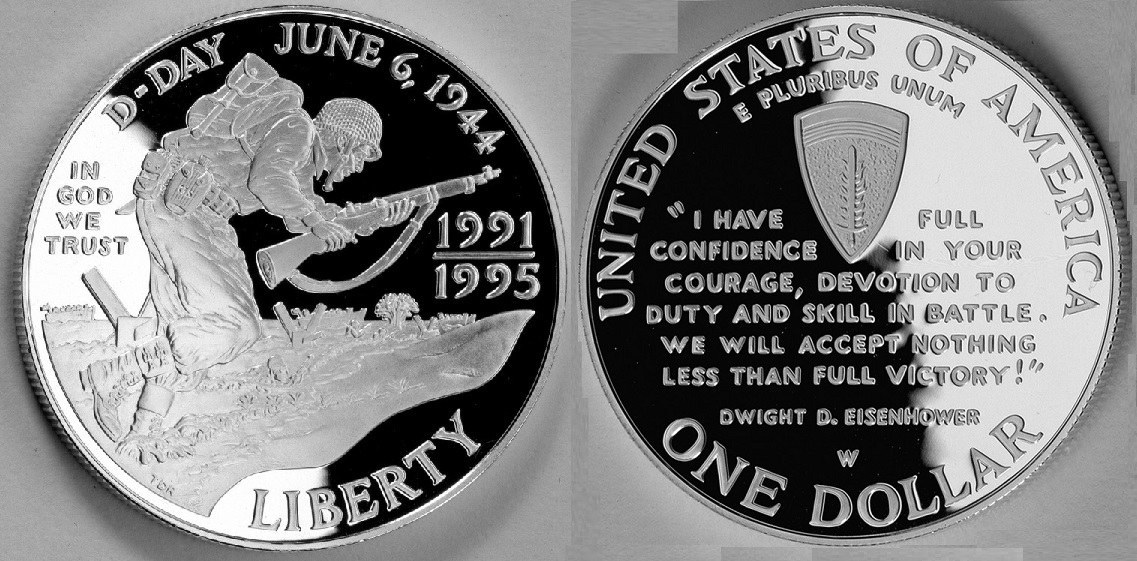
World War II 50th Anniversary Silver Dollar
A 1993 U.S. 90% silver dollar in the World War II 50th Anniversary program, showing a D-Day infantryman and a heraldic eagle with an Eisenhower quote.
- Country
- United States
- Denomination
- $1
- Metal
- Silver
Got a coin like this?
Identify any coin from a photo, free.
Overview
The World War II 50th Anniversary Silver Dollar is a United States commemorative dollar struck in 90% silver as part of the U.S. Mint's program marking the half-century anniversary of the war. Although the coins were produced and sold in 1993, they carry the dual date 1991-1995 to span the broader anniversary period. The observed obverse shows an American infantryman with rifle and combat gear alongside the inscription 'D-DAY JUNE 6, 1944' with 'IN GOD WE TRUST' and 'LIBERTY.'
The reverse depicts a large heraldic eagle with a shield, accompanied by a quotation drawn from General Dwight D. Eisenhower's D-Day message to Allied forces, along with 'UNITED STATES OF AMERICA' and the denomination 'ONE DOLLAR.' The design ties the coin directly to the Normandy landings that opened the Western Allied advance into occupied Europe.
The silver dollar was the middle denomination in a three-coin commemorative set that also included a copper-nickel clad half dollar and a gold five-dollar piece. Like other modern U.S. commemoratives, it was sold at a premium above face value, with a surcharge directed toward a designated beneficiary rather than entering everyday circulation.
History & Background
The program was authorized by Congress to honor those who served in World War II and to raise funds tied to commemoration of the conflict. Surcharges collected on the coins were designated to support anniversary and memorial purposes rather than the general treasury, following the standard model for modern U.S. commemorative issues.
The coins were released in 1993, several years into a wave of 50th-anniversary observances of wartime events. The 1991-1995 dual date was chosen so a single design could represent the multi-year span of the war's anniversaries rather than a single battle date. The obverse's explicit reference to 'D-DAY JUNE 6, 1944' anchors the imagery to the Allied invasion of Normandy.
As with the rest of the series, the silver dollar was offered in both uncirculated and proof formats and sold directly to collectors during a limited ordering window. Once that window closed, no further coins of this type were produced.
How to Identify
Look first at the obverse: a helmeted soldier in combat gear carrying a rifle, paired with the inscription 'D-DAY JUNE 6, 1944.' The mottoes 'IN GOD WE TRUST' and 'LIBERTY' also appear. This wartime figure, rather than a portrait or allegory, is the quickest way to recognize the type.
The reverse carries a large eagle over a shield, a quotation attributed to Eisenhower, and the legends 'UNITED STATES OF AMERICA' and 'ONE DOLLAR.' The presence of the denomination 'ONE DOLLAR' confirms it is the silver dollar rather than the smaller clad half dollar or the gold five-dollar coin from the same set.
The piece is a standard-size U.S. silver dollar: roughly 38.1 mm in diameter, about 26.7 grams, struck in a 90% silver / 10% copper alloy with a reeded edge. A small mint mark appears in the design field; uncirculated examples typically show a 'D' and proofs a 'W.' Confirm the dual date 1991-1995 to separate it from other modern commemorative dollars.
Value & Collectibility
This is a modern commemorative that was produced specifically for collectors, so surviving examples are common and generally trade in modest ranges rather than as rarities. Much of the value is tied to its silver content, since the coin contains roughly three-quarters of a troy ounce of pure silver; its worth tends to track the bullion market plus a collector premium.
Condition and format matter: pristine uncirculated and proof coins, especially those still housed in original Mint packaging with the certificate of authenticity, command more than loose or impaired pieces. High third-party grades can add a further premium.
Because it was sold at a premium above face value when new, values today reflect a combination of silver spot price, eye appeal, and completeness of original packaging rather than scarcity. For any specific coin, check recent sales of comparable graded examples to gauge current market levels.
Frequently asked questions
Why is a 1993 coin dated 1991-1995?
The dual date was chosen so one design could represent the full span of World War II 50th-anniversary observances. The coins were actually produced and sold in 1993, but they carry the 1991-1995 range to cover the broader anniversary period.
How much silver does it contain?
It is struck in the traditional U.S. 90% silver alloy at about 26.7 grams total, which works out to roughly three-quarters of a troy ounce of pure silver.
Is this coin rare or valuable?
No. It was made for collectors and survives in large numbers, so it is not rare. Its value is driven mainly by silver content plus a modest collector premium, with original packaging and high grades adding more.
What is the quotation on the reverse?
The reverse carries a line drawn from General Dwight D. Eisenhower's D-Day message to Allied forces, paired with the heraldic eagle and shield.
Was this coin meant for circulation?
No. Like other modern U.S. commemoratives, it was sold at a premium directly to collectors in uncirculated and proof formats and never released for everyday spending.
World War II 50th Anniversary Silver Dollar guides
In-depth guides for identifying, valuing, and collecting World War II 50th Anniversary Silver Dollar.
Other coins you may enjoy
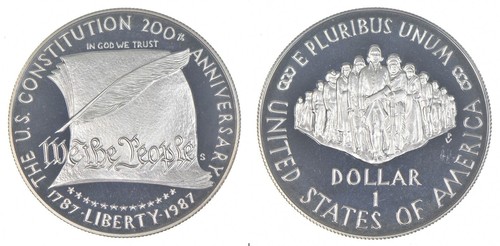
U.S. Constitution Bicentennial Silver Dollar
1987
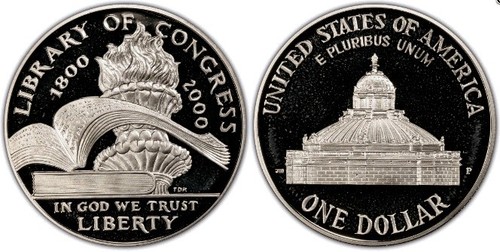
Library of Congress Bicentennial Silver Dollar
2000
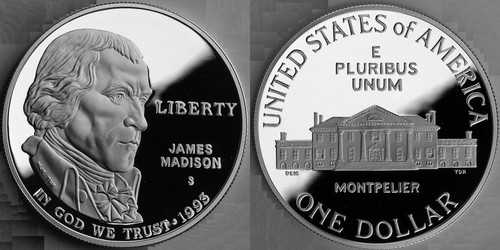
Bill of Rights Silver Dollar
1993
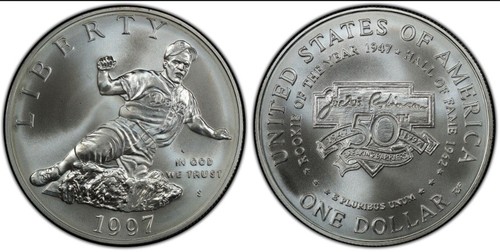
Jackie Robinson Silver Dollar
1997
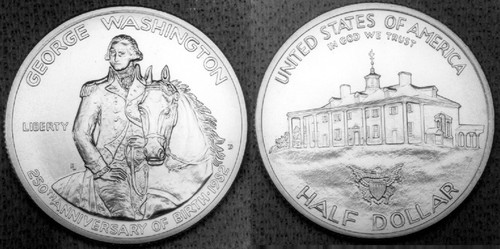
George Washington 250th Anniversary Half Dollar
1982
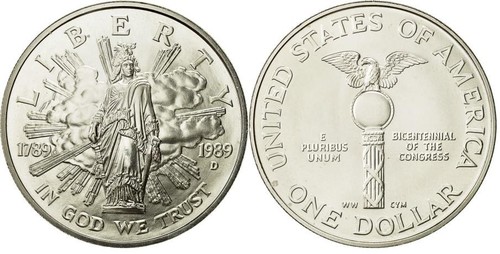
Congress Bicentennial Silver Dollar
1989
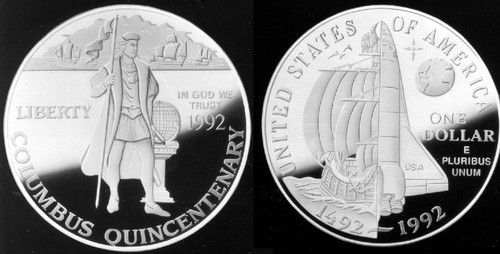
Christopher Columbus Quincentenary Silver Dollar
1992
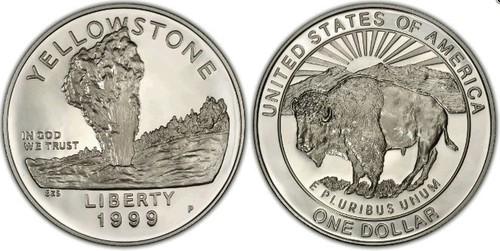
Yellowstone National Park Silver Dollar
1999
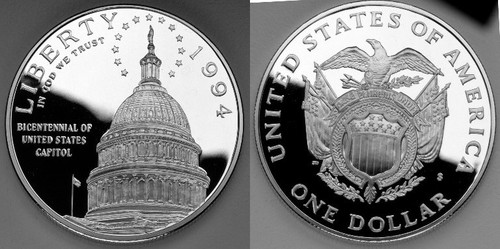
U.S. Capitol Bicentennial Silver Dollar
1994