
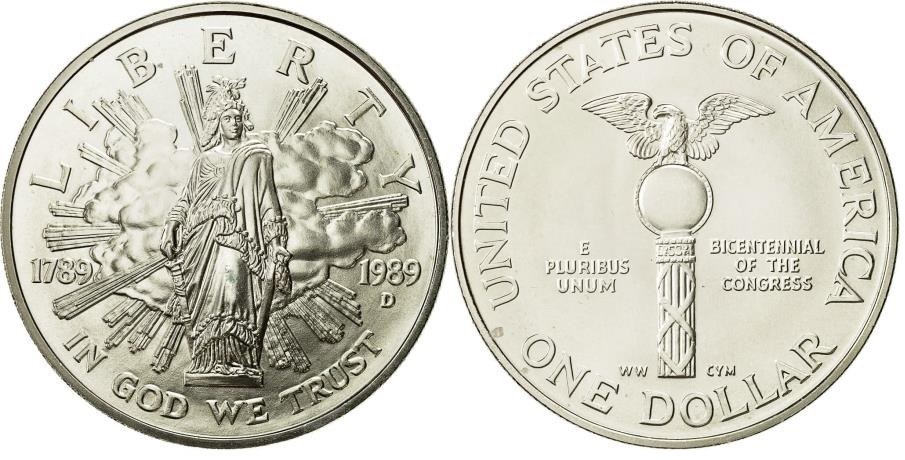
Congress Bicentennial Silver Dollar
A 1989 U.S. commemorative silver dollar marking 200 years of Congress, pairing a standing Liberty-style figure with an eagle above the U.S. Capitol.
- Country
- United States
- Denomination
- $1
- Metal
- Silver
Got a coin like this?
Identify any coin from a photo, free.
Overview
The Congress Bicentennial Silver Dollar is a United States commemorative coin issued in 1989 to mark the 200th anniversary of the first meeting of the U.S. Congress under the Constitution. It is a full-size silver dollar struck for collectors rather than for circulation, and the photographed example is dated 1989, the coin's only year of issue.
The obverse shows a standing allegorical Liberty figure with a raised hand, a shield, and architectural detailing that evokes the Capitol. The reverse features an eagle above the United States Capitol building, together with a Bicentennial inscription tying the coin to the congressional anniversary it honors.
As a modern commemorative, the coin was sold directly by the U.S. Mint in special packaging, with proceeds tied to the commemorative program. It carries a $1 face value but was never meant to spend at that amount; its appeal comes from its silver content, its historical theme, and its collectible finishes.
History & Background
The coin was part of a three-piece 1989 Congress Bicentennial program authorized to honor the bicentennial of the Congress, whose first session convened in 1789 under the newly ratified Constitution. Alongside this silver dollar, the program included a clad half dollar and a five-dollar gold piece, each carrying congressional and Capitol imagery.
Modern U.S. commemoratives like this one are produced in limited quantities and sold only during a defined issue period, after which the dies are retired. The Mint offered the Congress dollar in both an uncirculated (business-strike style) finish and a mirror-like proof finish, giving collectors a choice of presentation.
The 1989 issue reflects the U.S. Mint's late-1980s commemorative revival, in which single-year coins celebrated specific national anniversaries and institutions. Because it was made and sold for a single year, no later dates exist, and every genuine example is dated 1989.
How to Identify
Confirm the imagery first. The obverse shows a standing Liberty-type figure holding a raised object, with a shield and architectural elements at the sides; the reverse shows an eagle positioned above the domed U.S. Capitol, accompanied by a Bicentennial inscription and the standard United States legends. The date 1989 appears on the coin, and the denomination reads ONE DOLLAR.
Physically it is a standard commemorative silver dollar: struck in 90% silver, roughly 38.1 mm in diameter and about 26.7 grams in weight, with a reeded edge. That size and heft distinguish it from the smaller clad half dollar in the same 1989 program and from the gold five-dollar piece.
Look for a small mint mark on the obverse, present on both the uncirculated and proof versions. A deeply mirrored field with frosted devices indicates a proof strike, while a more matte, satiny surface indicates the uncirculated version. Both are legitimate formats of the same coin.
Value & Collectibility
As a modern commemorative struck in 90% silver, the coin contains roughly three-quarters of an ounce of silver, which sets a baseline value that moves with the silver market. Most examples trade for a modest premium over that metal value rather than at rare-coin prices.
Proof and uncirculated versions are both common enough that typical retail prices fall in a low range for collectors, with proofs and pieces still in original Mint packaging generally bringing a little more than loose uncirculated coins. Complete original sets with the box and certificate can add to the appeal.
Because the coin was widely sold to collectors, condition and packaging drive value more than scarcity. Certified high-grade or cameo proof examples can command higher premiums, but for pricing any specific coin it is best to check current silver prices and recent dealer or auction sales.
Frequently asked questions
What does the Congress Bicentennial Silver Dollar commemorate?
It marks the 200th anniversary of the United States Congress, which first met in 1789 under the Constitution. The coin was issued in 1989 as part of a three-coin commemorative program.
Is the coin made of real silver?
Yes. It is struck in 90% silver, giving it roughly three-quarters of an ounce of silver content. That is why its value is tied closely to the silver market plus a collector premium.
Why does it say ONE DOLLAR if it is worth more?
One dollar is the coin's legal face value, but it was sold as a collectible above face and never intended to circulate. Its actual worth comes from its silver content and collector demand.
Are all of these coins dated 1989?
Yes. The Congress Bicentennial Silver Dollar was issued only in 1989, so every genuine example carries that date. There are no other years of this design.
What is the difference between the proof and uncirculated versions?
The proof has deeply mirrored fields with frosted raised details, while the uncirculated version has a more satiny, matte-like surface. Both are the same coin in different finishes.
Congress Bicentennial Silver Dollar guides
In-depth guides for identifying, valuing, and collecting Congress Bicentennial Silver Dollar.
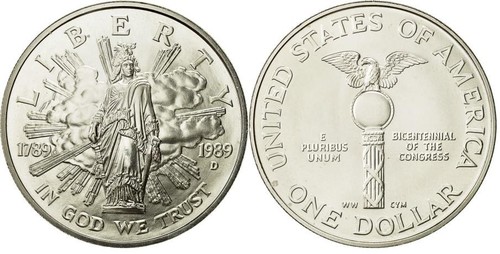
Other coins you may enjoy
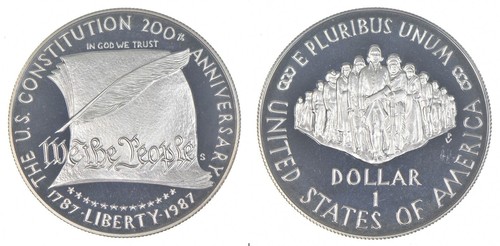
U.S. Constitution Bicentennial Silver Dollar
1987
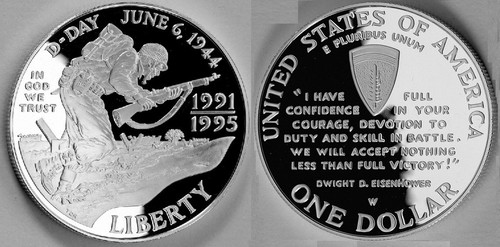
World War II 50th Anniversary Silver Dollar
1993 (dual-dated 1991-1995)
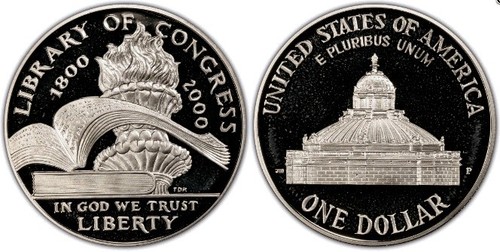
Library of Congress Bicentennial Silver Dollar
2000
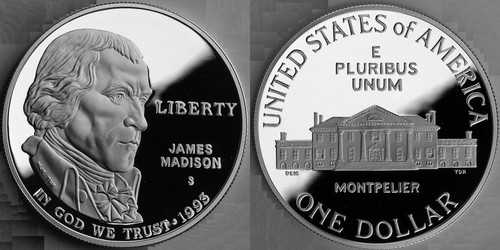
Bill of Rights Silver Dollar
1993
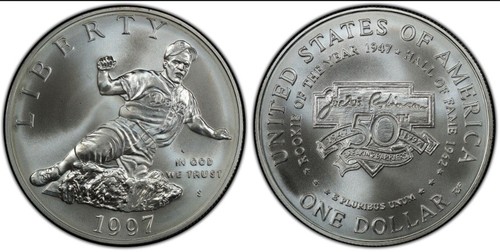
Jackie Robinson Silver Dollar
1997
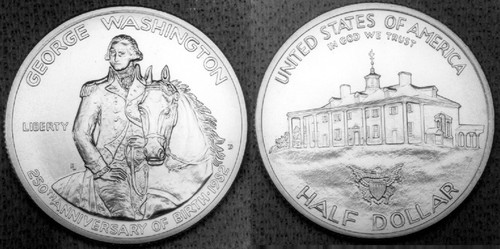
George Washington 250th Anniversary Half Dollar
1982
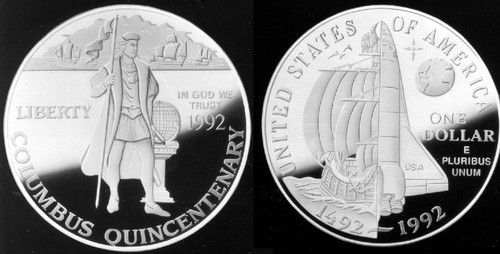
Christopher Columbus Quincentenary Silver Dollar
1992
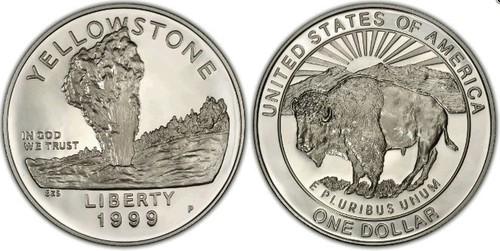
Yellowstone National Park Silver Dollar
1999
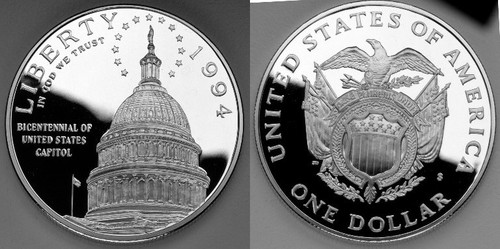
U.S. Capitol Bicentennial Silver Dollar
1994