
Bill of Rights Silver Dollar
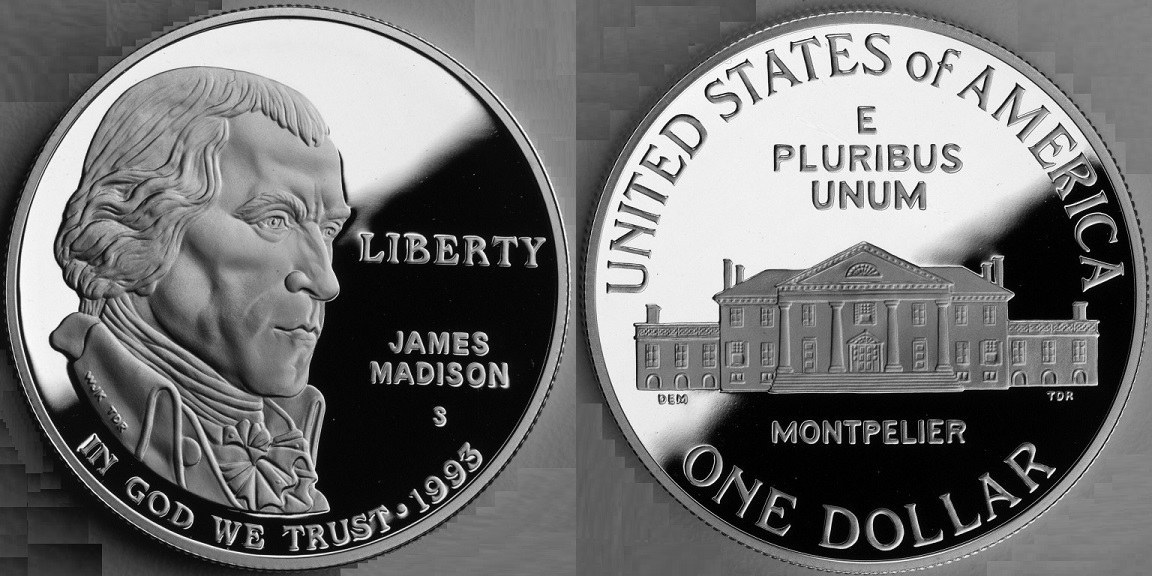
A 1993 U.S. silver dollar honoring the bicentennial of the Bill of Rights, showing a Liberty figure with torch and flags and an eagle above Montpelier.
- Country
- United States
- Denomination
- $1
- Metal
- Silver
Got a coin like this?
Identify any coin from a photo, free.
Overview
The Bill of Rights Silver Dollar is a United States modern commemorative dollar struck in 1993 to mark the bicentennial of the Bill of Rights, the first ten amendments to the U.S. Constitution ratified in 1791. It was issued as part of a multi-coin commemorative program associated with James Madison, who is remembered as the principal author of those amendments.
The obverse presents a standing Liberty figure holding a torch and flanked by flags, with the motto "IN GOD WE TRUST." The reverse pairs an eagle with a depiction of Montpelier, Madison's Virginia home, along with bicentennial lettering marking the anniversary of the Bill of Rights.
Struck in the traditional 90% silver alloy used for U.S. commemorative dollars, the coin was never meant for circulation. It was sold directly to collectors by the U.S. Mint at a premium, with surcharges directed toward a designated commemorative purpose, and today it is collected as part of the modern commemorative series.
History & Background
During the modern commemorative era that resumed in 1982, Congress authorized coin programs to honor national anniversaries and to raise funds through per-coin surcharges. The 1993 Madison / Bill of Rights program was one such issue, tied to the two-hundredth anniversary of the ratification of the first ten constitutional amendments.
The broader program included coins in more than one denomination and metal, of which the silver dollar is the mid-size piece. Like other modern commemoratives, the dollar was offered in both a mirrored proof format aimed at collectors and a satiny uncirculated format, sold individually and in sets directly from the Mint rather than released into everyday commerce.
Because these coins were sold at a premium to a collector audience rather than paid out through banks, distribution was limited to those who ordered them. As with most modern commemoratives, mintages were capped by the authorizing legislation and actual sales fell below those ceilings, so the coins are collectible but not rare in the way that many older commemoratives are.
How to Identify
Identify the type by its design and inscriptions. The obverse shows a standing Liberty figure holding aloft a torch, accompanied by flags and the motto "IN GOD WE TRUST." The design honors the freedoms protected by the Bill of Rights and carries the 1993 date.
The reverse depicts an eagle above a rendering of Montpelier, James Madison's home, together with lettering referencing the bicentennial of the Bill of Rights. This building-and-eagle reverse, paired with the torch-bearing Liberty obverse, is the surest way to distinguish the coin from other modern commemorative dollars.
The silver dollar is a standard commemorative-dollar size: about 38.1 mm in diameter and roughly 26.7 grams, struck in 90% silver with 10% copper and a reeded edge. A small mint mark appears on genuine coins; both proof and uncirculated versions were produced, the proof having deeply mirrored fields and frosted devices.
Value & Collectibility
As a modern silver commemorative sold to collectors, the Bill of Rights Silver Dollar generally trades at a modest premium over its silver bullion content rather than for large sums. Both the proof and uncirculated versions are affordable and readily available on the collector market.
Typical retail prices run in the range of a few tens of dollars, moving up or down with silver spot prices and with the coin's condition and packaging. Coins still in their original Mint packaging with the certificate of authenticity, or examples in high certified grades, tend to bring the upper end of that range, while loose or impaired pieces bring less.
Because values track the silver market and collector demand, any specific coin should be checked against current price guides and recent sales rather than a single fixed figure.
Frequently asked questions
What does the Bill of Rights Silver Dollar commemorate?
It marks the bicentennial of the Bill of Rights — the first ten amendments to the U.S. Constitution, ratified in 1791. The 1993 program is also associated with James Madison, the amendments' principal author.
Why is Montpelier shown on the reverse?
Montpelier was James Madison's home in Virginia. Because Madison is credited as the chief author of the Bill of Rights, his residence appears on the reverse alongside an eagle and bicentennial lettering.
Is the coin made of real silver?
Yes. Like other U.S. commemorative dollars of the era, it is struck in 90% silver with 10% copper, about 26.7 grams and 38.1 mm across, with a reeded edge.
Was it made for circulation?
No. It was sold directly to collectors by the U.S. Mint at a premium, in proof and uncirculated formats, and was never released into everyday circulation.
Is it valuable?
It is affordable and common in collector terms, usually trading for a modest premium over its silver content. Original packaging, certificates, and high certified grades push examples toward the higher end.
Bill of Rights Silver Dollar guides
In-depth guides for identifying, valuing, and collecting Bill of Rights Silver Dollar.
Other coins you may enjoy
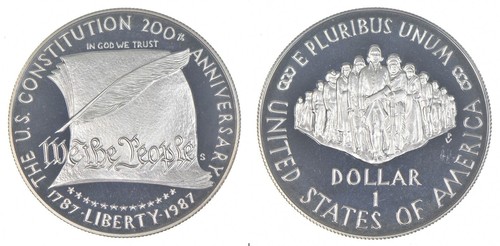
U.S. Constitution Bicentennial Silver Dollar
1987
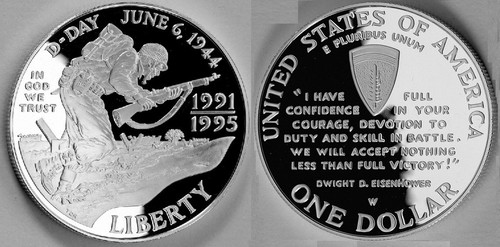
World War II 50th Anniversary Silver Dollar
1993 (dual-dated 1991-1995)
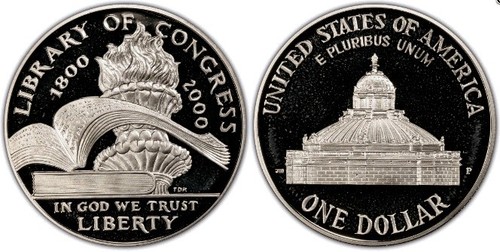
Library of Congress Bicentennial Silver Dollar
2000
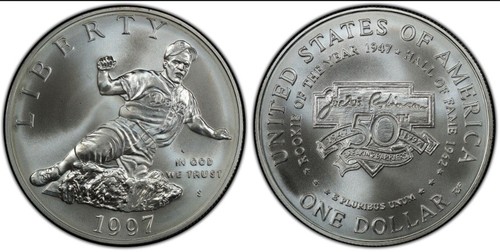
Jackie Robinson Silver Dollar
1997
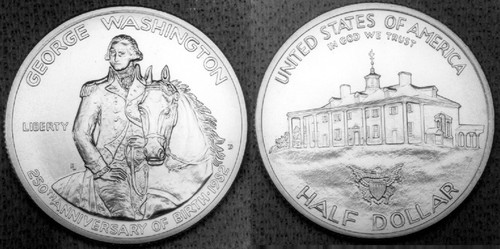
George Washington 250th Anniversary Half Dollar
1982
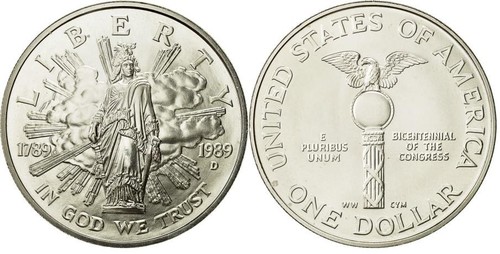
Congress Bicentennial Silver Dollar
1989
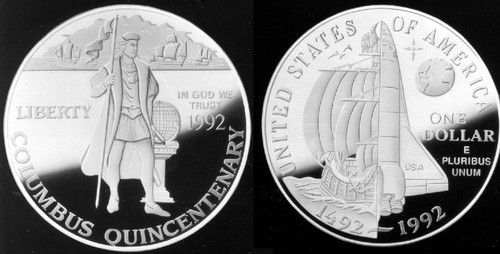
Christopher Columbus Quincentenary Silver Dollar
1992
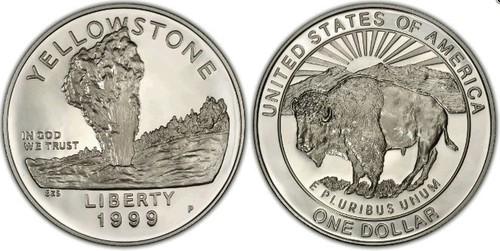
Yellowstone National Park Silver Dollar
1999
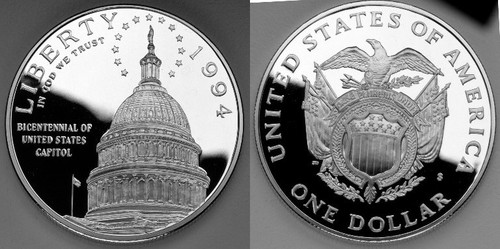
U.S. Capitol Bicentennial Silver Dollar
1994