
Yellowstone National Park Silver Dollar
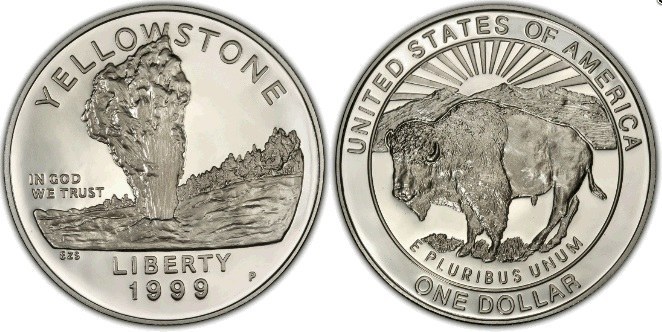
A 1999 U.S. 90% silver commemorative dollar honoring Yellowstone National Park, with Old Faithful erupting on the obverse and an American bison on the reverse.
- Country
- United States
- Denomination
- $1
- Metal
- Silver
Got a coin like this?
Identify any coin from a photo, free.
Overview
The Yellowstone National Park Silver Dollar is a United States modern commemorative dollar struck in 1999 to honor Yellowstone, established in 1872 as the nation's first national park. It belongs to the modern commemorative program in which Congress authorizes a limited coin, sold at a premium, with surcharges directed to a related cause.
The obverse depicts the Old Faithful geyser in full eruption, framed by the inscriptions "YELLOWSTONE," "LIBERTY," "IN GOD WE TRUST," and the date 1999. The reverse shows a standing American bison, one of the park's iconic animals, with "UNITED STATES OF AMERICA," "ONE DOLLAR," and the motto "E PLURIBUS UNUM."
Struck in the traditional 90% silver alloy at standard silver-dollar size, the coin was never meant for circulation. It was sold directly to collectors in proof and uncirculated finishes, and a portion of the proceeds supported the National Park Service and the park itself.
History & Background
Congress authorized a commemorative silver dollar to mark Yellowstone's place as the world's first national park, established by act of Congress in 1872. The 1999-dated coins were issued as part of the ongoing modern commemorative series, which since 1982 has produced single-year themed coins sold at a premium rather than placed into circulation.
The obverse Old Faithful design and the reverse bison were the work of U.S. Mint artists, and the coin was offered in two finishes: a proof version and an uncirculated (business-strike) version, each sold individually and in collector sets. A surcharge added to each coin's price was earmarked to benefit the National Park Service and Yellowstone National Park.
Authorizing legislation capped the program at a maximum mintage, but actual sales fell well short of that ceiling. Combined proof and uncirculated production ran into the low hundreds of thousands, with the proof issue considerably more numerous than the uncirculated issue.
How to Identify
Identify the type by its imagery and inscriptions. The obverse is dominated by the Old Faithful geyser erupting in a tall plume, with "YELLOWSTONE" above, "LIBERTY," the motto "IN GOD WE TRUST," and the date "1999." The reverse features a single standing American bison in profile, encircled by "UNITED STATES OF AMERICA," the denomination "ONE DOLLAR," and "E PLURIBUS UNUM."
The coin follows standard U.S. silver-dollar specifications: about 38.1 mm in diameter, roughly 26.73 grams, struck in 90% silver and 10% copper with a reeded edge. A small mint mark appears on the obverse — a "P" for the Philadelphia proof issue and a "D" for the Denver uncirculated issue.
Because its designs are unique to this one-year commemorative, it will not be confused with any circulating dollar. The Old Faithful obverse and the lone bison reverse together are the surest identifiers.
Value & Collectibility
As a modern silver commemorative, the Yellowstone dollar is worth well above its face value, driven mainly by its silver content and collector demand. The uncirculated issue was made in smaller numbers than the proof and generally carries a modest premium over the proof, though both remain affordable relative to older classic commemoratives.
Typical examples trade in a range from around silver-melt value up to a modest collector premium, with pristine, high-grade certified pieces and complete original-packaging sets bringing more. Coins still in their original U.S. Mint capsules and boxes with the certificate of authenticity tend to sell better than loose examples.
Because values track the silver market and collector interest, any specific coin should be checked against recent sales and current price guides rather than a single fixed figure.
Frequently asked questions
What does the Yellowstone Silver Dollar commemorate?
It honors Yellowstone National Park, established in 1872 as the first national park in the United States. The 1999 commemorative was sold to collectors, with surcharges benefiting the National Park Service and the park.
What is shown on each side?
The obverse shows the Old Faithful geyser erupting, with 'YELLOWSTONE,' 'LIBERTY,' 'IN GOD WE TRUST' and the date 1999. The reverse shows an American bison with 'UNITED STATES OF AMERICA,' 'ONE DOLLAR' and 'E PLURIBUS UNUM.'
Is it real silver?
Yes. Like other modern commemorative dollars, it is struck in 90% silver with 10% copper, weighs about 26.73 grams and measures roughly 38.1 mm across, with a reeded edge.
Does it have a mint mark?
Yes. The proof coins carry a 'P' for Philadelphia and the uncirculated coins carry a 'D' for Denver, located on the obverse. This differs from many older commemoratives that carry no mint mark.
Was it ever used as money?
No. It is a non-circulating legal-tender commemorative sold directly to collectors at a premium, not intended for everyday spending despite its one-dollar face value.
Yellowstone National Park Silver Dollar guides
In-depth guides for identifying, valuing, and collecting Yellowstone National Park Silver Dollar.
Other coins you may enjoy
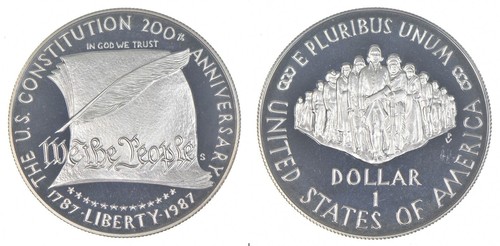
U.S. Constitution Bicentennial Silver Dollar
1987
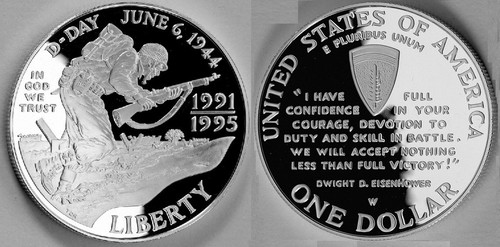
World War II 50th Anniversary Silver Dollar
1993 (dual-dated 1991-1995)
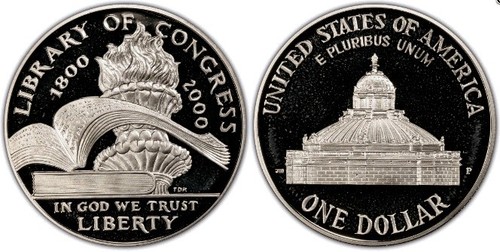
Library of Congress Bicentennial Silver Dollar
2000
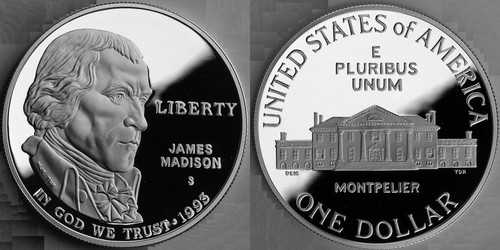
Bill of Rights Silver Dollar
1993
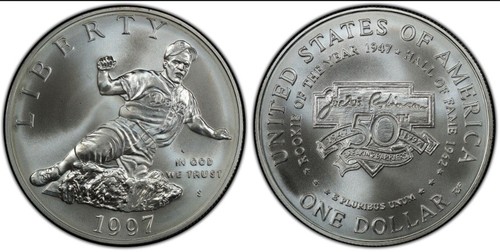
Jackie Robinson Silver Dollar
1997
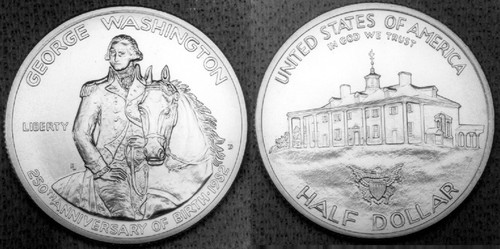
George Washington 250th Anniversary Half Dollar
1982
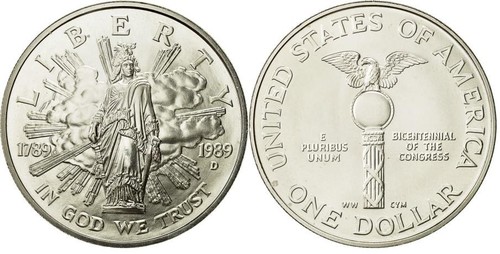
Congress Bicentennial Silver Dollar
1989
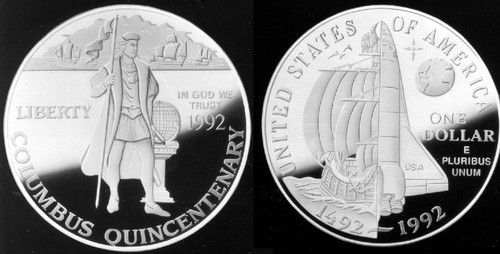
Christopher Columbus Quincentenary Silver Dollar
1992
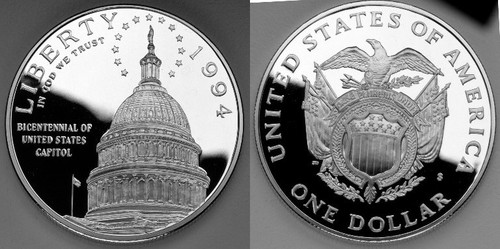
U.S. Capitol Bicentennial Silver Dollar
1994