
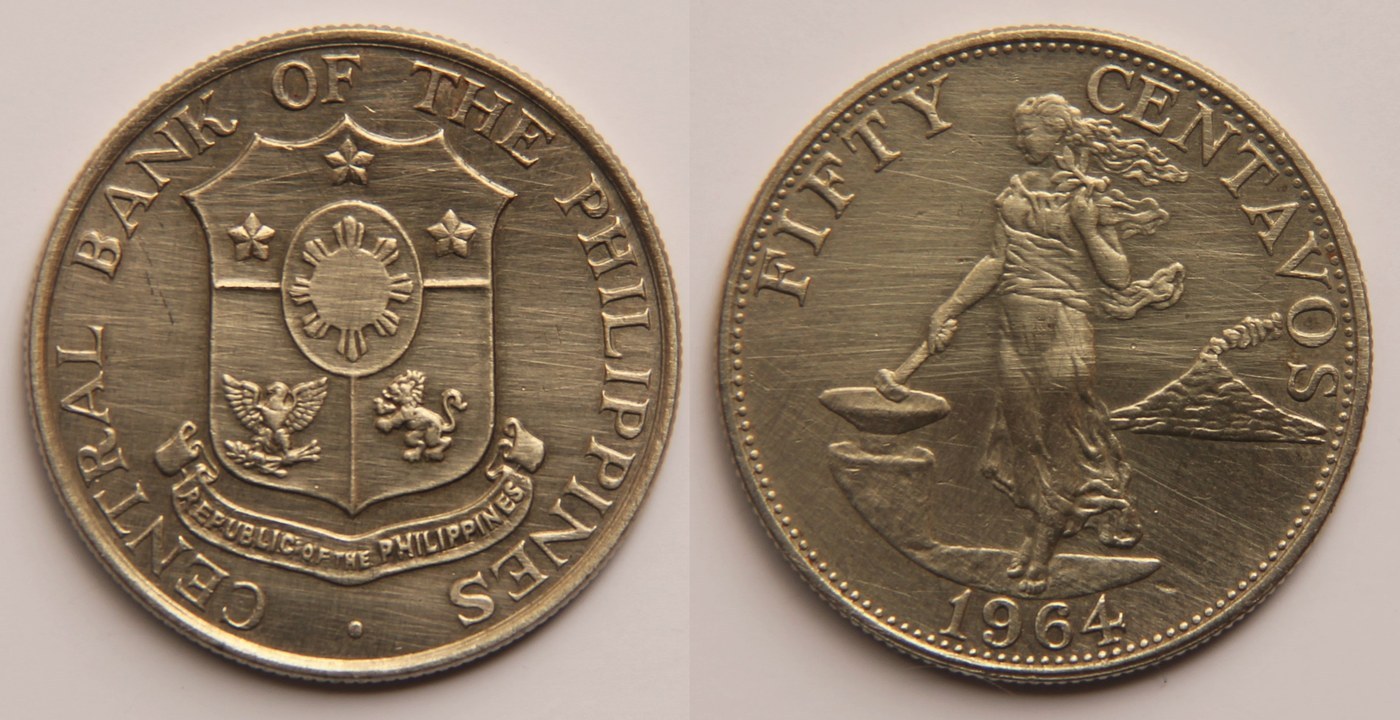
Philippines 50 Centavos
A 1960s Philippine 50-centavos coin in copper-nickel, its obverse showing an allegorical woman with a torch and its reverse the national coat of arms.
- Country
- Philippines
- Denomination
- 50 Centavos
- Metal
- Cupro-nickel
Got a coin like this?
Identify any coin from a photo, free.
Overview
The Philippines 50 Centavos is a mid-20th-century base-metal coin of the Republic of the Philippines. The example photographed here is dated 1964 and shows a standing allegorical female figure holding a torch on the obverse, with the national coat of arms on the reverse—the two designs that define this denomination in the period.
Struck in a copper-nickel alloy, the fifty-centavos was a middle-value circulating coin issued under the Central Bank of the Philippines. It belongs to the so-called English series, the run of coins that carried English-language legends and the modern republican arms rather than the Spanish or Commonwealth wording of earlier Philippine money.
Within the wider Southeast Asian series, this coin is a compact and accessible piece of Philippine monetary history, pairing a patriotic allegorical figure with the formal national emblem of the young republic.
History & Background
The Philippines used centavo-based coinage through the American colonial and Commonwealth periods and carried the unit forward after full independence in 1946. In 1949 the Central Bank of the Philippines was established, and from the late 1950s it issued a new run of coins with legends in English, commonly called the English series.
The 50 Centavos of this series, including the 1964 coin shown here, belongs to that post-independence chapter. Its allegorical female figure continues a design tradition of representing the nation and its ideals through a standing human figure, while the reverse arms present the formal emblem of the Republic of the Philippines. Together they mark a shift from colonial-era imagery to the symbols of an independent state.
This coinage circulated until the currency was redesigned later in the 1960s, when the denominations moved to Filipino-language legends and new national heroes on the pieces. The English-series 50 Centavos is therefore best understood as money of the first two decades of the independent republic, before that later change.
How to Identify
Start with the two faces. The obverse shows a standing allegorical female figure holding a torch, an emblem of liberty and enlightenment, usually with a surrounding legend and the date. The reverse carries the national coat of arms of the Philippines—a shield-and-eagle emblem—together with the denomination "FIFTY CENTAVOS" and the country name. The pairing of a torch-bearing figure with the republican arms is the core diagnostic of this type.
Physically it is a round base-metal coin in a copper-nickel alloy, pale silvery-grey when clean and toning to a darker or warmer shade with handling, as circulated examples often do. It is a middle-denomination coin—larger and heavier than the small centavo pieces of the same series but not a large silver crown—so weight and diameter fall in a moderate range.
Legends and numerals confirm the attribution. Look for the value fifty and the word centavos, the name of the Philippines in English, and a date such as 1964 within the English-series span. Because the torch-bearing figure and the national arms are specific to this Philippine coinage, that design pairing at the fifty-centavos value is generally enough to attribute the coin.
Value & Collectibility
The English-series 50 Centavos was a circulating denomination produced for everyday use, so ordinary worn examples are inexpensive and are collected for their history and design more than for scarcity. Most interest comes from the appeal of Philippine and Southeast Asian coinage rather than from rarity of the common dates.
Condition drives price. Coins that keep sharp detail in the standing figure and full clarity in the coat of arms, and especially uncirculated pieces with original surfaces, command a premium over heavily worn coins. Specific dates or minor varieties within the series can be scarcer and draw extra attention from specialists.
Because values depend on grade, eye appeal and demand, any figures here are general context rather than fixed quotes. A clean, problem-free coin is an affordable but genuinely collectible piece of Philippine history, while well-circulated examples trade for only a little above token value.
Frequently asked questions
Who is the woman on the obverse?
She is an allegorical figure holding a torch, representing liberty and national ideals rather than a specific real person. Such standing figures were a common way to personify the nation on Philippine coinage of this era.
What is on the reverse?
The reverse shows the national coat of arms of the Philippines—a shield-and-eagle emblem—alongside the denomination "FIFTY CENTAVOS" and the country name, the standard reverse for this series.
Is this coin silver?
No. The English-series 50 Centavos is a base-metal copper-nickel coin. Any silvery appearance comes from the alloy itself, and handled examples can look darker or warmer in color.
Why are the legends in English?
This coin is part of the Central Bank of the Philippines English series, which used English-language legends. Later Philippine coins moved to Filipino-language wording and different designs.
Was it real circulating money?
Yes. As a middle-value denomination it saw everyday use, which is why many surviving coins show genuine wear rather than mint-fresh surfaces.
Philippines 50 Centavos guides
In-depth guides for identifying, valuing, and collecting Philippines 50 Centavos.
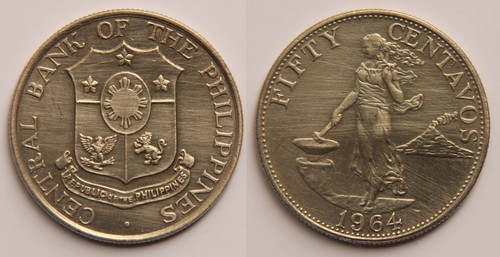
Philippines 50 Centavos identified by the community
Real coins identified with Coin Identifier.
Other coins you may enjoy
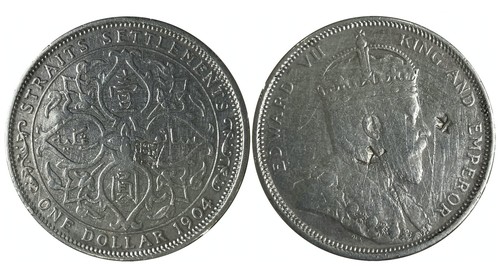
Straits Settlements Dollar
1904
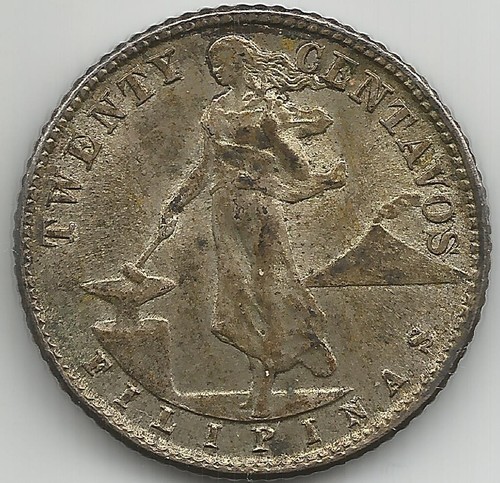
Philippines 20 Centavos
1937–1945 (this example dated 1944)
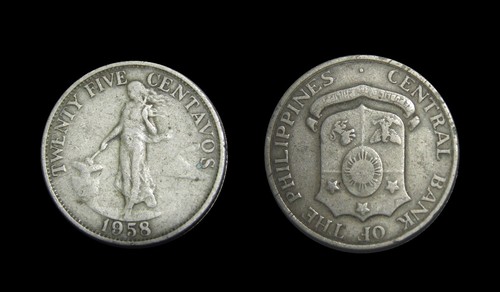
Philippines 25 Centavos
Dated 1958, part of the Republic of the Philippines "English Series" coinage struck from 1958 to 1966
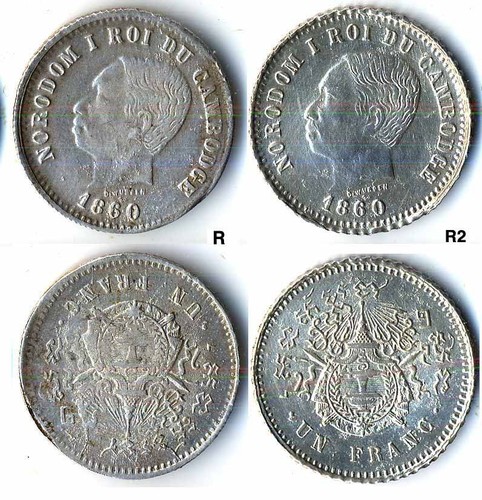
Cambodia One Franc
1950s–1960s
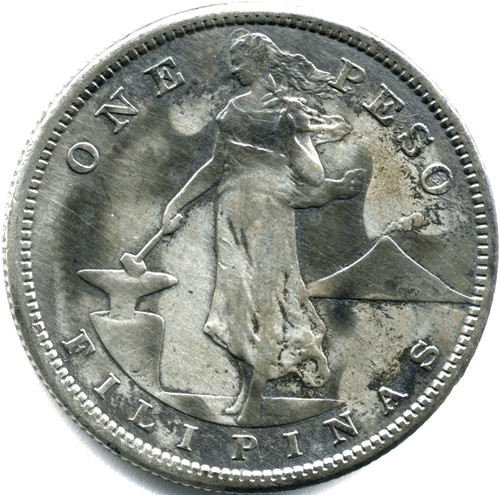
Philippines One Peso
1903–1912
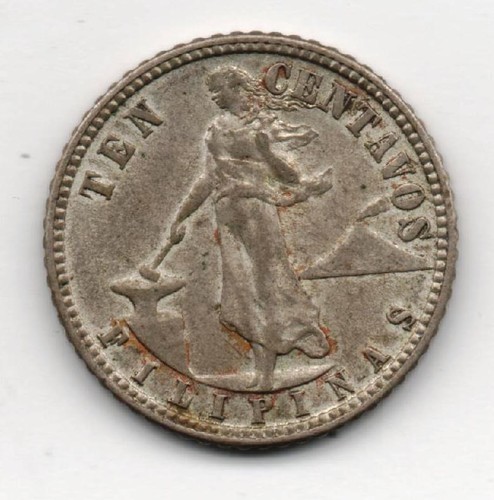
Philippines 10 Centavos
1907–1935 (this example dated 1911)
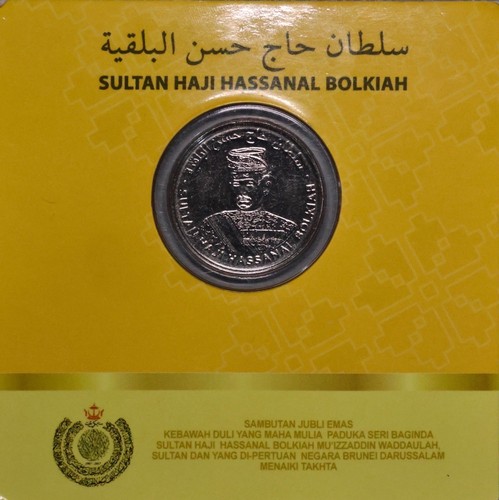
Brunei Golden Jubilee 50 Cents
Golden Jubilee issue, 2017
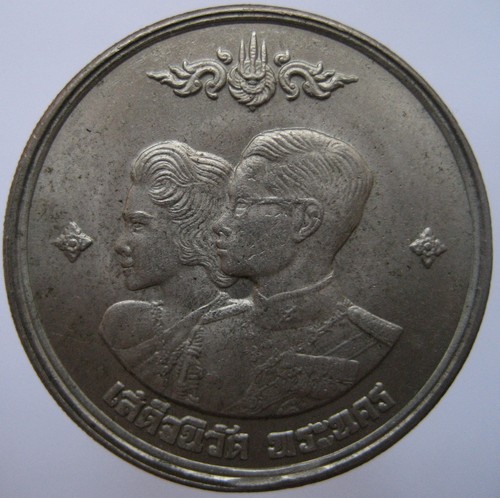
Thailand One Baht Commemorative
1961
Thailand One Baht
1917
Vietnam 2 Tien - Bao Dai
1926-1945
Indonesia 5 Rupiah
2003
Indonesia 100 Rupiah
Modern (late 20th–21st century)