
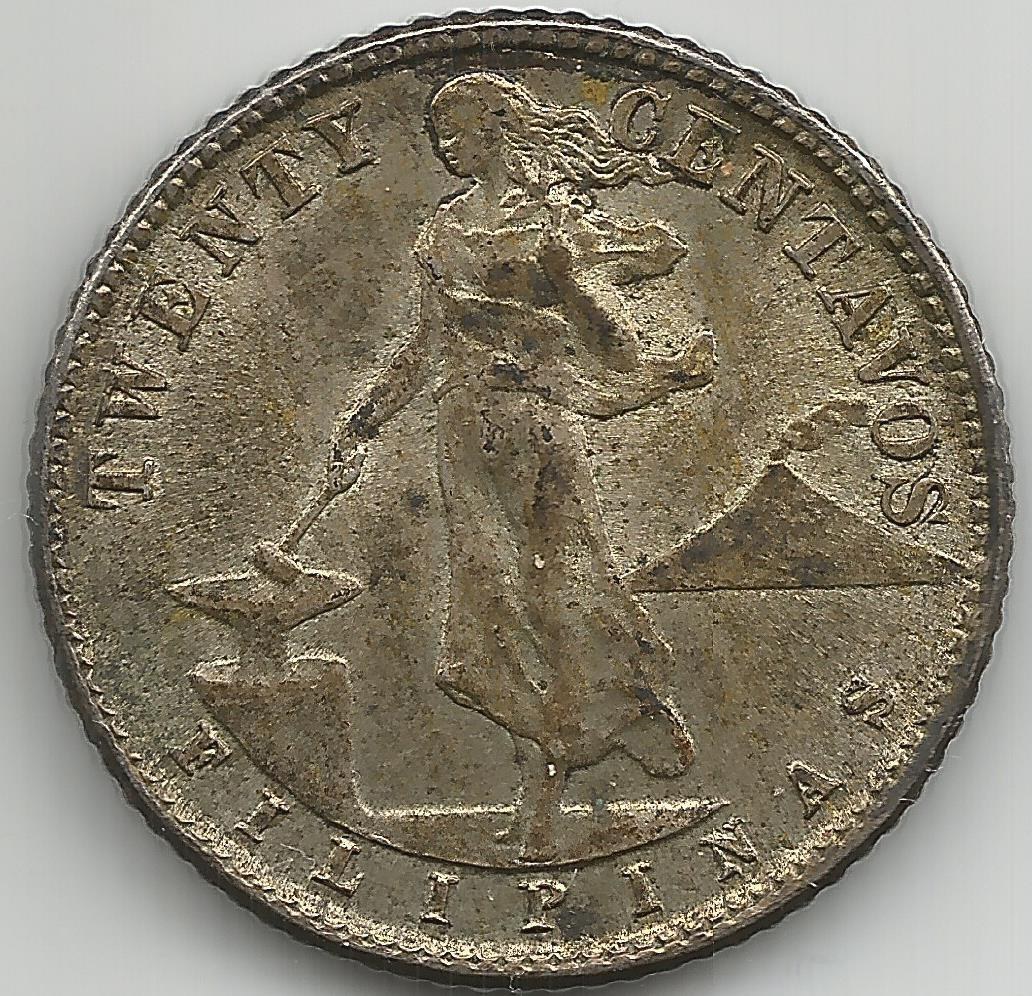
Philippines 20 Centavos
A small wartime silver 20 centavos of the Commonwealth-era Philippines: a standing Liberty figure and Mayon volcano, with an eagle over a shield on the reverse.
- Country
- Philippines
- Denomination
- 20 Centavos
- Metal
- Silver
Got a coin like this?
Identify any coin from a photo, free.
Overview
The Philippines 20 Centavos shown here is a small silver coin of the Commonwealth of the Philippines, dated 1944. The obverse carries an allegorical standing female figure — often described as Liberty or the Filipina — holding a hammer that rests on an anvil, with the volcano Mayon rising behind her, framed by "TWENTY CENTAVOS FILIPINAS" and the date. The reverse shows an eagle with outstretched wings perched above a shield.
This piece belongs to the American-administration coinage of the Philippines, but the 1944 date places it in the Commonwealth series struck during the Second World War. It combines a Spanish-derived denomination and legend ("FILIPINAS") with an eagle-and-shield reverse, the two faces that mark Philippine silver of this era.
The 20 centavos was an everyday circulating denomination worth one-fifth of a peso. The 1944 issue was produced in very large numbers to resupply the islands with coin around the period of liberation, so it is one of the more familiar and available silver coins of the series.
History & Background
Following the Spanish–American War the Philippines came under United States administration, and from 1903 the islands received their own coinage denominated in centavos and pesos. The designs were the work of Filipino artist Melecio Figueroa: the silver 10, 20 and 50 centavos and the peso share a standing female allegory, while the minor coins use a seated male figure, both set against Mount Mayon. The earliest silver coins of 1903–1906 were larger and of higher fineness; rising silver prices led to a reduced size, weight and fineness from 1907.
In 1935 the Commonwealth of the Philippines was established as a self-governing transitional government, and from 1937 the coinage adopted a new reverse bearing the Commonwealth coat of arms — an eagle above a shield — in place of the earlier United States arms. The obverse standing figure was retained. The 20 centavos in these photographs belongs to that Commonwealth series.
The 1944 date is significant. During the war the Manila mint was lost to Japanese occupation, so Commonwealth coinage of 1944–1945 was struck at United States mints — Denver and San Francisco for the twenty centavos — and shipped in bulk to help restore normal money to the islands as Allied forces returned. Coins of this type were the last of the centavo series before the post-independence peso coinage that followed.
How to Identify
The obverse is the quickest identifier: a standing female figure holding a hammer resting on an anvil, with the cone of Mayon volcano behind her, ringed by "TWENTY CENTAVOS FILIPINAS" and the year 1944. The word FILIPINAS (Spanish for "Philippines") together with the value "TWENTY CENTAVOS" fixes both the country and the denomination. The reverse shows an eagle with wings spread above a shield — the Commonwealth coat of arms — with the date and mint mark at the base and the surrounding legend naming the Commonwealth of the Philippines.
Physically this is a small silver coin, roughly 21 mm across and about 4 grams, struck in .750 fine silver. It sits between the smaller 10 centavos and the larger 50 centavos of the same series, so size and the value legend together separate the three silver denominations.
Look for the mint mark to the left of the date on the reverse. The 1944 twenty centavos was struck at Denver (D) and San Francisco (S); there is no Manila (M) striking for that year because the Manila mint was out of operation during the occupation. Use the standing figure, rather than the seated man of the minor coins, to confirm you are in the silver group before reading the denomination.
Value & Collectibility
The 1944 twenty centavos is one of the most common silver coins of the Philippine series, produced in very large quantities during the war. As a result, worn examples are inexpensive and carry a premium tied largely to their modest silver content rather than to scarcity, and even uncirculated pieces survive in good numbers because so many were saved.
Condition and originality still matter. Sharp, lustrous, problem-free coins with clean surfaces are worth more than heavily worn or cleaned examples, and full detail in the standing figure and the eagle adds to eye appeal. Earlier dates and mints in the wider 20 centavos series — including scarcer pre-Commonwealth issues and certain low-mintage years — stand well above this common wartime date.
Because prices depend on grade, eye appeal and demand, treat any figure as general context rather than a fixed quote. For the 1944 issue specifically, the silver content sets a practical floor for circulated coins, while high-grade uncirculated examples command a collector premium over that.
Frequently asked questions
Why was a Philippine coin struck in the United States in 1944?
The Manila mint was out of operation during the Japanese occupation, so Commonwealth coinage of 1944–1945 was struck at U.S. mints — Denver and San Francisco for the twenty centavos — and shipped to the islands to restore normal money around the time of liberation.
Is this coin actually silver?
Yes. The Commonwealth-era 20 centavos, including this 1944 piece, was struck in .750 fine silver. It is small and light, so the silver content is modest, but it is a genuine silver coin.
What does "FILIPINAS" mean on the coin?
"Filipinas" is Spanish for "Philippines," a legacy of the long Spanish colonial period. It identifies the coin as Philippine money alongside the eagle-and-shield reverse of the era.
Who is the woman on the front?
She is an allegorical figure, usually described as Liberty or the Filipina, holding a hammer on an anvil with Mount Mayon behind her — part of a design by Filipino artist Melecio Figueroa used on the silver denominations.
Is the 1944 twenty centavos rare?
No. It is one of the most common silver coins of the series, struck in large numbers during the war. Circulated examples are affordable; value comes mainly from silver content, with a premium for high-grade, original pieces.
Philippines 20 Centavos guides
In-depth guides for identifying, valuing, and collecting Philippines 20 Centavos.
Other coins you may enjoy
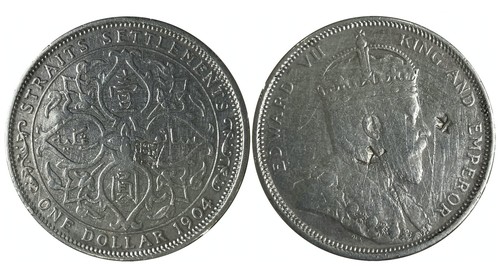
Straits Settlements Dollar
1904
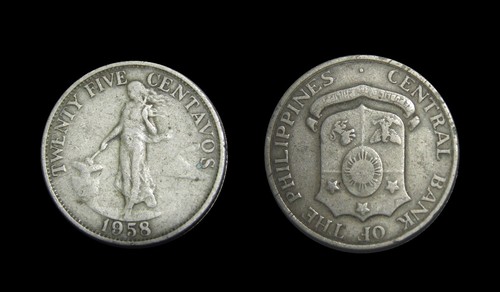
Philippines 25 Centavos
Dated 1958, part of the Republic of the Philippines "English Series" coinage struck from 1958 to 1966
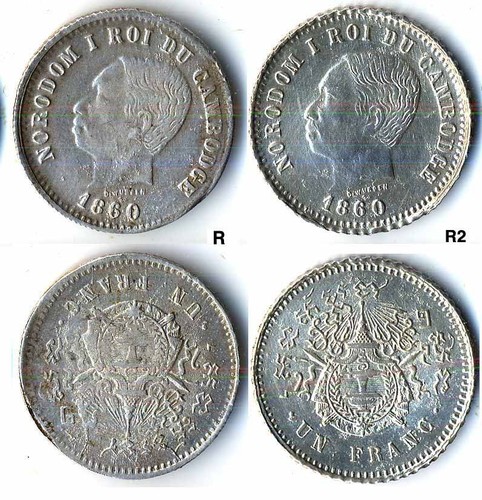
Cambodia One Franc
1950s–1960s
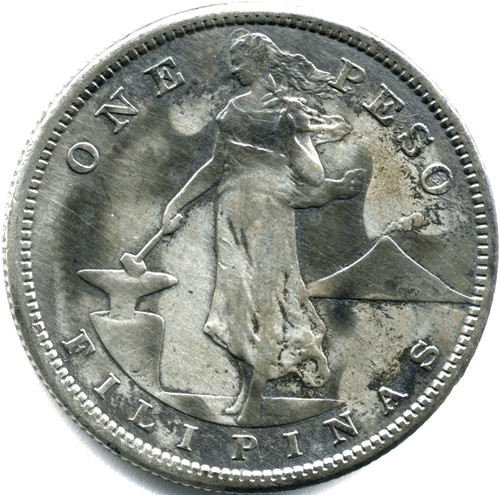
Philippines One Peso
1903–1912
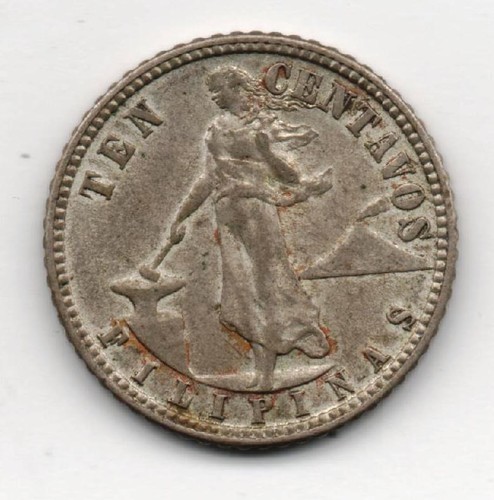
Philippines 10 Centavos
1907–1935 (this example dated 1911)
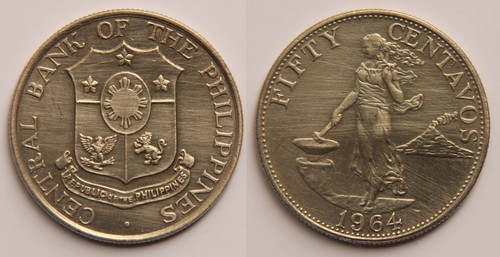
Philippines 50 Centavos
1958–1966 (English series); example dated 1964
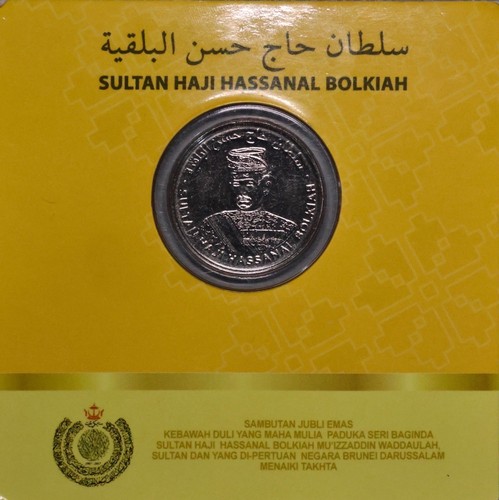
Brunei Golden Jubilee 50 Cents
Golden Jubilee issue, 2017
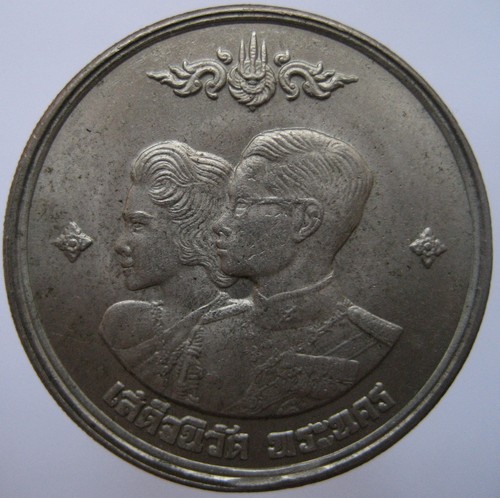
Thailand One Baht Commemorative
1961
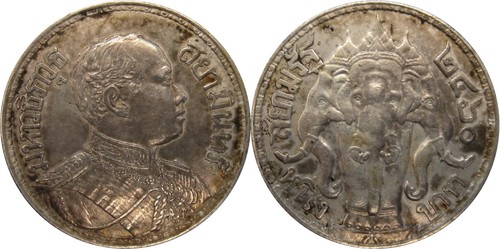
Thailand One Baht
1917
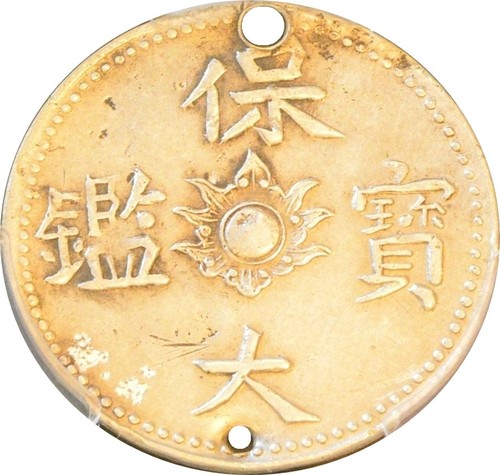
Vietnam 2 Tien - Bao Dai
1926-1945
Indonesia 5 Rupiah
2003
Indonesia 100 Rupiah
Modern (late 20th–21st century)