
Thailand One Baht
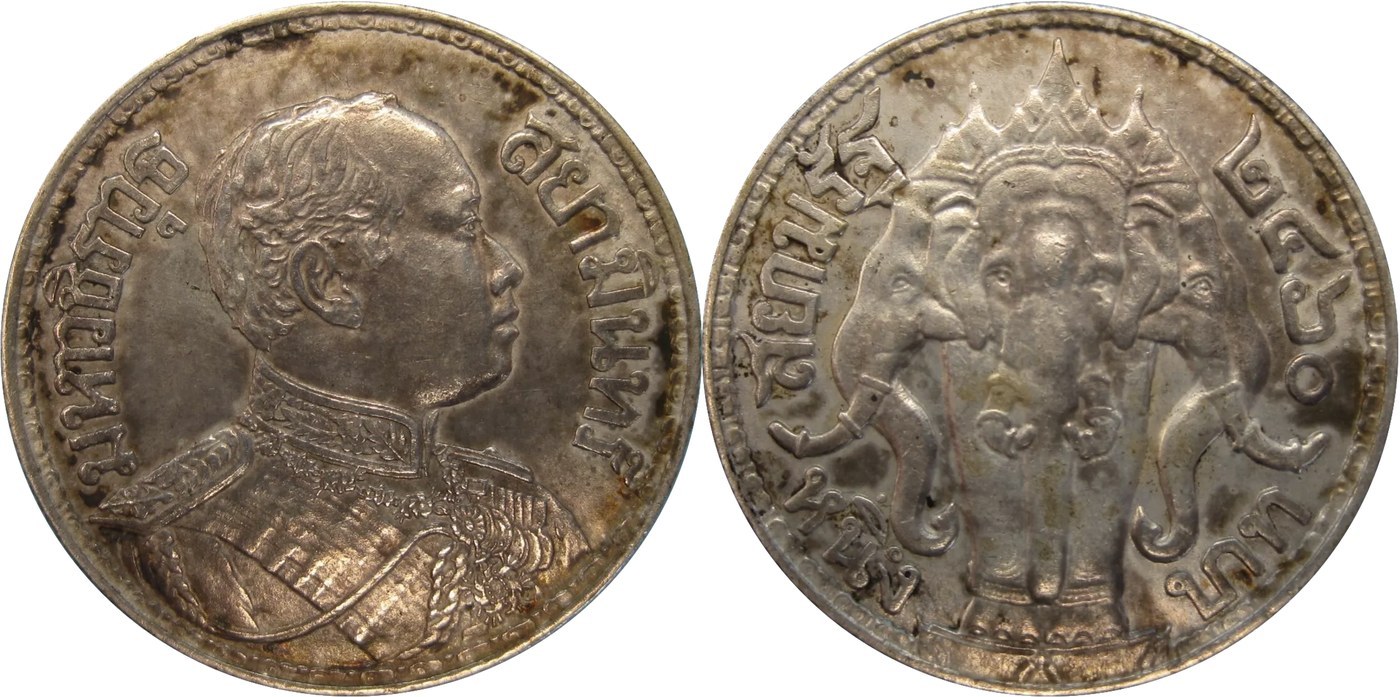
A silver one-baht coin of Siam struck under King Rama VI, its obverse bearing the young king's uniformed profile within Thai royal inscriptions.
- Country
- Thailand
- Denomination
- 1 Baht
- Metal
- Silver
Got a coin like this?
Identify any coin from a photo, free.
Overview
The Thailand One Baht shown here is a silver coin of Siam (the historic name of Thailand) struck during the reign of King Rama VI, Vajiravudh, who ruled from 1910 to 1925. The obverse carries a left-facing profile bust of the king in military dress, framed by Thai-script royal inscriptions naming the monarch and the realm, all set within a decorative border. Our example is dated to 1917.
The baht was the principal silver unit of the Siamese monetary system, and a one-baht piece of this era was a substantial circulating coin rather than a token or a purely commemorative issue. The reverse is not clearly visible in our photograph; on Rama VI silver baht coins it typically bears a heraldic device with Thai legends and the date rendered in the Buddhist or Rattanakosin dating systems used at the time.
As an early twentieth-century royal silver coin of a country that was never colonized, the Rama VI baht is a popular and historically resonant type among collectors of Southeast Asian coinage.
History & Background
King Vajiravudh (Rama VI) succeeded his father, the reforming King Chulalongkorn (Rama V), in 1910 and continued the modernization of the Siamese state and its coinage. His reign saw machine-struck milled coinage produced at the Royal Mint in Bangkok, replacing the earlier bullet-shaped "pot duang" money that had characterized Siamese currency for centuries.
Silver baht coins bearing the king's Western-style uniformed portrait were issued through the 1910s. Because Siam used its own calendar systems, dates on these coins may be expressed in the Rattanakosin era (counted from the founding of Bangkok in 1782) or the Buddhist era, so a coin of the year 1917 corresponds to those local reckonings rather than to a Gregorian date on the coin itself.
Siam's status as an independent kingdom that avoided European colonization gives its royal coinage particular interest. The Rama VI baht sits at the transition between traditional Siamese iconography and a modernizing state, making it a favorite entry point for collectors exploring Thai numismatic history.
How to Identify
The obverse is the diagnostic face. It shows a left-facing profile of a clean-shaven young man in a military-style uniform — King Rama VI — surrounded by Thai-script royal inscriptions and enclosed by a decorative border. This uniformed royal portrait, rather than the older Siamese emblematic designs, marks the coin as an early twentieth-century milled issue of Vajiravudh's reign.
The piece is a silver one-baht, historically a sizeable circulating silver coin roughly in the range of about 15 grams and near 26 to 27 millimeters in diameter, though exact specifications vary by type and year. The reverse, not visible in our image, on this series carries a Thai heraldic device with legends and the date in a local calendar; reading that side, when available, helps confirm the exact variety and year.
Because the uniformed Rama VI portrait is distinctive, the obverse alone is usually enough to attribute the coin to his reign. Confirming the denomination and precise date, however, requires examining the reverse and the Thai numerals, since Siamese coins of this period were also struck in fractional silver denominations that share the same portrait style.
Value & Collectibility
Value for a Rama VI silver baht depends heavily on the specific year, the variety and the state of preservation. As a genuine silver coin roughly a century old, even a well-worn example carries interest for its metal content and history, while sharp, lightly circulated pieces command stronger collector premiums.
Common dates in circulated grades are affordable and frequently traded, whereas scarcer years, well-struck high-grade survivors and pieces with attractive original toning sit at the upper end. Because grade and variety drive the market so strongly, published figures should be treated as general context rather than fixed quotes.
As with any older silver coin, cleaning, heavy wear, edge damage and counterfeits all reduce value, so condition and authenticity matter as much as the date. Collectors typically consult a specialized catalog of Thai coins to pin down the exact type before assessing worth.
Frequently asked questions
Who is the man on this coin?
He is King Rama VI, Vajiravudh, who ruled Siam (Thailand) from 1910 to 1925. His left-facing uniformed profile appears on the obverse of this silver baht.
Is this a coin from Thailand or Siam?
Both names refer to the same country. During Rama VI's reign the kingdom was known as Siam; it was renamed Thailand in the twentieth century, so this is an early Thai (Siamese) coin.
Is the coin really silver?
Yes. The one baht of this era was struck in silver as the main circulating silver denomination. Exact fineness varies by type, but it is a genuine precious-metal coin, not base metal.
Why doesn't the date look like 1917?
Siamese coins used local calendars such as the Rattanakosin and Buddhist eras, so the Thai numerals on the coin express the year in those systems rather than as a Western 1917.
What is on the reverse?
The reverse is not visible in our photograph, but Rama VI silver baht coins typically carry a Thai heraldic device with royal legends and the date in local numerals.
Thailand One Baht guides
In-depth guides for identifying, valuing, and collecting Thailand One Baht.
Other coins you may enjoy
Straits Settlements Dollar
1904
Philippines 20 Centavos
1937–1945 (this example dated 1944)
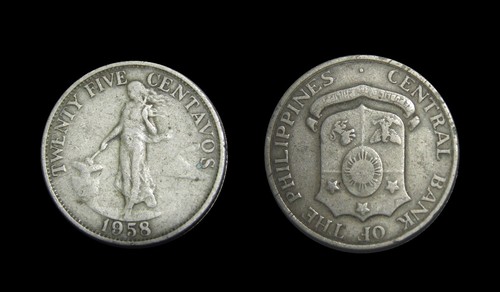
Philippines 25 Centavos
Dated 1958, part of the Republic of the Philippines "English Series" coinage struck from 1958 to 1966
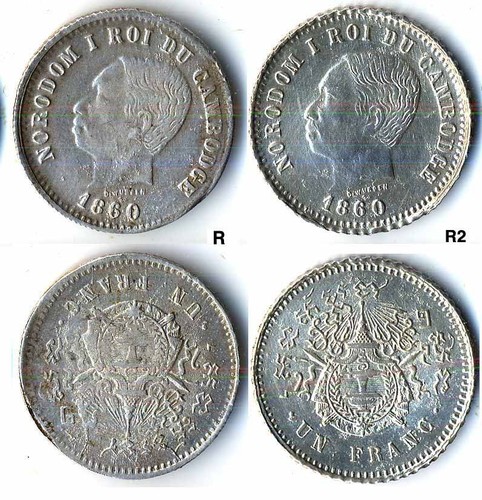
Cambodia One Franc
1950s–1960s
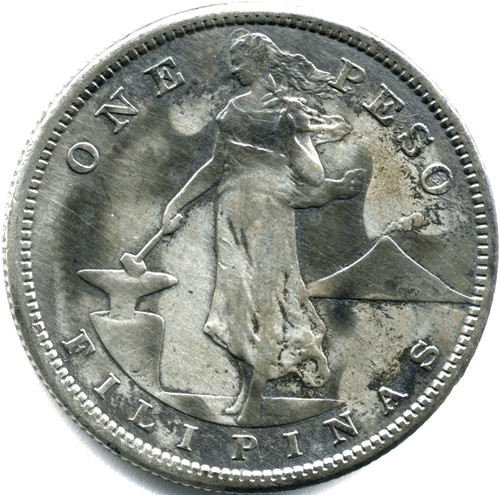
Philippines One Peso
1903–1912
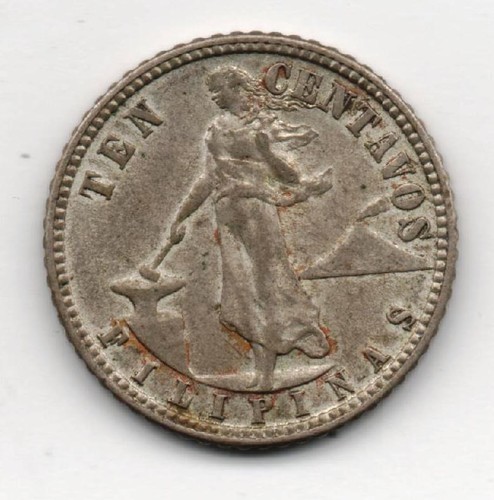
Philippines 10 Centavos
1907–1935 (this example dated 1911)
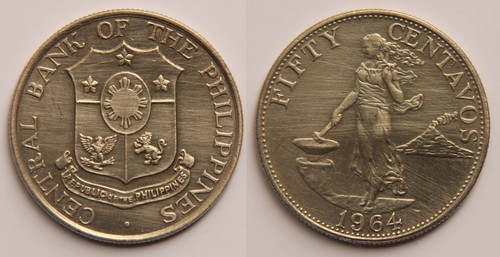
Philippines 50 Centavos
1958–1966 (English series); example dated 1964
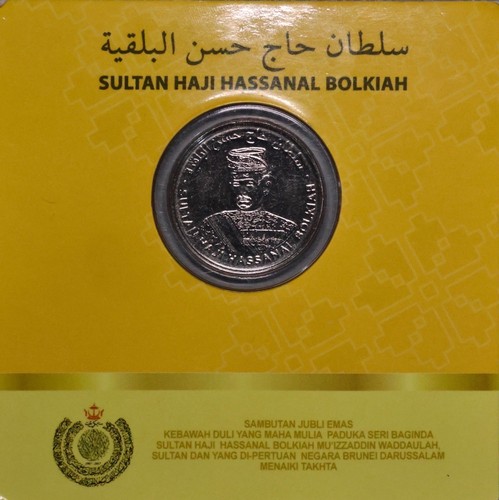
Brunei Golden Jubilee 50 Cents
Golden Jubilee issue, 2017
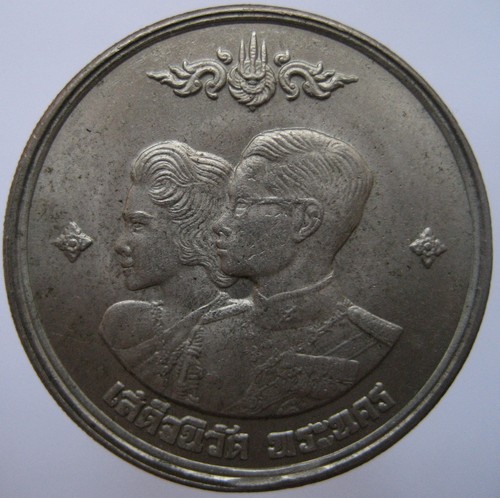
Thailand One Baht Commemorative
1961
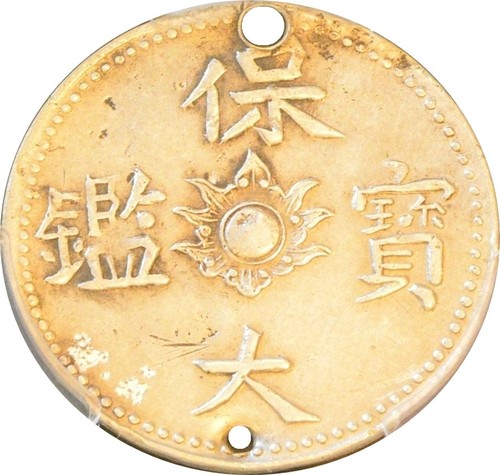
Vietnam 2 Tien - Bao Dai
1926-1945
Indonesia 5 Rupiah
2003
Indonesia 100 Rupiah
Modern (late 20th–21st century)