
How to Identify the Thailand One Baht
A collector's guide to attributing the Rama VI silver baht: the uniformed royal profile, Thai inscriptions, silver metal, size and authentication tips.
Read the full Thailand One Baht encyclopedia entry →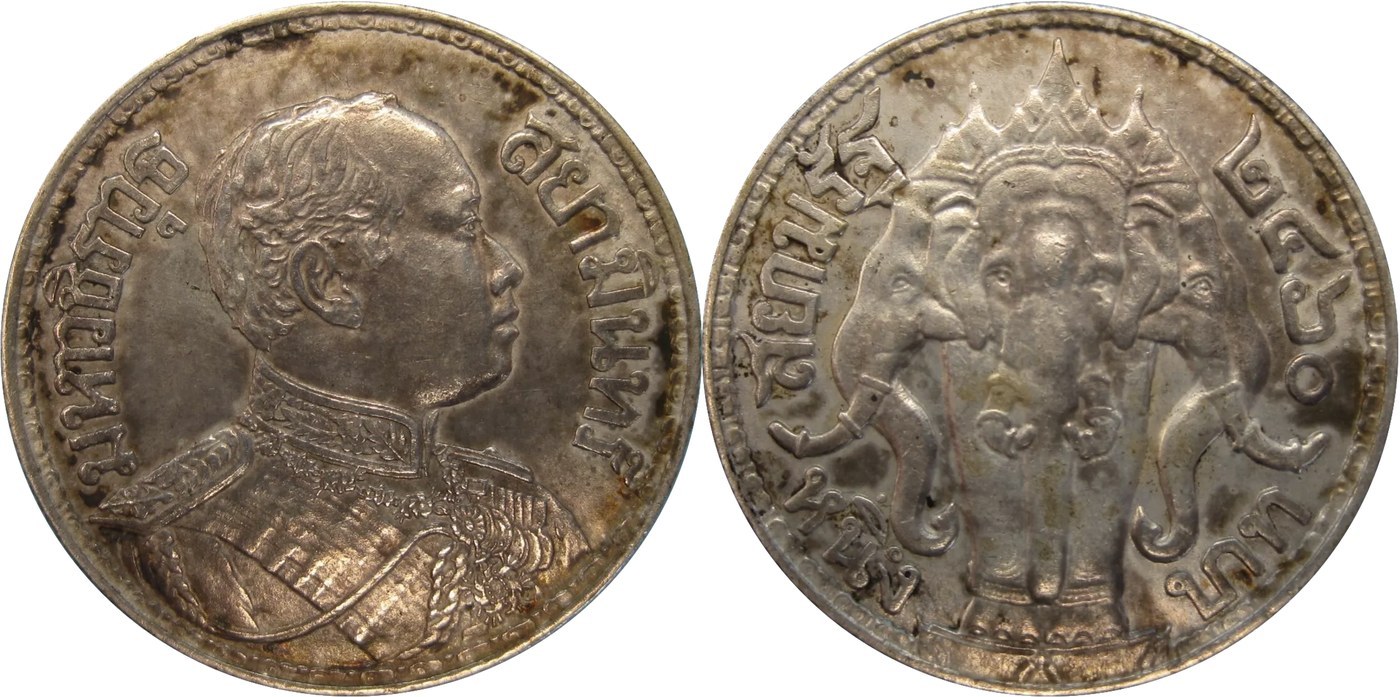
Start with the obverse portrait, the quickest identifier. This coin shows a left-facing profile of a clean-shaven young man in a military-style uniform — King Rama VI (Vajiravudh) — encircled by Thai-script royal inscriptions and framed by a decorative border. A Western-style uniformed royal bust, rather than the older Siamese elephant or emblematic motifs, places the coin firmly in the early twentieth-century milled coinage of his reign (1910–1925).
Confirm the physical coin. A one baht of this era is a silver coin, historically a substantial piece in the region of about 15 grams and roughly 26 to 27 millimeters across, though figures vary by year and type. Genuine silver has a characteristic heft and a soft grey-white tone that often develops attractive toning; a coin that feels too light, sounds dull, or shows a base-metal color at worn points warrants suspicion.
Read the reverse and the numerals to pin down the exact issue. Although the reverse is not shown in our photograph, on this series it carries a Thai heraldic device with royal legends and the date expressed in the Rattanakosin or Buddhist calendar. Because the same portrait style appears on fractional silver denominations, checking the reverse and the Thai numerals is what separates a full baht from a half or quarter baht and fixes the precise year.
Watch for look-alikes and related types. Siam issued silver coins under both Rama V and Rama VI, and their uniformed profiles can look similar at a glance; the specific facial features, inscriptions and reverse design distinguish the reigns. Do not confuse the circulating silver baht with later base-metal baht coins or with medals and tokens bearing royal portraits.
Apply the usual authentication cautions. Genuine coins are struck with crisp Thai lettering and a clean border; be wary of cast copies showing soft detail, seams or bubbles, of silver-plated base-metal fakes, and of pieces with tooled or re-engraved dates. When in doubt, weigh and measure the coin, test the silver by non-destructive means, and compare it against a specialized catalog of Thai coins.
Frequently asked questions
How do I tell a Rama VI baht from a Rama V baht?
Both show a uniformed royal profile, so compare the facial features, the Thai inscriptions and the reverse design against a reference. The two kings are depicted differently, and the legends name the reigning monarch.
How can I be sure it is a full baht and not a fraction?
Check the reverse and the Thai numerals for the denomination. Siam struck half and quarter baht coins with the same portrait style, so size, weight and the denomination legend confirm a full one-baht piece.
How do I read the date?
The date is in Thai numerals and follows the Rattanakosin era (counted from 1782) or the Buddhist era rather than the Western calendar. Convert the local year to identify the Gregorian date, using a catalog if needed.
How do I spot a counterfeit?
Look for correct weight and diameter, crisp struck detail and genuine silver tone. Casting seams, bubbles, mushy lettering, a base-metal core showing through wear, or an incorrect weight all point to a fake.