
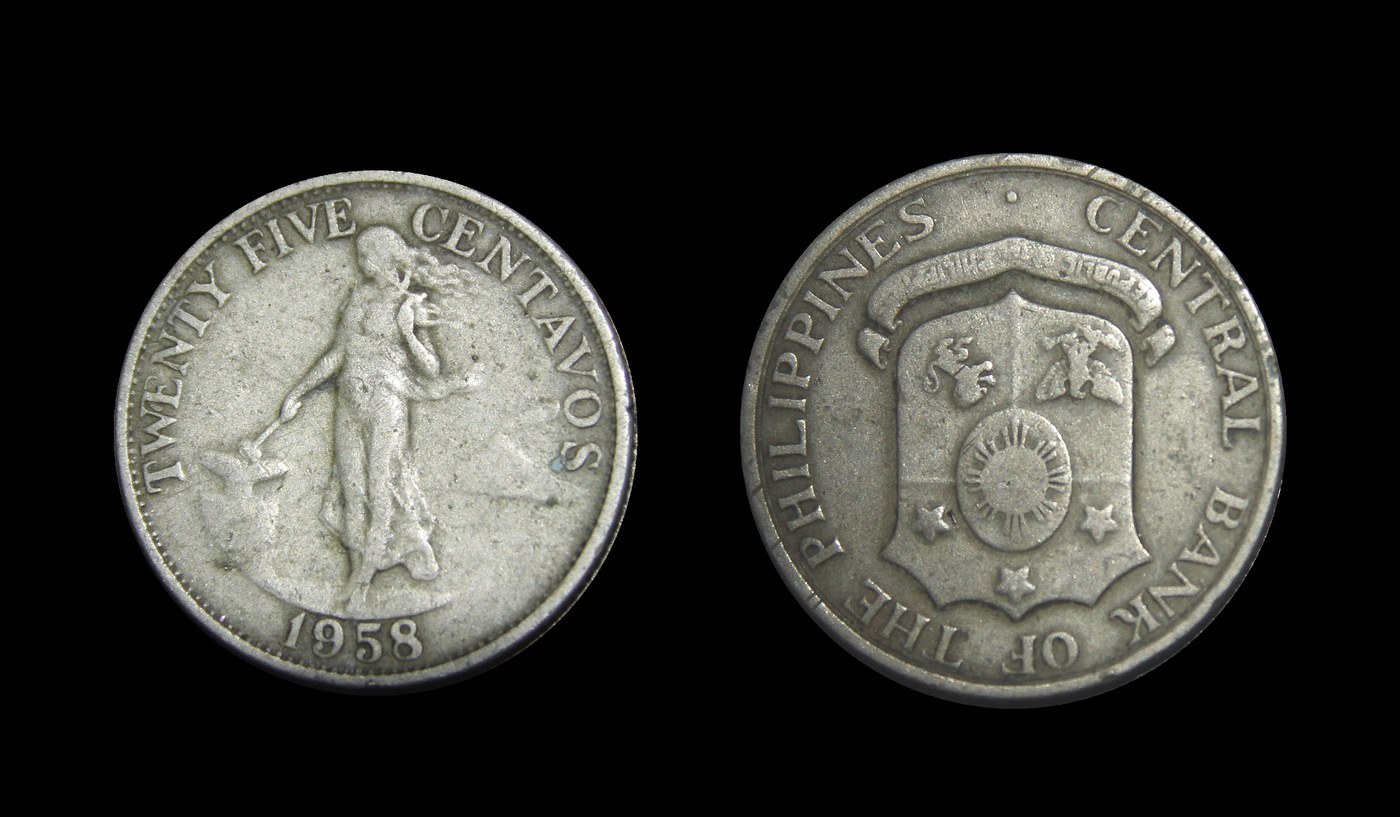
Philippines 25 Centavos
Silvery base-metal 25 centavos of the young Republic of the Philippines, dated 1958: a standing figure with a liberty torch and the Republic's sunburst coat of arms.
- Country
- Philippines
- Denomination
- 25 Centavos
- Metal
- Base metal (silvery copper-nickel-zinc alloy)
Got a coin like this?
Identify any coin from a photo, free.
Overview
The Philippines 25 Centavos shown here is a coin of the independent Republic of the Philippines, dated 1958. It belongs to the so-called "English Series," the first regular coinage the Republic issued in its own name after independence from the United States, with legends written in English. The obverse carries a standing allegorical figure holding a raised liberty torch, and the reverse displays the coat of arms of the Republic with its distinctive rayed sun.
Despite its bright, silvery-white look, this is a base-metal coin rather than a precious-metal one. The English Series minor coins in this size were struck in a pale copper-nickel-zinc alloy (a type of nickel-brass or "nickel silver") that closely resembles silver in colour, which is why the piece is so often taken for a silver coin. It carries no bullion content, and its interest to collectors is historical rather than in its metal.
As a mid-value denomination in everyday Philippine change of the late 1950s and 1960s, the 25 centavos was a workhorse coin. Its combination of an English legend, the liberty-torch figure and the Republic's sun-and-stars arms makes it a clear marker of the early years of Philippine self-government.
History & Background
The Philippines gained full independence from the United States in 1946. For its first postwar decade the country continued to use coinage inherited from the American and Commonwealth periods, but by the late 1950s the young Republic introduced a completely new national series struck in its own name. Because the inscriptions were in English, collectors call it the "English Series," issued from 1958 through 1966.
This 1958 25 centavos is part of that first republican issue. The designs broke with the earlier American-era coinage: instead of legends naming the United States or the Commonwealth, the reverse now reads for the Republic of the Philippines and shows the national coat of arms, while the obverse uses an allegorical figure with a liberty torch in the spirit of a newly sovereign nation. The rayed sun on the arms recalls the sun and three stars long used as symbols of Philippine nationhood.
The English Series circulated until the mid-1960s, when it was replaced by the "Pilipino Series" that switched the legends into the Filipino language and put national heroes on the coins. Because the English Series marks the transition from colonial to fully national coinage, its pieces are collected today as artifacts of the early Republic even though most are common.
How to Identify
This coin is about the size of a US quarter and has a silvery-white colour, but it is a base-metal alloy (copper-nickel-zinc), not silver. It is non-magnetic and typically has a reeded (grooved) edge. The bright appearance is the single biggest reason it is mistaken for a silver coin, so colour alone should not be used to judge the metal.
The obverse shows a standing allegorical figure holding a liberty torch aloft. The reverse carries the coat of arms of the Republic of the Philippines, featuring the eight-rayed sun above a shield, with English legends naming the Republic and the denomination TWENTY FIVE CENTAVOS, together with the date 1958.
The English-language legends and the word REPUBLIC are the decisive attribution clues. Earlier American-period 25 centavos coins name the United States of America or the Commonwealth of the Philippines and were struck in actual silver, while the later Pilipino Series uses the Filipino language and hero portraits. A 1958 date combined with an English "Republic of the Philippines" legend places this piece firmly in the base-metal English Series.
Value & Collectibility
The 1958 Philippines 25 Centavos is a common base-metal coin, so its value is modest. It has no precious-metal content, and worn or cleaned circulated examples are worth only a small amount, typically at the low end of the world-coin market as inexpensive collector filler.
Value rises with condition. Uncirculated pieces with full original lustre and sharp detail on the liberty-torch figure and the coat of arms command a higher premium than circulated coins, and certified high-grade examples are the most sought after. Even so, because these coins survive in quantity, prices for the type as a whole stay affordable.
Exact prices vary with grade, eye appeal and demand, so the figures here are general context rather than fixed values. The main thing that separates a common example from a more desirable one is the state of preservation, not the denomination or the silvery colour.
Frequently asked questions
Is the 1958 Philippines 25 Centavos made of silver?
No. Although it looks silvery, this English Series 25 centavos is a base-metal coin struck in a pale copper-nickel-zinc alloy. It has no precious-metal content. Only the earlier American-period Philippine 25 centavos (through 1945) were true silver.
What do the designs on the coin mean?
The obverse figure holds a liberty torch as an emblem of the newly sovereign Republic, and the reverse shows the coat of arms of the Republic of the Philippines. The rayed sun on the arms is a long-standing symbol of Philippine nationhood.
Why are the legends in English?
This is part of the "English Series" (1958-1966), the first coinage issued by the independent Republic in its own name, with inscriptions in English. It was later replaced by the Pilipino Series, which used the Filipino language and hero portraits.
How can I tell it from an American-era Philippine 25 centavos?
Check the legend and metal. This 1958 coin reads Republic of the Philippines in English and is silvery base metal; the earlier coins name the United States or the Commonwealth and were struck in real silver. The date and wording settle it.
Is my 1958 25 centavos worth much?
Most are common and worth only a modest amount, especially if worn. Uncirculated examples with full lustre and sharp detail are worth more, and certified high grades bring the strongest prices, but the type overall stays inexpensive.
Philippines 25 Centavos guides
In-depth guides for identifying, valuing, and collecting Philippines 25 Centavos.
Philippines 25 Centavos identified by the community
Real coins identified with Coin Identifier.
Other coins you may enjoy
Straits Settlements Dollar
1904
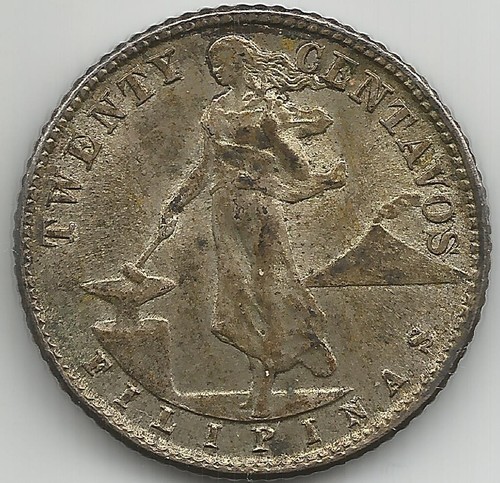
Philippines 20 Centavos
1937–1945 (this example dated 1944)
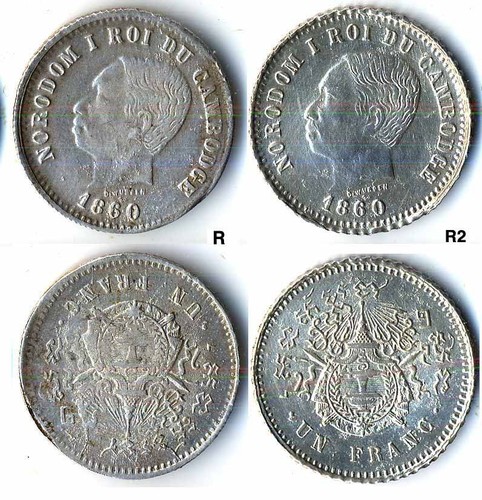
Cambodia One Franc
1950s–1960s
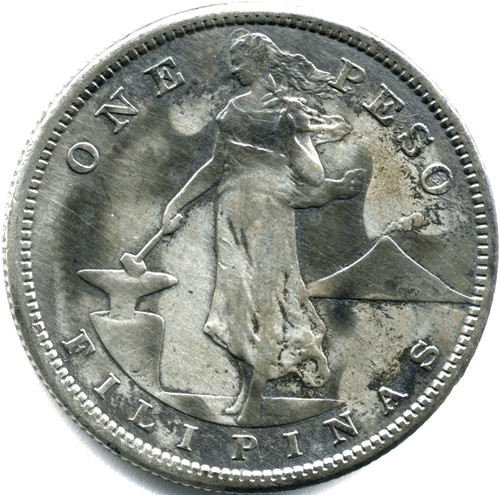
Philippines One Peso
1903–1912
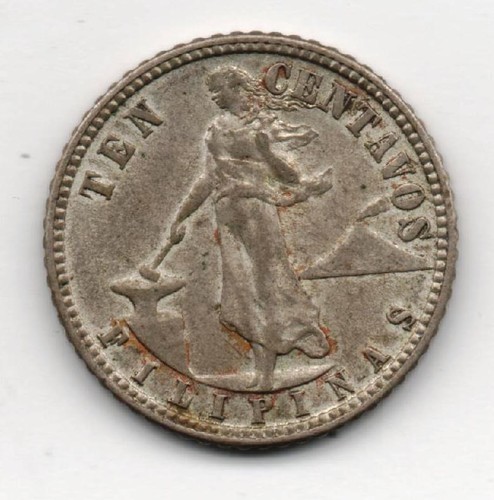
Philippines 10 Centavos
1907–1935 (this example dated 1911)
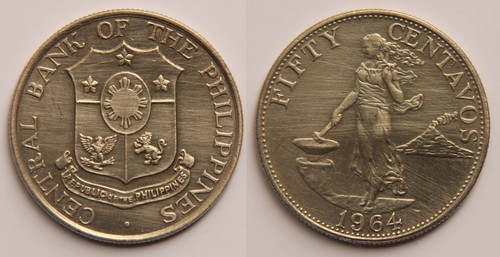
Philippines 50 Centavos
1958–1966 (English series); example dated 1964
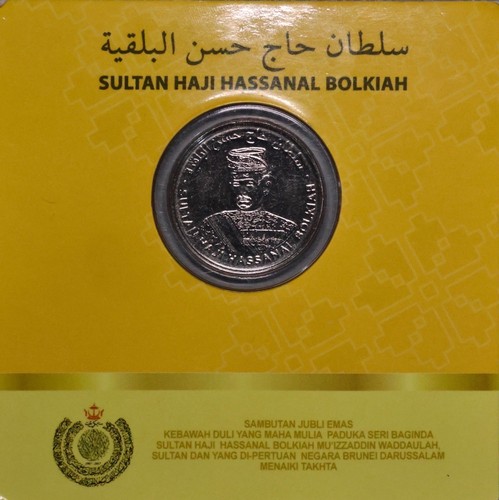
Brunei Golden Jubilee 50 Cents
Golden Jubilee issue, 2017
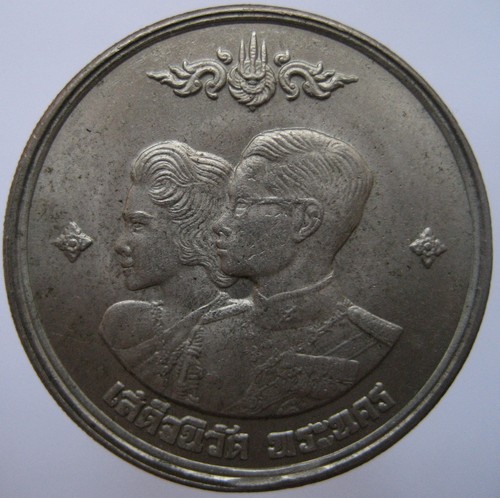
Thailand One Baht Commemorative
1961
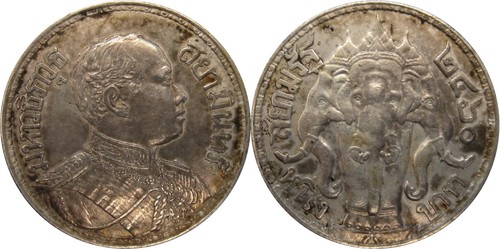
Thailand One Baht
1917
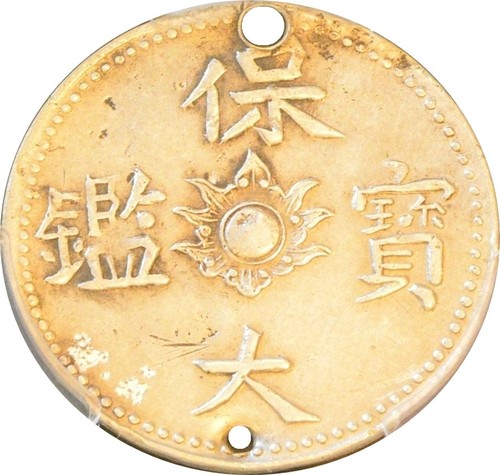
Vietnam 2 Tien - Bao Dai
1926-1945
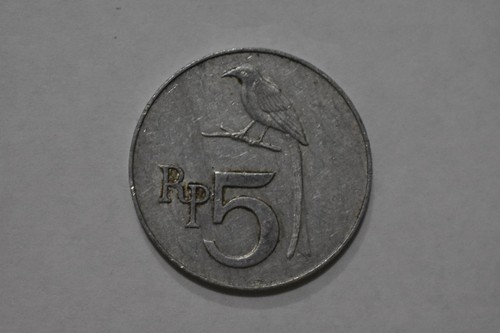
Indonesia 5 Rupiah
2003
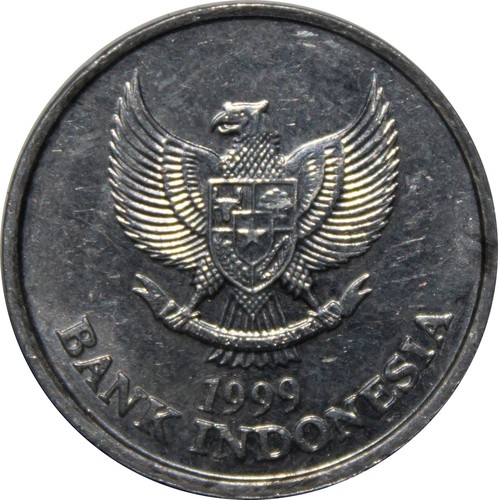
Indonesia 100 Rupiah
Modern (late 20th–21st century)