How to Identify the Philippines 25 Centavos
A collector's guide to the 1958 Republic 25 centavos: the liberty-torch obverse, sunburst coat of arms, silvery base-metal alloy, English legends and look-alikes.
Read the full Philippines 25 Centavos encyclopedia entry →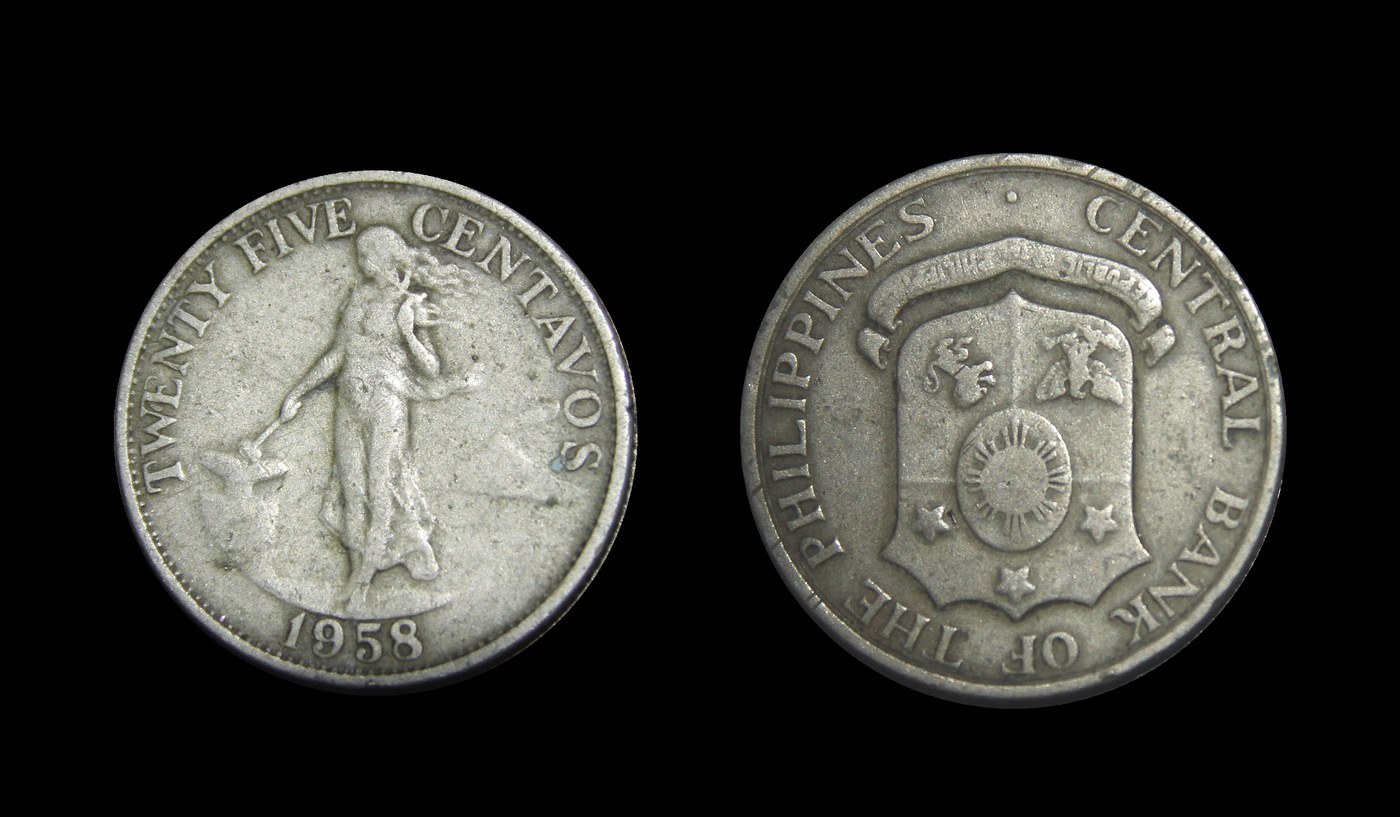
Begin with size and colour, but do not trust colour for the metal. The 25 centavos is roughly the diameter of a US quarter and has a bright silvery-white surface, yet it is a base-metal copper-nickel-zinc alloy rather than silver. A genuine coin is non-magnetic and usually has a reeded edge; the silvery look is exactly what causes it to be mislabelled as a silver piece, so weigh and measure it rather than relying on appearance.
Read the reverse legend first, because it is the most reliable identifier. Look for the coat of arms of the Republic of the Philippines with its eight-rayed sun, surrounded by English inscriptions naming the Republic and the value TWENTY FIVE CENTAVOS, with the date 1958. The word REPUBLIC in English, paired with a late-1950s date, is what fixes the coin as part of the base-metal English Series.
Check the obverse for the standing allegorical figure holding the raised liberty torch. This design, together with the English legends, distinguishes the coin from the American-period 25 centavos that used a Filipina-with-hammer motif, and from the later Pilipino Series that switched to Filipino-language legends and portraits of national heroes.
Separate it from its own look-alikes. The English Series also included 10 and 50 centavos of similar silvery colour and related designs, so use the diameter and the stated value on the reverse to be sure you have the 25 centavos and not a neighbouring denomination. The earlier true-silver 25 centavos are a different, more valuable type, and confusing the two is a common error, so always read the legend language and the date.
Authentication is rarely an issue because the coin is common base metal with little counterfeiting incentive; the practical task is correct attribution and grading. Confirm the diameter, the reeded edge and the English "Republic of the Philippines" legend, then judge condition. For value, wear on the torch figure and the coat of arms is what separates a common circulated coin from a desirable uncirculated one, so grade carefully before assigning worth.
Frequently asked questions
What is the quickest way to identify this coin?
Find a silvery, quarter-sized coin dated 1958 with a standing figure holding a torch on one side and the Republic of the Philippines coat of arms with a rayed sun on the other, all in English legends. That combination identifies the English Series 25 centavos.
How do I know it is base metal and not silver?
The English Series 25 centavos was struck in a silvery copper-nickel-zinc alloy, not silver. It looks white but has no bullion value. If your coin is dated 1958 and reads Republic of the Philippines, it is base metal regardless of its colour.
How do I tell the 25 centavos from the 10 or 50 centavos?
They share a similar silvery look and related designs, so read the value on the reverse and compare diameters. The 25 centavos sits between the smaller 10 centavos and the larger 50 centavos, and its reverse plainly states TWENTY FIVE CENTAVOS.
Does the coin have a mint mark I should look for?
Mint marks are not the key to identifying this type. Focus instead on the date, the English "Republic of the Philippines" legend, the liberty-torch obverse and the sunburst coat of arms, which together confirm the English Series 25 centavos.
Philippines 25 Centavos identified by the community
Recent Philippines 25 Centavos coins identified with Coin Identifier.