How to Identify the Philippines 50 Centavos
A collector's guide to the Philippine 50-centavos: the torch-bearing figure, the national arms, the copper-nickel fabric, dates and look-alikes.
Read the full Philippines 50 Centavos encyclopedia entry →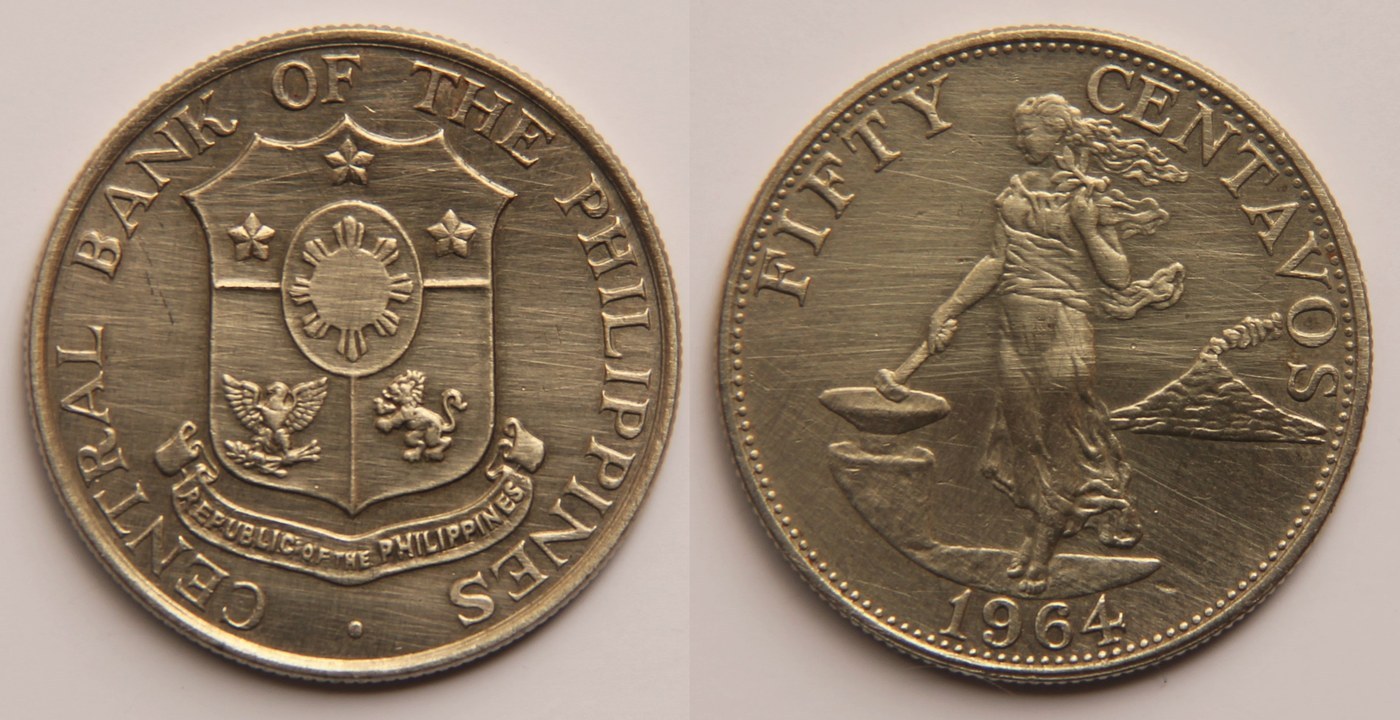
Begin with the design pairing, the quickest identifier. One face shows a standing allegorical female figure holding a torch, an emblem of liberty; the other shows the national coat of arms of the Philippines with the value "FIFTY CENTAVOS" and the country name. A torch-bearing figure on one side and the republican arms on the other, at a fifty-centavos value, points squarely to the Central Bank of the Philippines English series.
Confirm the physical coin. This is a round copper-nickel piece: a base-metal coin with a pale silvery-grey alloy that often tones darker or warmer in circulation. It is a middle denomination—clearly larger and heavier than the small one-, five- and ten-centavo coins of the same series, but not the size or heft of a large silver crown. A simple weight and diameter check helps confirm you have the fifty rather than a neighboring value, and separates it from unrelated coins struck in other metals.
Read the legends and date. Look for the numeral fifty with the word centavos, the name of the Philippines in English, and a date such as 1964 within the English-series span. The English wording and the modern national arms distinguish this coin from earlier Commonwealth and American-era Philippine issues, which use different legends and emblems, and from the later Filipino-language coinage that replaced this series.
Watch for look-alikes and related types. The same series carries the country name and similar styling across several denominations, so do not rely on the standing figure alone—check the stated value and the diameter. Earlier Philippine coins can also show allegorical standing figures and can superficially recall this imagery, but they differ in date, legend and often metal. Confirm the denomination and the coat-of-arms style rather than the portrait alone.
Apply standard authentication cautions. Genuine coins are struck, with clean lettering and crisp detail in the figure and the arms. Be wary of cast copies with soft or blurred detail, seams or surface bubbles, of coins artificially colored or plated, and of any piece offered as a precious-metal version of a denomination that circulated in base metal. When unsure, weigh and measure the coin and compare it against a reliable catalog of Philippine coinage.
Frequently asked questions
How do I tell the 50 centavos from other coins in the series?
Read the denomination directly: look for the numeral fifty with the word centavos, then confirm the middle-size diameter and weight. Smaller values in the same series share the national arms and similar styling, so the stated value and size are what set the fifty apart.
Could this be an older Commonwealth or American-era coin?
It can look related, since Philippine coins long used allegorical figures, but the English-series 50 centavos carries English legends and the modern republican arms and is dated to the late 1950s–1960s. Check the legends, date and emblem to separate it from earlier issues.
The coin looks dark or dull—is that a problem?
No. Copper-nickel tones with age and handling, so circulated coins often appear darker or duller than a fresh strike. Toning alone does not indicate a fake; judge authenticity from struck detail, correct weight and diameter instead.
How can I spot a counterfeit?
Genuine coins are sharply struck with clean legends and clear detail in the figure and coat of arms. Watch for casting seams, bubbles, mushy detail, plating meant to imitate precious metal, or an incorrect weight and diameter, and verify against a standard reference for Philippine coins when in doubt.
Philippines 50 Centavos identified by the community
Recent Philippines 50 Centavos coins identified with Coin Identifier.