
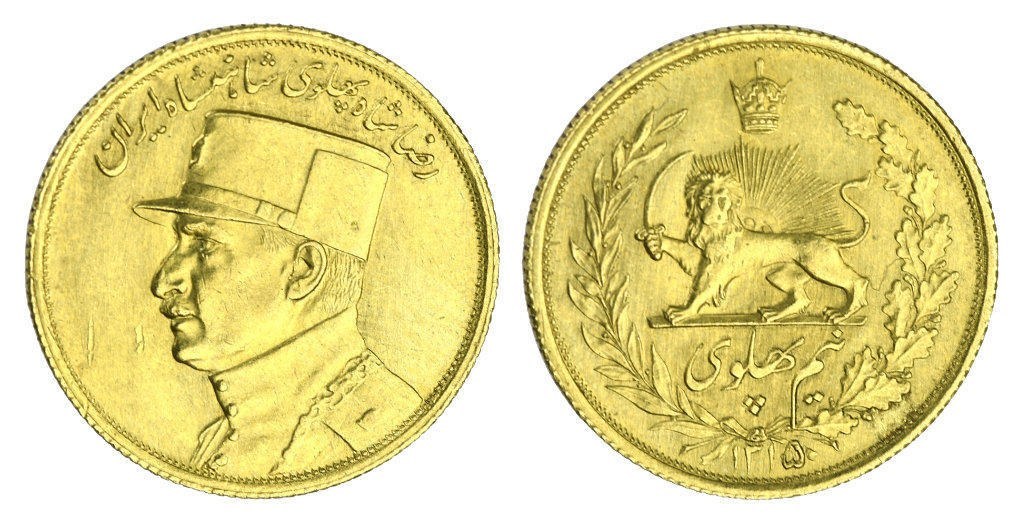
Half Pahlavi Gold Coin
A small Iranian gold coin worth half a Pahlavi, showing Reza Shah in a military cap on one side and the Lion and Sun with a crown on the other.
- Country
- Iran
- Denomination
- 0.5 Pahlavi
- Metal
- Gold
Got a coin like this?
Identify any coin from a photo, free.
Overview
The Half Pahlavi (Persian Nim Pahlavi) is a small gold coin of Iran valued at one-half of the full Pahlavi. The example shown carries a left-facing profile of Reza Shah Pahlavi in a military cap on the obverse and the Iranian Lion and Sun emblem — a standing lion holding a sword, a radiant sun behind it, a royal crown above and laurel branches to the sides — on the reverse.
The Pahlavi was Iran's principal gold denomination in the twentieth century, and the half-Pahlavi is the mid-size member of the family, struck below the full Pahlavi and above the quarter Pahlavi. Reza Shah–era pieces of this design date to roughly the late 1920s and 1930s (the coin's own date is given in the Solar Hijri calendar in Persian numerals).
Like other Pahlavi gold, it was minted in a high gold fineness and was intended as much for saving and bullion holding as for circulation. Read the coin's date, denomination word and portrait style to place it, and confirm weight and fineness before relying on any single attribution.
History & Background
Reza Shah Pahlavi came to power in 1925 and founded the Pahlavi dynasty, launching a broad program of state modernization that included reforming Iran's coinage. Gold coins denominated in Pahlavi replaced the older toman-based gold, and were struck at the Tehran mint in denominations that included the quarter, half, one, two and higher Pahlavi units.
Early Reza Shah gold carried his portrait in military uniform and cap, paired with the national Lion and Sun (Shir o Khorshid) — a centuries-old Persian emblem here surmounted by the Pahlavi crown. Dates on these coins follow the Solar Hijri (SH) calendar; the Reza Shah gold Pahlavis were struck in the years surrounding SH 1305–1310, corresponding to the second half of the 1920s and into the 1930s.
The Pahlavi gold system continued and expanded under Reza Shah's successor, Mohammad Reza Shah, remaining a standard vehicle for gold savings in Iran for decades. Half-Pahlavi coins with the Reza Shah portrait belong specifically to this founding period of the dynasty; precise dating of any individual piece depends on reading its Persian date and comparing it to catalogued examples.
How to Identify
Start with the obverse portrait. This coin shows a bare-headed-to-capped bust: Reza Shah in profile facing left, wearing a military cap and uniform. That uniformed portrait, together with a Persian legend naming the Shah, is the key marker of the Reza Shah issues as opposed to later Pahlavi types.
Turn to the reverse and confirm the Lion and Sun. Look for a standing or seated lion, typically holding a sword, with a radiating sun behind or above it, a crown at the top and laurel or wreath branches framing the design. The denomination — half a Pahlavi (Nim Pahlavi) — and the date appear in Persian script and Persian-Indic numerals; transcribe both.
Check size and weight against the denomination. A half Pahlavi is a small gold coin, noticeably smaller and lighter than a full Pahlavi and larger than a quarter Pahlavi; the standard Pahlavi gold was struck in high fineness (0.900). Because the design has been widely restruck and copied, do not rely on appearance alone: record the exact weight and diameter, note any edge features, and remember that gold color does not by itself prove gold content.
Value & Collectibility
A genuine half-Pahlavi has a firm floor set by its gold content: it is a small coin of high-fineness gold, so its intrinsic (bullion) value tracks the gold market for its weight. Any premium above that rests on the coin being authentic, on its date and preservation, and on collector demand for Reza Shah–era Pahlavi gold specifically.
Early Reza Shah portrait Pahlavis can carry a numismatic premium over plain bullion when they are genuine and well preserved, but values vary widely by date and grade and by whether a piece is an original strike or a later restrike. Treat any single figure as general context rather than a fixed price, and check current gold prices plus recent auction and dealer results for the exact date and grade.
Because Pahlavi gold is heavily traded and widely imitated, official restrikes, jewelry-mounted pieces and outright fakes all circulate. Obtain independent metal testing and, for anything sold at a numismatic premium, a specialist opinion before assigning a firm value.
Frequently asked questions
What is a Half Pahlavi?
It is an Iranian gold coin worth one-half of a full Pahlavi, part of the Pahlavi gold series introduced under Reza Shah. In Persian it is called the Nim Pahlavi.
Who is on the coin?
The obverse shows Reza Shah Pahlavi, founder of the Pahlavi dynasty, in profile wearing a military cap and uniform. The exact identification should be confirmed from the Persian legend.
What is the emblem on the reverse?
It is the Lion and Sun (Shir o Khorshid), the historic national emblem of Iran: a lion with a radiant sun, topped by a crown and framed by laurel branches.
How much gold does it contain?
The Pahlavi series was struck in high-fineness gold (0.900), and the half-Pahlavi is a small coin, so its gold weight is roughly half that of a full Pahlavi. Weigh and test the specific piece to confirm.
How do I read the date?
The date is in the Solar Hijri (SH) calendar written in Persian numerals. Reza Shah half-Pahlavis fall in the late 1920s to 1930s; converting the SH year gives the Common Era date.
Half Pahlavi Gold Coin guides
In-depth guides for identifying, valuing, and collecting Half Pahlavi Gold Coin.
Other coins you may enjoy
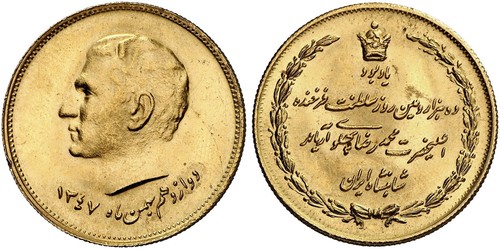
Pahlavi Reign Gold Medal
1971
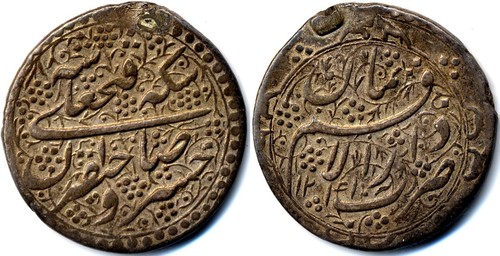
Qiran of Fath-Ali Shah Qajar
AH 1240–1241 (AD 1825–1826)
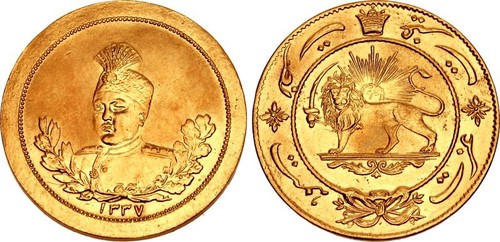
Qajar 5 Tomans Commemorative
Late Qajar period; dated 1299 (Solar Hijri, c. 1920 CE), reign of Ahmad Shah Qajar (1909–1925)
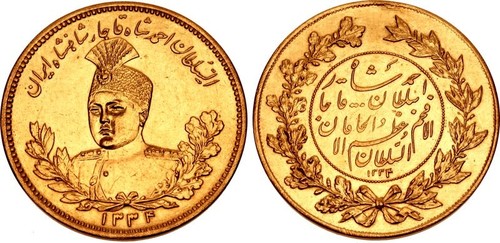
Gold Toman of Ahmad Shah Qajar
Qajar dynasty; Ahmad Shah's reign AH 1327–1344 (1909–1925 CE)
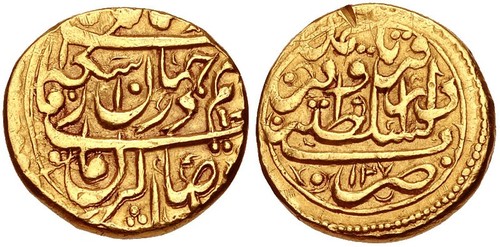
Gold Toman of Agha Mohammad Khan Qajar
1792–1793 CE (AH 1206–1207)
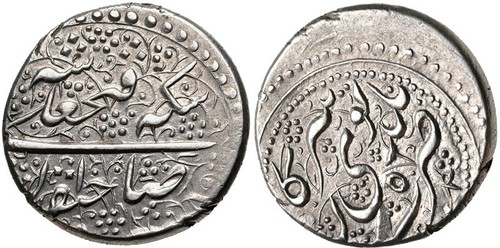
Gold Toman of Fath-Ali Shah Qajar
1811–1812 CE (AH 1226–1227)
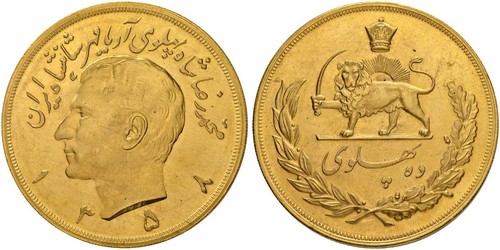
10 Pahlavi Gold Coin
Struck under Mohammad Reza Shah Pahlavi; the example shown is dated 1979 (Imperial year 2537–2538 SH)
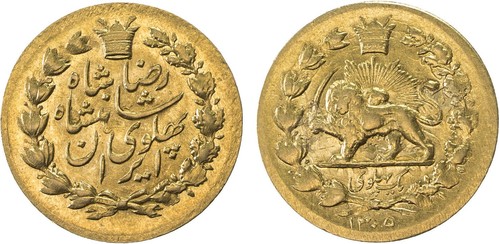
1 Pahlavi Gold Coin
Pahlavi dynasty, mid-20th century (issues commonly dated to the 1950s–1970s)
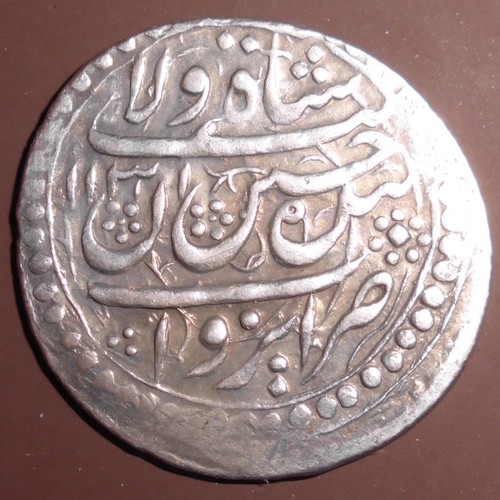
Abbasi of Shah Sultan Husayn
Reign of Shah Sultan Husayn, AH 1105–1135 (1694–1722 CE)