
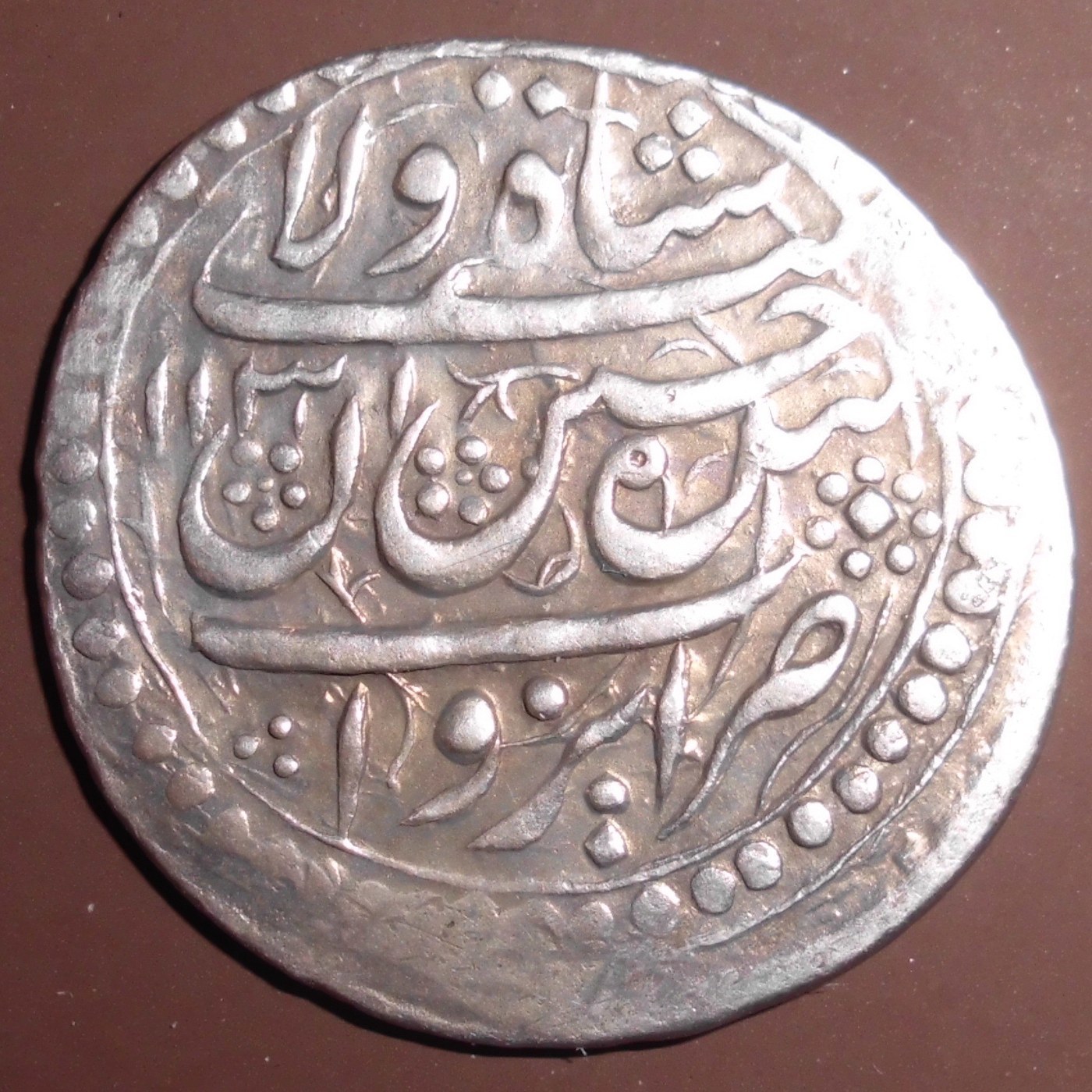
Abbasi of Shah Sultan Husayn
A hand-struck Safavid silver abbasi of Shah Sultan Husayn, covered entirely in flowing Persian-Arabic calligraphy with jeweled borders and no portrait.
- Country
- Persia (Iran)
- Denomination
- Abbasi
- Metal
- Silver
Got a coin like this?
Identify any coin from a photo, free.
Overview
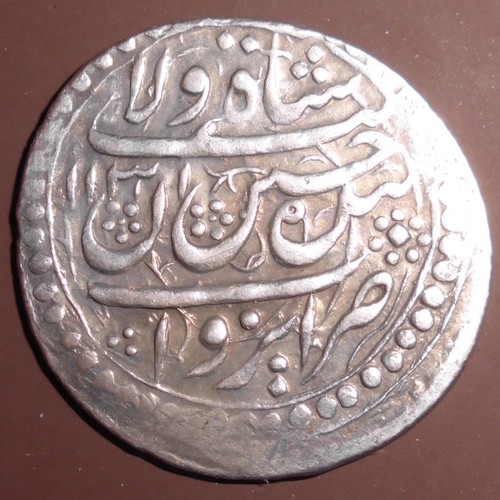
The abbasi is a silver coin of Safavid Persia, and the piece shown here belongs to the reign of Shah Sultan Husayn, the last effective ruler of the Safavid dynasty. Both faces are filled with Persian-Arabic calligraphy arranged in horizontal lines and framed by decorative jeweled borders, with no portrait or figural image of any kind.
Named after Shah Abbas I, who standardized it around the turn of the seventeenth century, the abbasi became the principal silver denomination of Safavid Iran. It anchored a system of fractions and multiples used throughout the empire's markets, and coins in the name of successive shahs continued the same aniconic, inscription-only design.
On this coin the obverse carries calligraphy in horizontal lines with decorative elements and a jeweled border, while the reverse bears further inscription within a circular jeweled border that includes the mint-and-date formula. The overall effect is decorative and text-driven, typical of late Safavid silver.
History & Background
The Safavid dynasty ruled Persia from 1501, establishing Twelver Shi'ism as the state religion and presiding over a flourishing of Persian art, architecture, and coinage. The silver abbasi, introduced under Shah Abbas I (reigned 1588–1629), gave the realm a stable, widely trusted trade coin that remained the backbone of Safavid currency for well over a century.
Shah Sultan Husayn reigned from 1694 to 1722 (AH 1105–1135) and was the last shah to hold effective power before the Afghan invasion that led to the siege of Isfahan and the collapse of Safavid rule. Coins struck in his name continued long-established conventions: elegant Persian calligraphy, religious and dynastic formulas, and the mint name and Hijri year worked into the design rather than any image of the ruler.
The abbasis of his reign therefore sit at the very end of the classical Safavid coinage tradition. They were produced at many provincial mints, and their inscriptions typically combine a Shi'ite religious invocation with a couplet or legend naming the sovereign, alongside the place and year of striking.
How to Identify
An abbasi of Shah Sultan Husayn is a hand-struck silver coin, generally broad and thin, with an outline that is often slightly irregular because each piece was struck individually from dies. Silver gives it a grey to lightly toned appearance rather than the reddish tone of copper, and well-preserved examples show crisp, flowing script.
Both faces are entirely epigraphic. The obverse shows Persian-Arabic calligraphy in horizontal lines accompanied by decorative elements and a jeweled border; the reverse carries further calligraphy within a circular jeweled border that includes the mint name and the Hijri date. The dotted or beaded 'jeweled' frames around the legends are a characteristic decorative feature of Safavid silver of this period.
Attribution rests on reading the legends. The religious formula and the ruler's name identify the issue with Shah Sultan Husayn, while the mint-and-date portion ties it to a specific city and Hijri year. Dates and mints are spelled or set out in Arabic script rather than as Western numerals, so matching the legend against a reference for the reign (AH 1105–1135) is the key step.
Value & Collectibility
Safavid abbasis are relatively plentiful as a class, since silver was the standard trade metal of the empire and large numbers were struck across many mints during the long Safavid period. Ordinary circulated examples of Shah Sultan Husayn's abbasis are generally accessible to collectors rather than rare.
Value within the series depends on the mint, the date, how complete and legible the calligraphy is, and overall preservation. Coins that are well centered with full, sharp inscriptions and clear mint-and-date legends, or that come from scarcer mints, are more desirable than worn, clipped, or weakly struck pieces where the text and borders are hard to read.
Because pricing turns on grade, mint, and specialist demand, and because hand-struck silver varies so much from coin to coin, figures should be treated as general context rather than fixed quotes. A clear, readable mint and Hijri date is the single biggest factor in a given coin's interest and value.
Frequently asked questions
What is an abbasi?
The abbasi was the principal silver denomination of Safavid Persia, named after Shah Abbas I who standardized it. It served as a major trade coin and anchored a system of silver fractions and multiples.
Who was Shah Sultan Husayn?
Shah Sultan Husayn reigned from 1694 to 1722 CE (AH 1105–1135) and was the last effective Safavid shah of Persia before the Afghan invasion and the fall of Isfahan ended Safavid rule.
Why is there no portrait on the coin?
Safavid coinage is aniconic, avoiding portraits and figural images. Instead it uses Persian-Arabic calligraphy carrying religious and dynastic formulas along with the mint name and Hijri date.
How old is this coin?
It dates to the reign of Shah Sultan Husayn, AH 1105–1135, which corresponds to 1694–1722 CE, placing it at the very end of the Safavid period in the late 17th and early 18th centuries.
Is an abbasi of Shah Sultan Husayn valuable?
Most are relatively common and affordable because Safavid silver was struck in quantity. Value depends mainly on the mint, the date, the legibility of the calligraphy, and how well the coin has survived.
Abbasi of Shah Sultan Husayn guides
In-depth guides for identifying, valuing, and collecting Abbasi of Shah Sultan Husayn.
Other coins you may enjoy
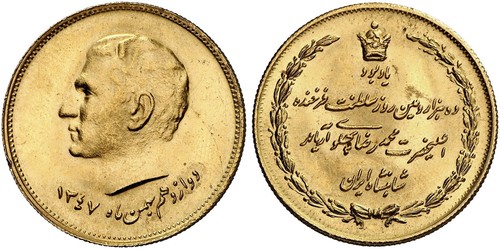
Pahlavi Reign Gold Medal
1971
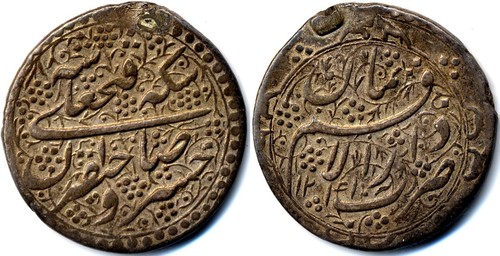
Qiran of Fath-Ali Shah Qajar
AH 1240–1241 (AD 1825–1826)
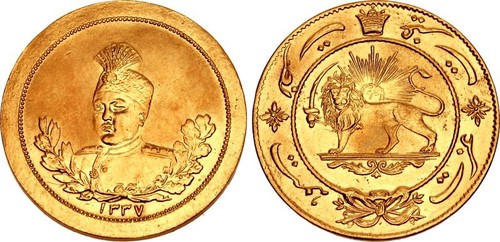
Qajar 5 Tomans Commemorative
Late Qajar period; dated 1299 (Solar Hijri, c. 1920 CE), reign of Ahmad Shah Qajar (1909–1925)
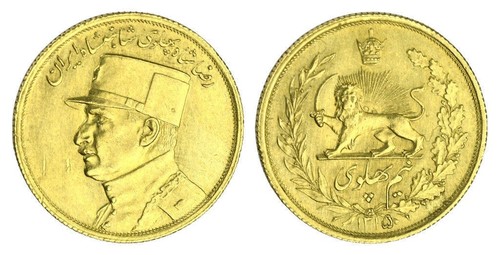
Half Pahlavi Gold Coin
1920s–1930s (Reza Shah era)
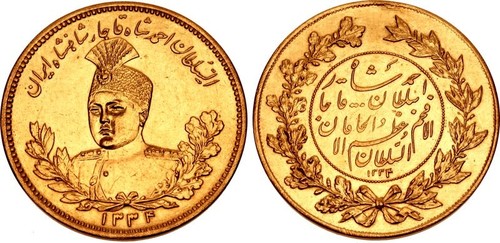
Gold Toman of Ahmad Shah Qajar
Qajar dynasty; Ahmad Shah's reign AH 1327–1344 (1909–1925 CE)
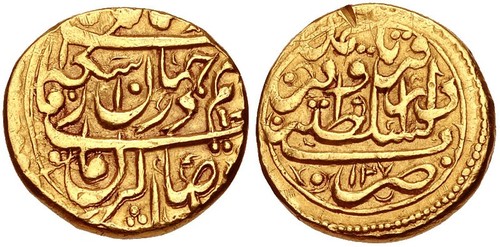
Gold Toman of Agha Mohammad Khan Qajar
1792–1793 CE (AH 1206–1207)
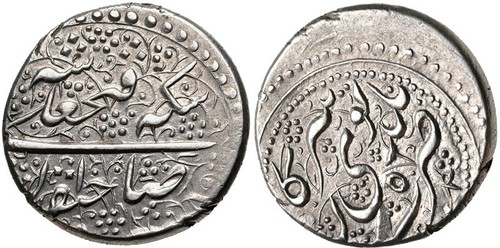
Gold Toman of Fath-Ali Shah Qajar
1811–1812 CE (AH 1226–1227)
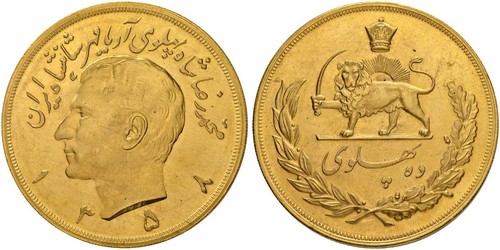
10 Pahlavi Gold Coin
Struck under Mohammad Reza Shah Pahlavi; the example shown is dated 1979 (Imperial year 2537–2538 SH)
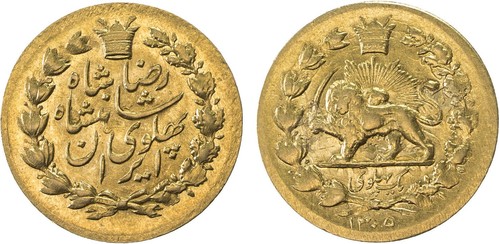
1 Pahlavi Gold Coin
Pahlavi dynasty, mid-20th century (issues commonly dated to the 1950s–1970s)