
How to Identify the Abbasi of Shah Sultan Husayn
A collector's guide to attributing a Safavid abbasi of Shah Sultan Husayn: reading its calligraphy, jeweled borders, mint and Hijri date, and spotting look-alikes.
Read the full Abbasi of Shah Sultan Husayn encyclopedia entry →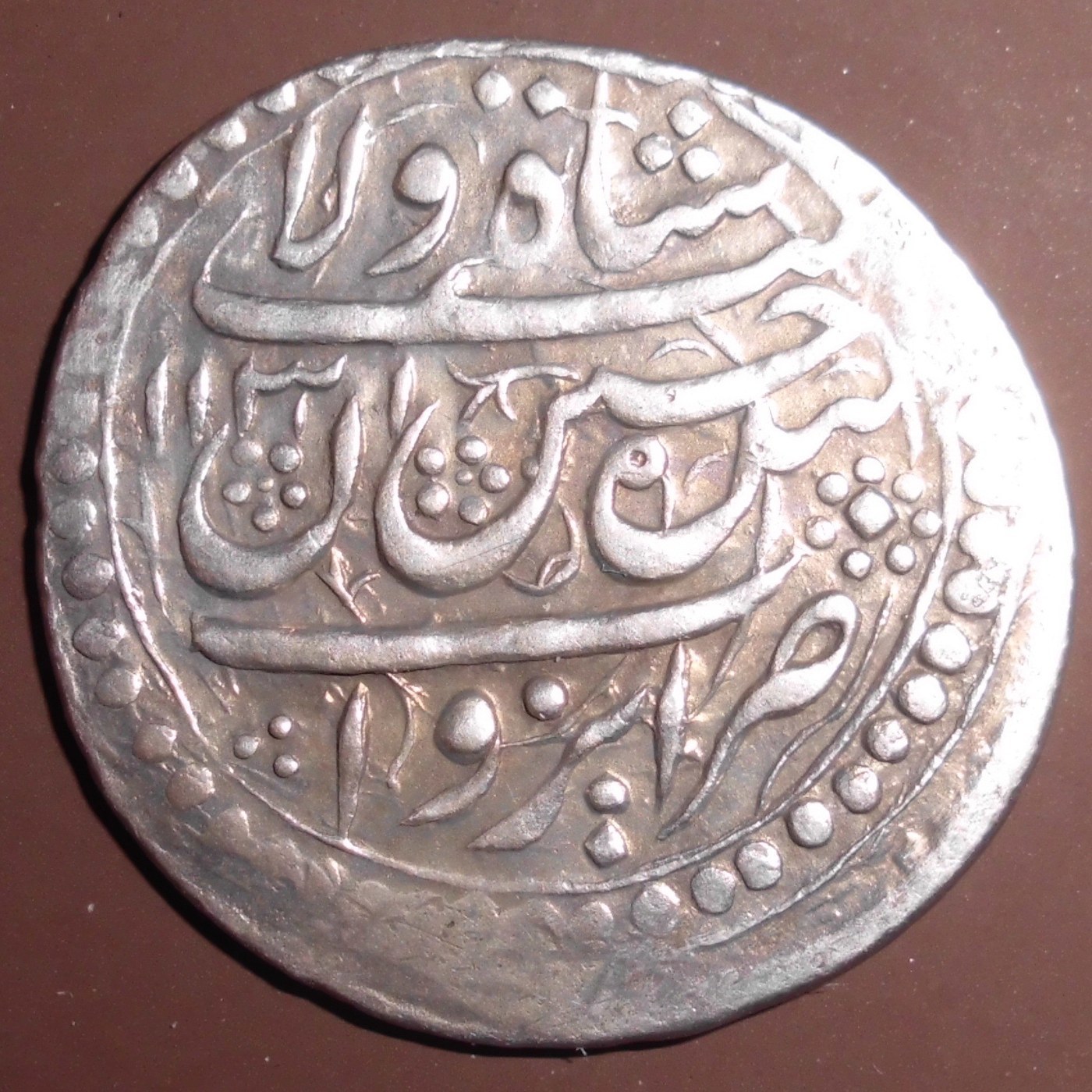
Begin by confirming the coin is entirely calligraphic. An abbasi of Shah Sultan Husayn carries only Persian-Arabic script on both faces, set out in horizontal lines with no portrait, animal, or figural device anywhere. A distinctive feature is the jeweled border: a beaded or dotted decorative frame around the legends, with the reverse typically enclosed in a circular jeweled border containing the mint-and-date formula. If you see a portrait or any Latin lettering, the coin is not a Safavid abbasi.
Read the legends to attribute the piece. The inscriptions combine a Shi'ite religious invocation with a legend naming the sovereign, which is what ties the coin to Shah Sultan Husayn rather than to an earlier or later ruler. The reverse mint-and-date formula is the key to a precise attribution: it names the mint and the Hijri year, both in Arabic script rather than Western numerals. Matching that legend against a reference for the reign (AH 1105–1135 / 1694–1722 CE) is what pins the coin down.
Check the physical coin. This is silver, so expect a grey to lightly toned surface rather than the reddish-brown of copper. Abbasis are hand-struck, broad, and fairly thin, so the flan is often slightly irregular and the strike can be uneven or off-center, leaving part of the legend or border running off the edge. Weight and diameter vary somewhat between mints and over time, so use the calligraphy and denomination context rather than exact measurements alone.
Watch for look-alikes. Abbasis were struck in the names of many Safavid shahs, and later Afsharid, Zand, and Qajar silver, as well as coins of neighboring Islamic states, can look broadly similar with all-calligraphic designs and beaded borders. The specific ruler's name and the mint-and-date legend — not the general appearance — separate an abbasi of Shah Sultan Husayn from these related issues. Fractional and multiple denominations of the same reign also share the design and are distinguished mainly by size and weight.
Apply sensible authentication checks. Genuine abbasis are struck, showing the slightly uneven relief and flan shape of hand production; be wary of cast copies with soft, blurry detail, seams, or bubbles, and of pieces with tooled surfaces or artificial toning hiding modern work. When the legend cannot be read clearly, compare the coin against a specialist catalog of Safavid coinage or seek an expert opinion before accepting a firm attribution to this reign and mint.
Frequently asked questions
How do I read the date on the coin?
The date is given in the Hijri (AH) calendar and written in Arabic script as part of the reverse mint-and-date formula, not as Western numerals. For this type it should fall within AH 1105–1135, the reign of Shah Sultan Husayn.
Where is the mint name?
The mint is named within the reverse legend, usually inside the circular jeweled border as part of the phrase stating where the coin was struck. Reading or matching that mint name against a reference is essential for a precise attribution.
How can I tell it apart from other Safavid silver?
Abbasis were struck for many shahs and in fractions and multiples, so appearance alone is not enough. The ruler's name in the legend identifies it with Shah Sultan Husayn, while size and weight help distinguish the abbasi from its fractional and multiple denominations.
How do I spot a fake or tooled coin?
Genuine abbasis are struck, with the uneven relief and irregular flan of hand production. Watch for casting seams, bubbles, and mushy detail, and for artificial toning concealing modern or tooled surfaces. Verify doubtful pieces against a specialist Safavid catalog.