
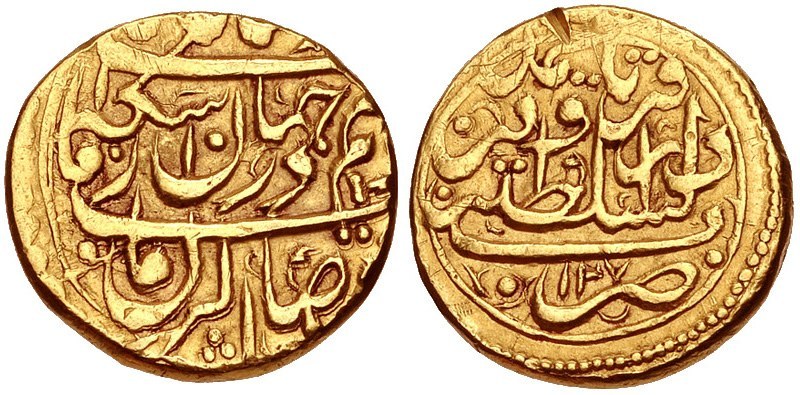
Gold Toman of Agha Mohammad Khan Qajar
A gold toman of Agha Mohammad Khan, founder of the Qajar dynasty, struck at Qazvin in AH 1206–1207 (1792–1793), covered in Persian calligraphy with no portrait.
- Country
- Persia (Iran)
- Denomination
- Toman
- Metal
- Gold
Got a coin like this?
Identify any coin from a photo, free.
Overview
The gold toman of Agha Mohammad Khan Qajar is an early issue of Iran's Qajar dynasty, struck as the dynasty's founder was consolidating power over Persia. The example shown carries Persian and Arabic calligraphy arranged in horizontal lines on the obverse, with the reverse naming the mint of Qazvin and the date. It is dated AH 1206–1207, corresponding to 1792–1793 CE.
The toman was the principal gold denomination of Qajar Iran, a high-value coin used for large payments and for the storage of wealth rather than everyday marketplace change. Its design follows the long-established Islamic and Persian tradition of purely epigraphic coinage: the whole surface is given over to calligraphy expressing the ruler's authority together with the mint and date.
Like other coins of the period, this piece bears no portrait or figural image. Instead the inscriptions carry the sovereign's name and titles in a couplet or formula, framed by the minting information, which places it firmly at the very beginning of the Qajar era.
History & Background
Agha Mohammad Khan Qajar (reigned as shah from 1789/1796 until his death in 1797) was the founder of the Qajar dynasty, which would rule Iran into the early twentieth century. He spent years campaigning to reunite the Persian lands after the collapse of earlier dynasties and the turmoil that followed the death of Nader Shah, and coins struck in his name during the early 1790s date from this period of consolidation.
A date of AH 1206–1207 (1792–1793) falls in the years before his formal coronation as shah, when he was extending his control across northern and central Persia. Qazvin, the mint named on this coin's reverse, was one of the important cities in the region he was securing. Striking gold in his own name at such mints was both an economic act and a public assertion of sovereignty.
The coinage of Agha Mohammad Khan continued the Persian tradition of finely arranged calligraphic dies. His gold tomans and their fractions carry his name and royal formula in flowing script, with the mint-and-date legend identifying where and when each piece was made. These coins are historically significant as the first gold issues of a dynasty that would define modern Iranian history.
How to Identify
This is a hand-struck gold coin whose surfaces are covered entirely in Persian and Arabic calligraphy, with no portrait, animal, or figural device of any kind. The obverse shows the inscriptions arranged in horizontal lines and contains the ruler's name and royal formula; the reverse carries the mint-and-date legend, which on this coin names the mint of Qazvin and gives the date in the Hijri calendar.
The metal is gold, so expect a warm yellow tone and the softness typical of a high-purity gold alloy. Early Qajar tomans are struck on relatively small, thick flans and, like all hand-struck coins, can be slightly irregular in outline and unevenly centered, so parts of the legend may run toward or off the edge. The date is written out in Arabic numerals and words within the reverse formula rather than shown in a Western style.
Attribution rests on reading the legends. The obverse names Agha Mohammad Khan in a royal couplet or titulature, while the reverse phrase "struck at Qazvin" together with the AH year fixes the specific mint and date. The complete absence of any image, the flowing Persian nastaliq-style script, and the gold metal together distinguish it from the silver and copper coins of the same reign and from the coinage of other dynasties.
Value & Collectibility
Gold tomans of Agha Mohammad Khan are scarce, historically important coins. As the first gold issues of the Qajar dynasty and the product of a relatively short and turbulent reign, they were struck in far smaller numbers than the silver and copper coinage of the period, and they carry the intrinsic value of their gold content in addition to their numismatic interest.
Value depends on the mint, the date, the fullness and sharpness of the strike, and overall preservation, as well as the weight and denomination, since tomans were issued alongside fractional gold pieces. A well-centered coin with complete, legible legends and clear mint and date is considerably more desirable than a weakly struck, clipped, or worn example. Coins from particular mints or dates can command a premium among specialists in Persian and Islamic coinage.
Because these are gold coins of genuine rarity, prices are driven by both the bullion value and strong collector demand, and individual results vary widely by grade and by the strength of the reading. Any figures should be treated as general context rather than fixed quotes; a clear attribution of Qazvin and the AH 1206–1207 date is central to establishing a specific piece's interest and value.
Frequently asked questions
Who was Agha Mohammad Khan Qajar?
He was the founder of the Qajar dynasty of Iran, who reunited Persia after a period of upheaval and ruled until 1797. Coins in his name from the early 1790s date from his rise to power before his formal coronation as shah.
What is a toman?
The toman was the principal gold denomination of Qajar Iran, a high-value coin used for large payments and storing wealth rather than for everyday small change. It was issued alongside smaller fractional gold pieces.
What does the date AH 1206–1207 mean?
AH refers to the Islamic Hijri calendar, counted from 622 CE. AH 1206–1207 converts to about 1792–1793 CE, placing the coin at the very start of the Qajar dynasty.
Where was this coin made?
The reverse names the mint of Qazvin, an important city in the region Agha Mohammad Khan was securing. The mint name and Hijri year are written into the reverse legend.
Why is there no portrait on the coin?
Persian and Islamic coinage of this era is aniconic, using calligraphy instead of images. The surfaces carry the ruler's name and royal formula along with the mint and date rather than a portrait.
Gold Toman of Agha Mohammad Khan Qajar guides
In-depth guides for identifying, valuing, and collecting Gold Toman of Agha Mohammad Khan Qajar.
Other coins you may enjoy
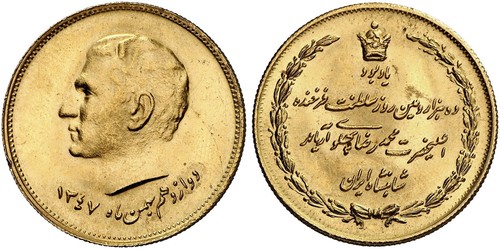
Pahlavi Reign Gold Medal
1971
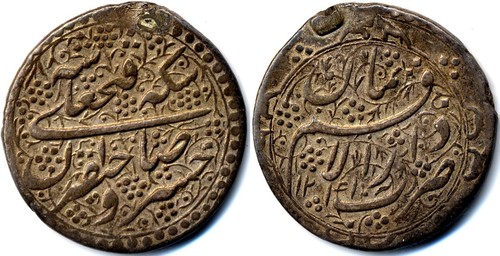
Qiran of Fath-Ali Shah Qajar
AH 1240–1241 (AD 1825–1826)
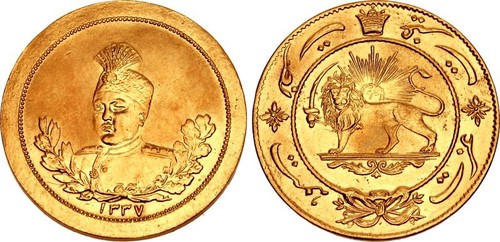
Qajar 5 Tomans Commemorative
Late Qajar period; dated 1299 (Solar Hijri, c. 1920 CE), reign of Ahmad Shah Qajar (1909–1925)
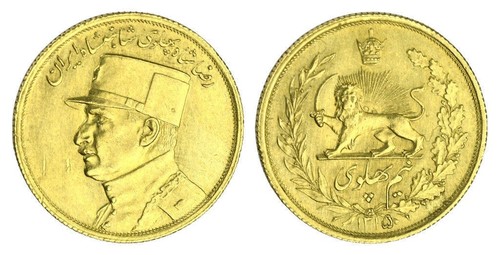
Half Pahlavi Gold Coin
1920s–1930s (Reza Shah era)
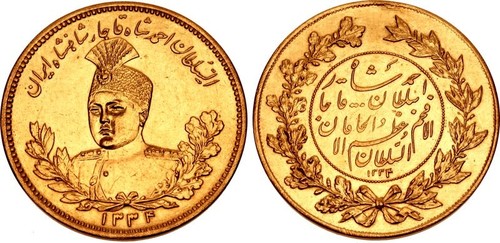
Gold Toman of Ahmad Shah Qajar
Qajar dynasty; Ahmad Shah's reign AH 1327–1344 (1909–1925 CE)
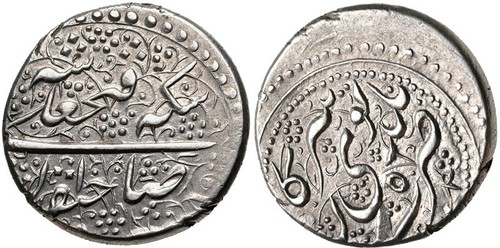
Gold Toman of Fath-Ali Shah Qajar
1811–1812 CE (AH 1226–1227)
10 Pahlavi Gold Coin
Struck under Mohammad Reza Shah Pahlavi; the example shown is dated 1979 (Imperial year 2537–2538 SH)
1 Pahlavi Gold Coin
Pahlavi dynasty, mid-20th century (issues commonly dated to the 1950s–1970s)
Abbasi of Shah Sultan Husayn
Reign of Shah Sultan Husayn, AH 1105–1135 (1694–1722 CE)