
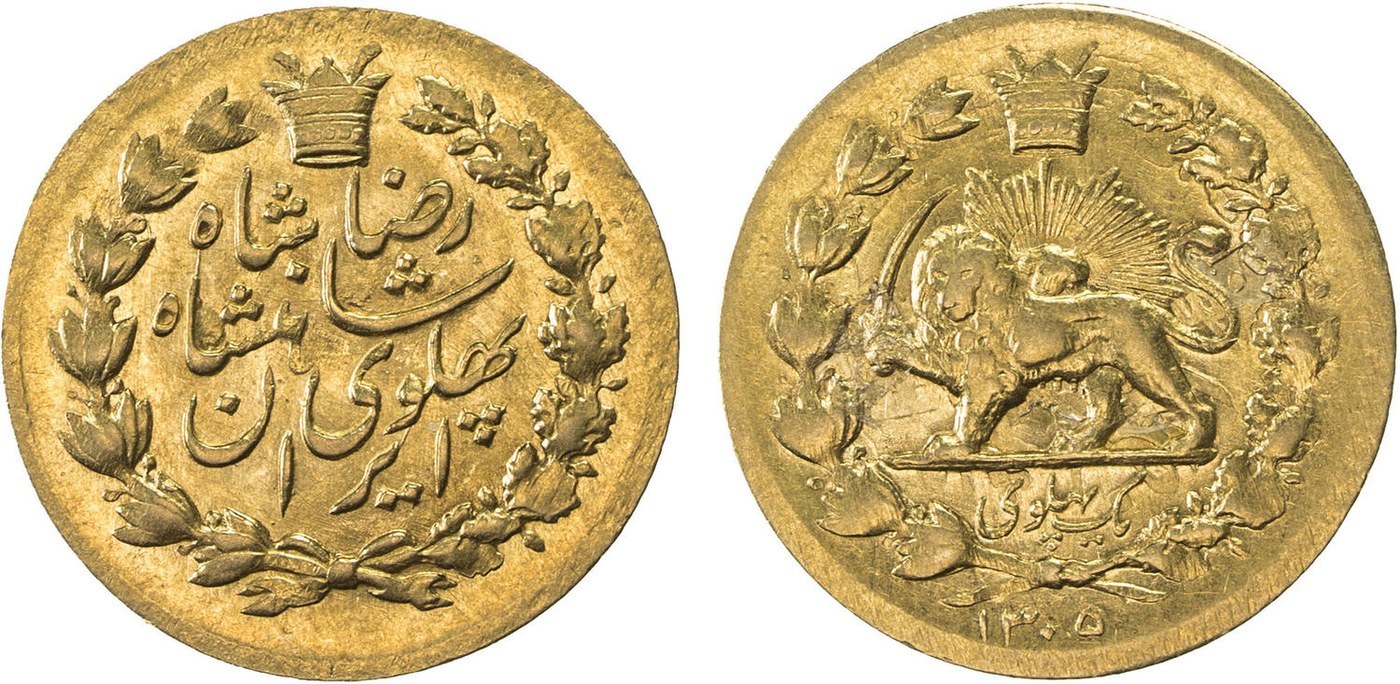
1 Pahlavi Gold Coin
A gold coin of Pahlavi-era Iran, with Persian text and a crowned royal emblem on one side and the Lion and Sun within laurel wreaths on the other.
- Country
- Iran
- Denomination
- 1 Pahlavi
- Metal
- Gold
Got a coin like this?
Identify any coin from a photo, free.
Overview
The 1 Pahlavi is a gold coin of modern Iran, named after the Pahlavi dynasty that ruled the country in the twentieth century. The example shown carries Persian inscriptions and royal symbols crowned with a diadem on the obverse, while the reverse displays the Lion and Sun — Iran's national emblem — a standing lion holding a sword before a rising sun, topped by a crown and framed by laurel wreaths.
The Pahlavi was part of a family of gold coins issued in fractions and multiples, with pieces such as the quarter, half, one, two-and-a-half, five, and ten Pahlavi sharing the same broad design language. The 1 Pahlavi sits in the middle of this range and was the most familiar single unit of the series.
These coins functioned partly as circulating and ceremonial money and partly as a store of value, and the gold Pahlavi remains widely recognized as a traditional gold savings and gifting piece in Iran and the wider region.
History & Background
The Pahlavi dynasty was founded in 1925 when Reza Shah came to power, replacing the Qajar dynasty, and continued under his son Mohammad Reza Shah until the Iranian Revolution of 1979. During this period Iran modernized its coinage, and the gold Pahlavi was introduced as a standardized gold denomination named for the ruling house.
Throughout the mid-twentieth century the Iranian mint in Tehran struck gold Pahlavis in a range of denominations. The Lion and Sun (Shir-o-Khorshid) that appears on the reverse was the long-standing national emblem of Iran, carried on flags, seals, and coins, and its use on the Pahlavi gold connects these modern coins to a much older Persian symbolic tradition.
Gold Pahlavis were valued as much for their bullion content as for use as money, and they became a customary way to hold wealth and to give gifts on occasions such as weddings. Coins of this type continued to be produced and dated through the 1950s, 1960s, and 1970s before the fall of the monarchy.
How to Identify
The 1 Pahlavi is a gold coin with the warm yellow tone of a high-purity gold alloy, and it is noticeably heavy for its modest size. The obverse of the example shown carries Persian text together with royal symbols surmounted by a crown, while the reverse shows the standing Lion and Sun beneath a crown and enclosed within laurel wreaths.
The date is written in Persian numerals and follows the Iranian (Solar Hijri) calendar rather than Western numerals or years, so reading the coin requires recognizing Persian-script figures. Denomination and legends are likewise in Persian, and the word 'Pahlavi' identifies the coin as part of this specific gold series.
Because the Pahlavi was struck in several sizes, diameter and weight are the surest way to separate the 1 Pahlavi from its fractional pieces (such as the half or quarter) and its larger multiples (the two-and-a-half, five, and ten Pahlavi), which repeat the same crowned Lion and Sun motifs at different scales.
Value & Collectibility
As a gold coin, the 1 Pahlavi carries an underlying bullion value tied to its gold content, and for common dates this precious-metal value is usually the main driver of price. Because gold prices move constantly, any figure should be treated as changing market context rather than a fixed quote.
Above the melt value, collector interest depends on the specific date, the ruler and issue, the strike quality, and overall preservation. Scarcer dates, higher grades, and coins with sharp, fully struck detail and original surfaces can carry a premium over ordinary examples that are worn or handled.
Gold Pahlavis are widely traded in Iran and internationally as recognized gold pieces, so most common examples sell close to their gold value. Confirming the denomination, date, and authenticity is the key step before assigning any specific worth.
Frequently asked questions
What is a 1 Pahlavi gold coin?
It is a gold coin of Pahlavi-era Iran, part of a series named after the ruling Pahlavi dynasty. The 1 Pahlavi is the single-unit denomination, with fractional and larger multiple coins sharing the same design.
What do the images on the coin mean?
The reverse shows the Lion and Sun (Shir-o-Khorshid), Iran's national emblem, crowned and framed by laurel wreaths. The obverse carries Persian text and royal symbols with a crown reflecting the Pahlavi monarchy.
Is the coin made of real gold?
Yes, Pahlavi coins of this series were struck in high-purity gold, which gives them their weight and warm yellow color. This is why they are widely used and traded as a traditional gold savings and gifting piece.
How do I read the date?
The date is written in Persian numerals following the Iranian Solar Hijri calendar, not Western years. Recognizing the Persian-script figures is needed to read the year, which for this series generally falls in the mid-twentieth century.
How much is a 1 Pahlavi worth?
For common dates the value is driven mainly by the coin's gold content, which changes with the gold market. Scarcer dates and higher-grade, well-preserved examples can bring a premium over the underlying bullion value.
1 Pahlavi Gold Coin guides
In-depth guides for identifying, valuing, and collecting 1 Pahlavi Gold Coin.
Other coins you may enjoy
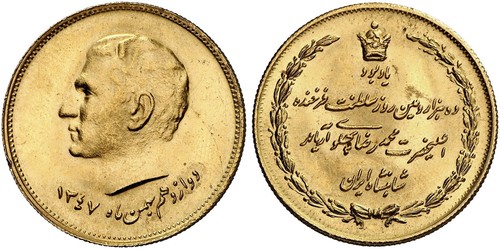
Pahlavi Reign Gold Medal
1971
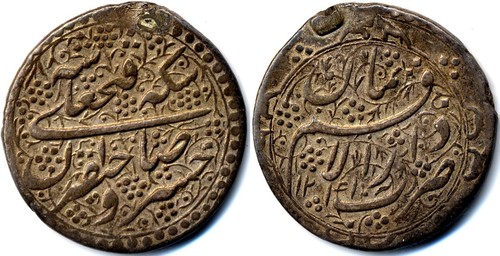
Qiran of Fath-Ali Shah Qajar
AH 1240–1241 (AD 1825–1826)
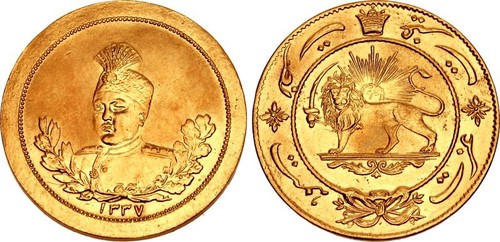
Qajar 5 Tomans Commemorative
Late Qajar period; dated 1299 (Solar Hijri, c. 1920 CE), reign of Ahmad Shah Qajar (1909–1925)
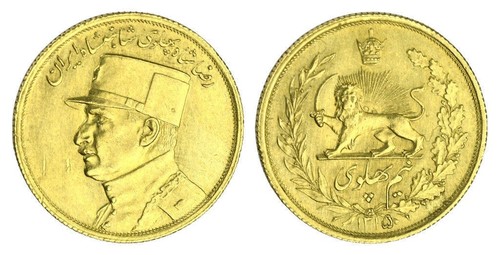
Half Pahlavi Gold Coin
1920s–1930s (Reza Shah era)
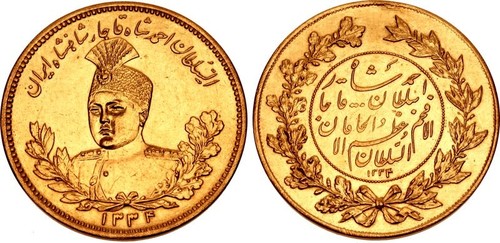
Gold Toman of Ahmad Shah Qajar
Qajar dynasty; Ahmad Shah's reign AH 1327–1344 (1909–1925 CE)
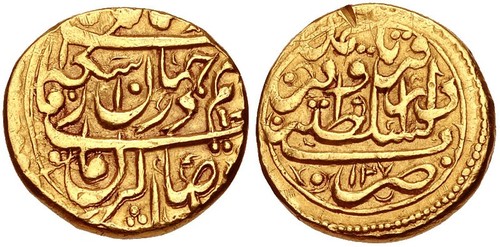
Gold Toman of Agha Mohammad Khan Qajar
1792–1793 CE (AH 1206–1207)
Gold Toman of Fath-Ali Shah Qajar
1811–1812 CE (AH 1226–1227)
10 Pahlavi Gold Coin
Struck under Mohammad Reza Shah Pahlavi; the example shown is dated 1979 (Imperial year 2537–2538 SH)
Abbasi of Shah Sultan Husayn
Reign of Shah Sultan Husayn, AH 1105–1135 (1694–1722 CE)