
How to Identify the 1 Pahlavi Gold Coin
A collector's guide to attributing a 1 Pahlavi: reading its Persian date, confirming the crowned Lion and Sun, checking size and gold, and spotting fakes.
Read the full 1 Pahlavi Gold Coin encyclopedia entry →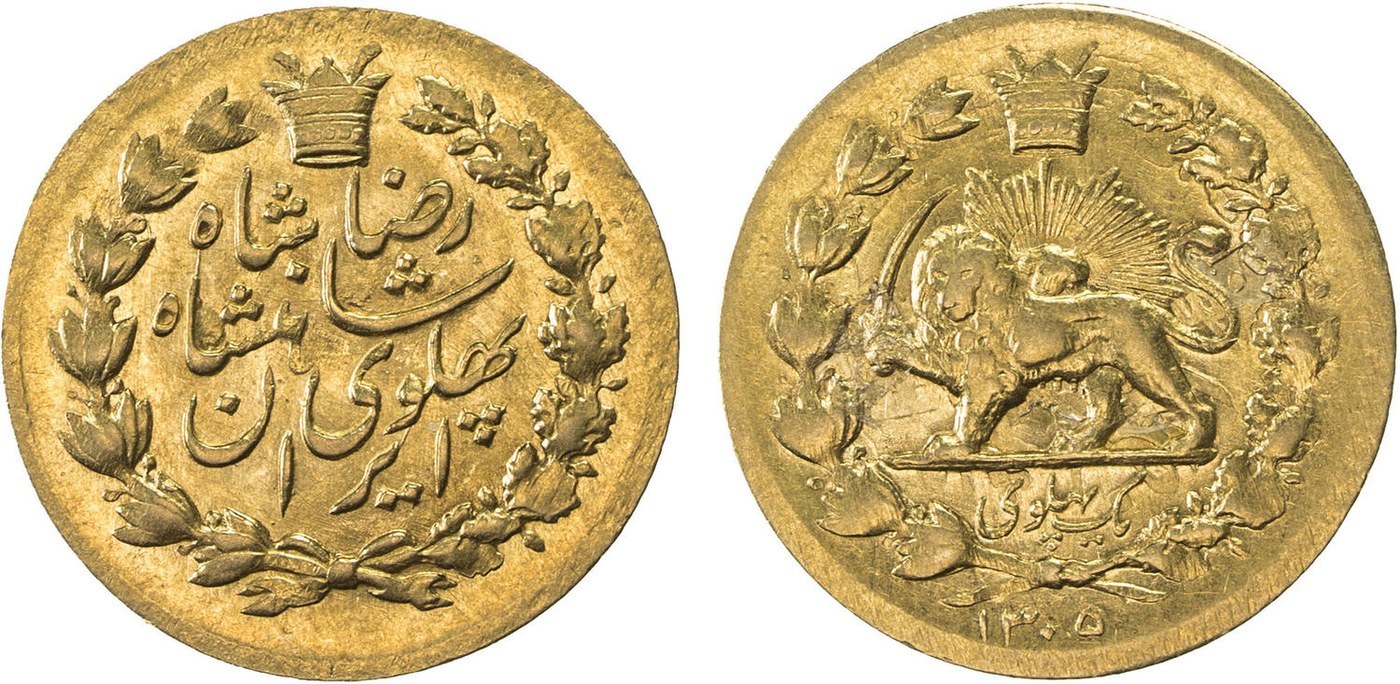
Start with the reverse emblem. A genuine Pahlavi gold coin shows the Lion and Sun (Shir-o-Khorshid): a standing lion, usually holding a sword, set before a rising sun with a crown above and laurel wreaths to the sides. The obverse of the example shown carries Persian inscriptions and royal symbols topped by a crown. If a coin lacks these Persian-script legends or the crowned Lion and Sun, it is not a Pahlavi of this type.
Confirm the denomination and date. The coins are inscribed in Persian, and the word 'Pahlavi' names the series; the date is given in Persian numerals following the Iranian Solar Hijri calendar rather than in Western figures. Reading the year requires recognizing Persian-script digits, and matching that date against a catalog of the series is what pins the coin to a specific issue and ruler within the mid-twentieth-century range.
Check the metal and the measurements. This is a high-purity gold coin, so expect a rich yellow color and a heft that feels heavy for the coin's small diameter; gold does not tarnish or turn reddish the way base metals do. Because the Pahlavi was struck in several denominations — quarter, half, one, two-and-a-half, five, and ten — diameter and weight are the most reliable way to confirm you have the 1 Pahlavi and not a fraction or a larger multiple that repeats the same design at another size.
Watch for look-alikes and related issues. The whole Pahlavi gold family shares the crowned Lion and Sun and Persian legends, so the emblem alone will not tell you the denomination. Earlier Iranian gold, such as Qajar toman coinage, and other regional gold pieces can also look broadly similar; the specific 'Pahlavi' legend, the denomination, and the date separate this coin from them. Note too that the Lion and Sun appears widely on Iranian coins and medals, so its presence confirms the country but not the exact coin.
Apply careful authentication. Because these are gold and trade near bullion value, counterfeits and gold-plated base-metal copies exist. Weigh and measure the coin against published specifications for the 1 Pahlavi, since a fake will usually miss the correct weight or diameter, and be wary of soft, blurry detail, casting seams, or a color that looks like plating over a lighter core. When value or authenticity is uncertain, have the piece tested or examined by a reputable dealer or a coin-grading service before relying on any attribution.
Frequently asked questions
How can I tell a 1 Pahlavi from other Pahlavi gold coins?
They share the same crowned Lion and Sun and Persian legends, so use size and weight to tell them apart. The 1 Pahlavi sits between the smaller fractions (quarter, half) and the larger multiples (two-and-a-half, five, ten), which repeat the design at different scales.
Why is the date hard to read?
The year is written in Persian numerals following the Iranian Solar Hijri calendar, not Western numerals. You need to recognize Persian-script digits and, ideally, match them against a reference for the series to read the date correctly.
How do I know the gold is real?
Genuine Pahlavis are struck in high-purity gold, giving a warm yellow color and a weight that feels heavy for their size. Checking the coin's weight and diameter against published specifications, and testing by a professional when in doubt, helps confirm the metal.
Are there fakes of this coin?
Yes. Because Pahlavi gold trades near its bullion value, counterfeits and gold-plated copies exist. Watch for wrong weight or diameter, blurry cast detail, seams, or plating over a lighter core, and verify doubtful pieces with a trusted dealer or grading service.