
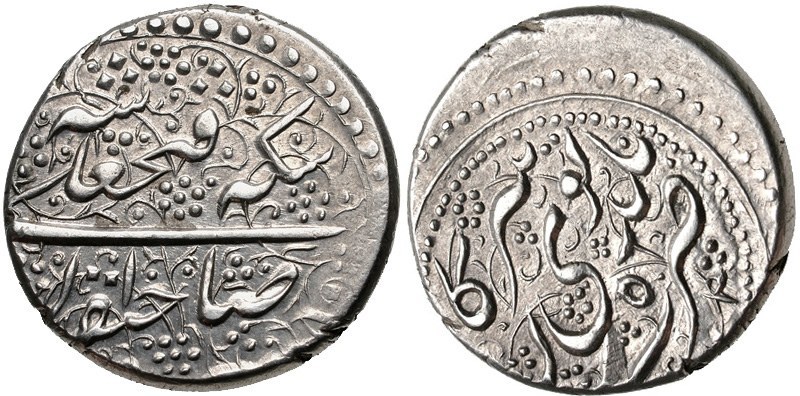
Gold Toman of Fath-Ali Shah Qajar
A hand-struck Qajar gold toman of Fath-Ali Shah dated AH 1226–1227 (1811–1812), covered in ornate Persian calligraphy with no portrait or figural imagery.
- Country
- Persia (Iran)
- Denomination
- Toman
- Metal
- Gold
Got a coin like this?
Identify any coin from a photo, free.
Overview
The gold toman of Fath-Ali Shah is a hand-struck coin of Qajar Persia (Iran), issued in the name of the second Qajar ruler. The example shown carries an elaborate calligraphic inscription set within an ornate cartouche and floral border on the obverse, and further calligraphic text within a decorated circular frame with scrollwork on the reverse, and is dated AH 1226–1227 (1811–1812 CE).
The toman was the principal gold denomination of the Qajar monetary system. It functioned as a high-value coin used for large payments, savings, and ceremonial gifting rather than everyday market purchases, which were handled by silver and copper pieces.
Like other Qajar precious-metal coinage of this period, the piece is entirely aniconic in the traditional Islamic manner: it bears no ruler's portrait or figural imagery, only Persian and Arabic calligraphy naming the ruler and expressing sovereign and religious formulas, together with the mint and date.
History & Background
Fath-Ali Shah ruled Persia from 1797 to 1834, during the early decades of the Qajar dynasty that governed Iran from the late 18th century into the early 20th. His long reign is remembered for lavish court art, an extravagant royal image, and prolonged conflict with Imperial Russia over the Caucasus, which unfolded across roughly this period.
The gold toman of his reign continued the traditional epigraphic style of Persian coinage, in which the ruler's name and titles appear in elegant calligraphy alongside religious and sovereign phrases, all rendered in flowing script framed by decorative borders. Coins of this type reflect the refined ornamental taste of the Qajar court.
A date of AH 1226–1227 corresponds to 1811–1812 CE, placing this coin in the middle of Fath-Ali Shah's reign. Qajar gold of this era was struck by hand at regional mints, and issues vary in the exact arrangement of their legends, the ornamental framing, and the mint named on the coin.
How to Identify
A gold toman of Fath-Ali Shah is a hand-struck gold coin whose surfaces are covered in Persian and Arabic calligraphy rather than any image. The obverse of this type shows an ornate cartouche with an elaborate floral border surrounding a calligraphic inscription; the reverse carries further calligraphic text set within a decorated circular frame with ornamental scrollwork.
The coin bears no portrait, animal, or figural device of any kind, and no Latin lettering — only flowing Persian nasta'liq and related scripts. The ruler's name and titles are worked into the legend, and the mint name and Hijri date appear as part of the inscription; the date here falls in AH 1226–1227 (1811–1812 CE). Because the coins were individually struck, the flan is often slightly irregular and the strike can be uneven, with parts of the ornamental border running off the edge.
The surest attribution comes from reading the legends: the calligraphic naming of Fath-Ali Shah and his titles marks it as his issue, while the mint and Hijri year tie it to a specific place and time. The rich yellow tone of gold, the dense ornamental framing, and the entirely epigraphic design together distinguish it from lower-denomination silver and copper Qajar coins and from non-Persian coinages.
Value & Collectibility
Gold tomans of Fath-Ali Shah are collectible coins whose value rests on their precious-metal content, their historical association with a celebrated Qajar ruler, and their preservation. As gold pieces they carry an intrinsic bullion value on top of any numismatic premium, so they trade well above base-metal coins of the period.
Value within the series depends on the mint, the exact date, the denomination or weight standard, the completeness and sharpness of the calligraphy and ornamental borders, and overall condition. Well-centered strikes with full, crisp legends, pieces from scarcer mints or dates, and coins with attractive original surfaces command higher prices than worn, bent, mounted, or clipped examples.
Because gold coins are sometimes cleaned, mounted as jewelry, or reproduced, and because pricing turns on grade, mint, and specialist demand, figures should be treated as general context rather than fixed quotes. A clear reading of the mint and the AH date, together with confirmation that the piece is genuine and unaltered, is central to establishing its interest and value.
Frequently asked questions
What is a toman?
The toman was the principal gold denomination of the Qajar Persian monetary system, a high-value coin used for large payments, savings, and gifting rather than everyday small purchases, which used silver and copper.
How old is this coin?
It is dated AH 1226–1227 in the Islamic (Hijri) calendar, corresponding to 1811–1812 CE, placing it in the middle of Fath-Ali Shah's reign over Qajar Persia.
Why is there no portrait of the shah on the coin?
This gold toman follows the traditional aniconic style of Islamic and Persian coinage, avoiding figural imagery. Instead it names Fath-Ali Shah and his titles in ornate calligraphy within decorative borders.
Who was Fath-Ali Shah?
Fath-Ali Shah was the second ruler of the Qajar dynasty, reigning over Persia (Iran) from 1797 to 1834. His reign is known for an opulent court and for the wars with Imperial Russia over the Caucasus.
Is a Qajar gold toman valuable?
As a gold coin it carries both bullion value and a numismatic premium tied to its Qajar history. Actual value depends on the mint, date, the sharpness of the calligraphy, and whether the coin is genuine and unaltered.
Gold Toman of Fath-Ali Shah Qajar guides
In-depth guides for identifying, valuing, and collecting Gold Toman of Fath-Ali Shah Qajar.
Other coins you may enjoy
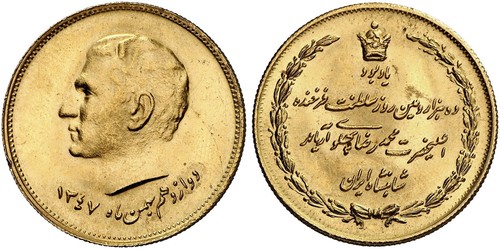
Pahlavi Reign Gold Medal
1971
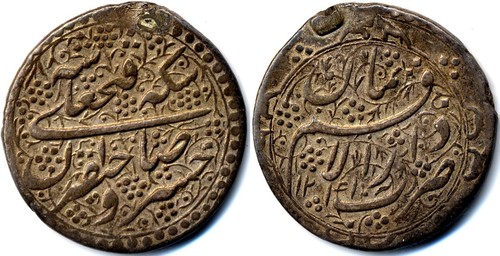
Qiran of Fath-Ali Shah Qajar
AH 1240–1241 (AD 1825–1826)
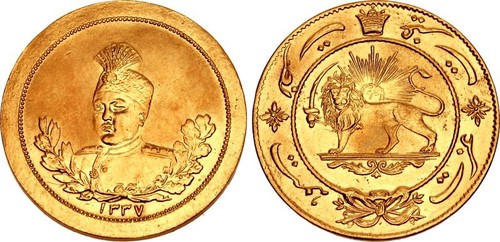
Qajar 5 Tomans Commemorative
Late Qajar period; dated 1299 (Solar Hijri, c. 1920 CE), reign of Ahmad Shah Qajar (1909–1925)
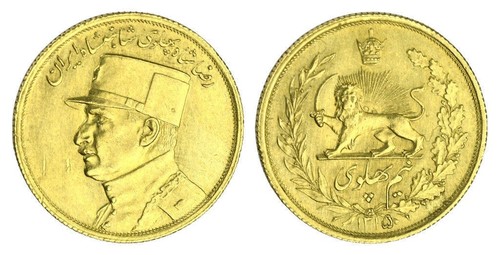
Half Pahlavi Gold Coin
1920s–1930s (Reza Shah era)
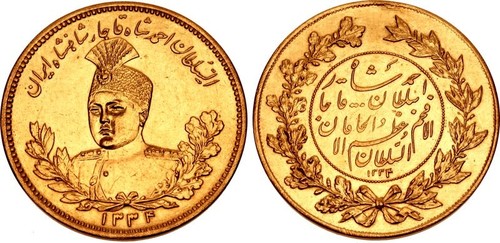
Gold Toman of Ahmad Shah Qajar
Qajar dynasty; Ahmad Shah's reign AH 1327–1344 (1909–1925 CE)
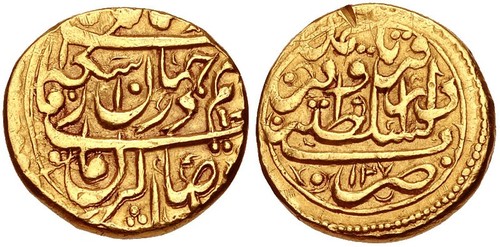
Gold Toman of Agha Mohammad Khan Qajar
1792–1793 CE (AH 1206–1207)
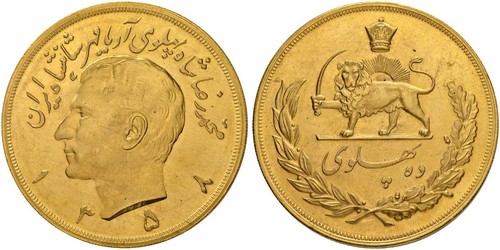
10 Pahlavi Gold Coin
Struck under Mohammad Reza Shah Pahlavi; the example shown is dated 1979 (Imperial year 2537–2538 SH)
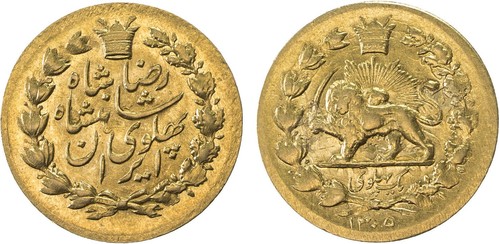
1 Pahlavi Gold Coin
Pahlavi dynasty, mid-20th century (issues commonly dated to the 1950s–1970s)
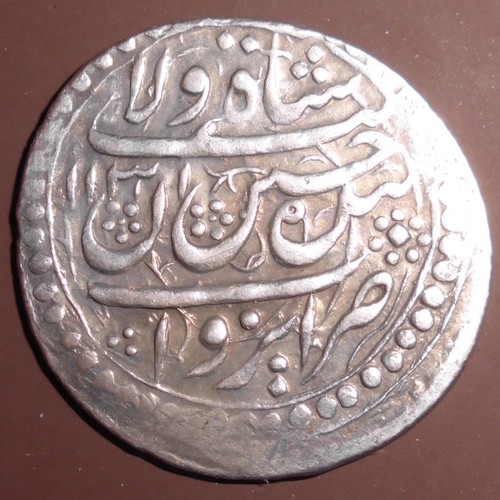
Abbasi of Shah Sultan Husayn
Reign of Shah Sultan Husayn, AH 1105–1135 (1694–1722 CE)