
How to Identify the Gold Toman of Fath-Ali Shah Qajar
A collector's guide to attributing a Qajar gold toman of Fath-Ali Shah: reading its calligraphy, mint and Hijri date, judging gold and size, and spotting look-alikes.
Read the full Gold Toman of Fath-Ali Shah Qajar encyclopedia entry →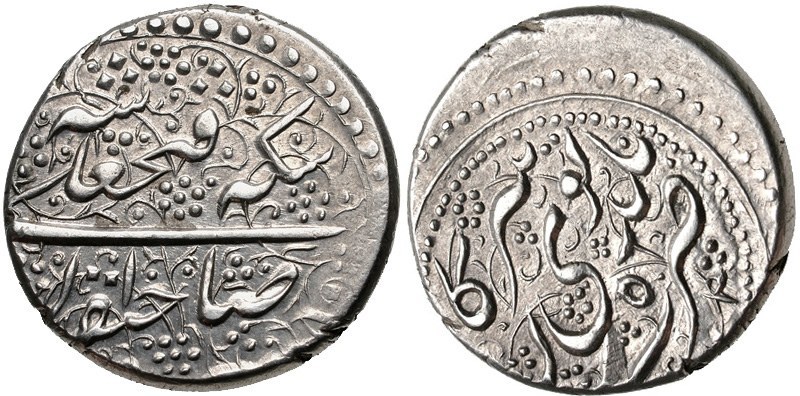
Start by confirming the coin is entirely epigraphic and ornamental. A gold toman of Fath-Ali Shah carries only Persian and Arabic calligraphy on both faces, with no portrait, animal, or figural device. The obverse of this type shows an ornate cartouche framed by an elaborate floral border, and the reverse shows calligraphic text within a decorated circular frame with scrollwork. If you see any human or animal image, or any Latin lettering, you are not looking at a Qajar toman of this type.
Read the legends to attribute the piece. The inscriptions name Fath-Ali Shah together with his royal and religious titles in flowing script, while the mint and the Hijri date are worked into the legend rather than appearing as separate numerals. On this coin the date falls in AH 1226–1227 (1811–1812 CE). Being able to read, or match against a reference, the ruler's name, the mint, and the year is what separates one Qajar gold issue from another and confirms the reign.
Check the physical coin. This is a gold piece, so expect a warm, rich yellow tone that does not tarnish like silver or corrode like copper. Tomans are hand-struck, so the flan is often slightly irregular and the strike can be uneven, with the ornamental border sometimes running off the edge. Gold has a characteristic heft for its size; weight and diameter follow period standards but vary by mint and issue, so compare against catalog figures rather than assuming a single fixed size.
Watch for look-alikes and later issues. Other Qajar rulers — and successor and neighboring states — struck superficially similar all-calligraphic gold, so the specific naming of Fath-Ali Shah plus the mint and Hijri date, not the general ornate appearance, is what pins the coin to this reign and to AH 1226–1227. Worn pieces with illegible legends often cannot be attributed with confidence and should be described cautiously.
Apply careful authentication checks, which matter more for gold. Genuine tomans are struck, showing the slightly uneven relief and flan of hand production; be wary of cast copies with soft, blurry detail, seams, or bubbles, and of modern gold reproductions and jewelry-grade fantasy pieces. Look for solder marks, filed edges, or loop scars that indicate a coin mounted as jewelry, and for signs of harsh cleaning. When the legend cannot be read clearly or authenticity is in doubt, weigh the coin, compare it against a specialist catalog of Qajar gold, and seek an expert opinion before accepting a firm attribution.
Frequently asked questions
How do I read the date on a Qajar gold toman?
The date is written into the calligraphic legend in the Hijri (AH) calendar rather than as standalone numerals. On this coin it falls in AH 1226–1227, which converts to 1811–1812 CE. Matching the script against a reference helps confirm it.
How can I tell it apart from other Qajar gold coins?
Many Qajar and neighboring rulers struck similar ornate, all-calligraphic gold. The specific naming of Fath-Ali Shah and his titles, together with the mint and Hijri date in the legend, is what identifies it as his issue rather than a related one.
How do I know it is really gold and not a copy?
Genuine tomans have the warm untarnished tone and characteristic heft of gold and show struck, slightly uneven relief. Watch for cast seams, bubbles, mushy detail, solder or loop marks from jewelry mounting, and weigh doubtful pieces against catalog standards.
Where is the mint name on the coin?
The mint is named within the calligraphic legend as part of the striking formula. Reading or matching that mint name against a specialist reference is essential for a precise attribution and can affect the coin's scarcity and value.