
How to Identify the Half Pahlavi Gold Coin
A collector's guide to the Reza Shah half-Pahlavi: the military-cap portrait, the Lion and Sun reverse, size and fineness checks, and fake and restrike cautions.
Read the full Half Pahlavi Gold Coin encyclopedia entry →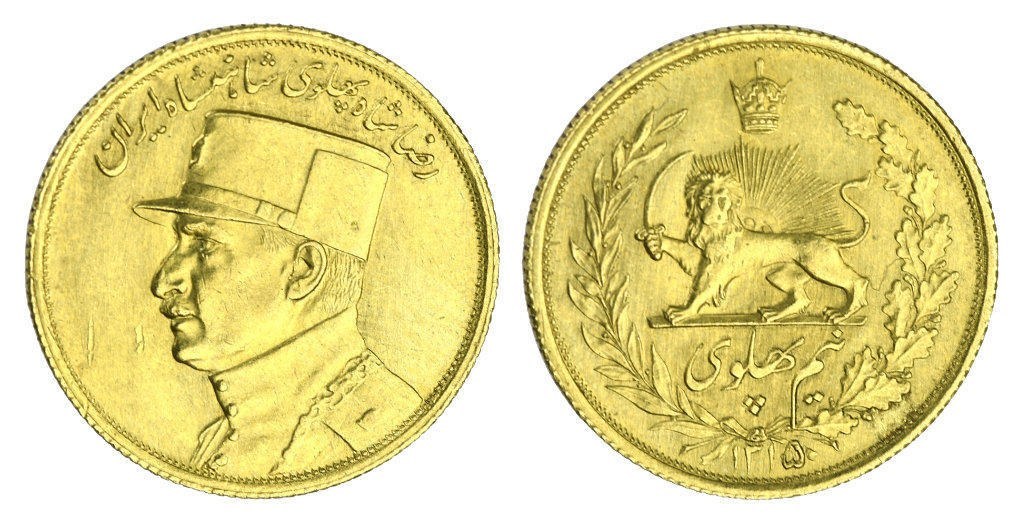
Begin with the portrait. The Reza Shah half-Pahlavi shows a left-facing bust of the Shah in a military cap and uniform, with a Persian legend naming him. That uniformed, capped portrait is what separates Reza Shah's founding issues from the later Mohammad Reza Shah Pahlavi types, which use different portraits and, in later years, different reverse designs. Fixing the portrait first narrows the field quickly.
Confirm the reverse emblem and the denomination. Look for the Lion and Sun: a lion (usually holding a sword), a radiant sun, a crown above and laurel branches to the sides. The value — half a Pahlavi, Nim Pahlavi — and the date are written in Persian script and Persian-Indic numerals. Transcribe or photograph the date; it is in the Solar Hijri calendar, and Reza Shah half-Pahlavis sit in the late-1920s-to-1930s SH range. The wording and date, not the picture alone, pin down the exact issue.
Measure and weigh the coin against the denomination. The half-Pahlavi is a small gold coin — clearly smaller and lighter than a full Pahlavi and larger than a quarter Pahlavi — struck in 0.900 gold. Weight relative to diameter is an early authenticity screen: a piece that is too light or too thin for its size, or that shows any magnetism, is a warning sign. Note the edge as well, and do not treat the yellow color as proof of gold, since gilt and plated copies exist.
Separate originals from restrikes and copies. Pahlavi gold has been restruck and widely reproduced, and half-Pahlavis turn up mounted in jewelry, as bullion-style rounds, and as outright fakes. Restrikes can be genuine gold yet command different values from original strikes, while cast forgeries betray themselves through soft, mushy detail, seams, surface bubbles or wrong weight. Compare strike sharpness, lettering and fabric to documented examples for the same date.
Apply firm authentication caution before paying a premium. Genuine struck coins show crisp Persian lettering and sharp relief on both the portrait and the Lion and Sun. For anything sold as solid gold, insist on weight and diameter measurement plus non-destructive metal testing such as specific gravity, and get a specialist in Iranian or Islamic-world coinage to review dates, restrikes and grading. When the legend or date cannot be read, keep the attribution provisional.
Frequently asked questions
How do I tell a Reza Shah half-Pahlavi from a later Pahlavi coin?
Check the portrait and reverse. Reza Shah's issues show him in a military cap and uniform with the Lion and Sun reverse. Mohammad Reza Shah's later coins use different portraits and, in some years, redesigned reverses. Read the Persian legend and date to be sure.
What details should I record before asking for an attribution?
Note the exact weight and diameter, describe the portrait and cap, transcribe or photograph the Persian denomination word and date, and document the Lion and Sun emblem and any edge features. Clear images of both faces and the edge are essential.
The coin looks gold — is that enough to confirm the metal?
No. Color alone does not prove gold. Gilt, plated and low-purity imitations exist, so confirm with weight-to-size checks and professional metal testing such as specific gravity before assuming precious-metal content.
How can I spot a fake or a restrike?
Watch for casting seams, bubbles or soft, uneven detail, incorrect weight for the size, any magnetism, and misspelled or nonsensical legends. Genuine struck coins have sharp, consistent Persian lettering and relief; restrikes may be genuine gold but differ in value, so verify the date and fabric against a reliable reference and an expert.