
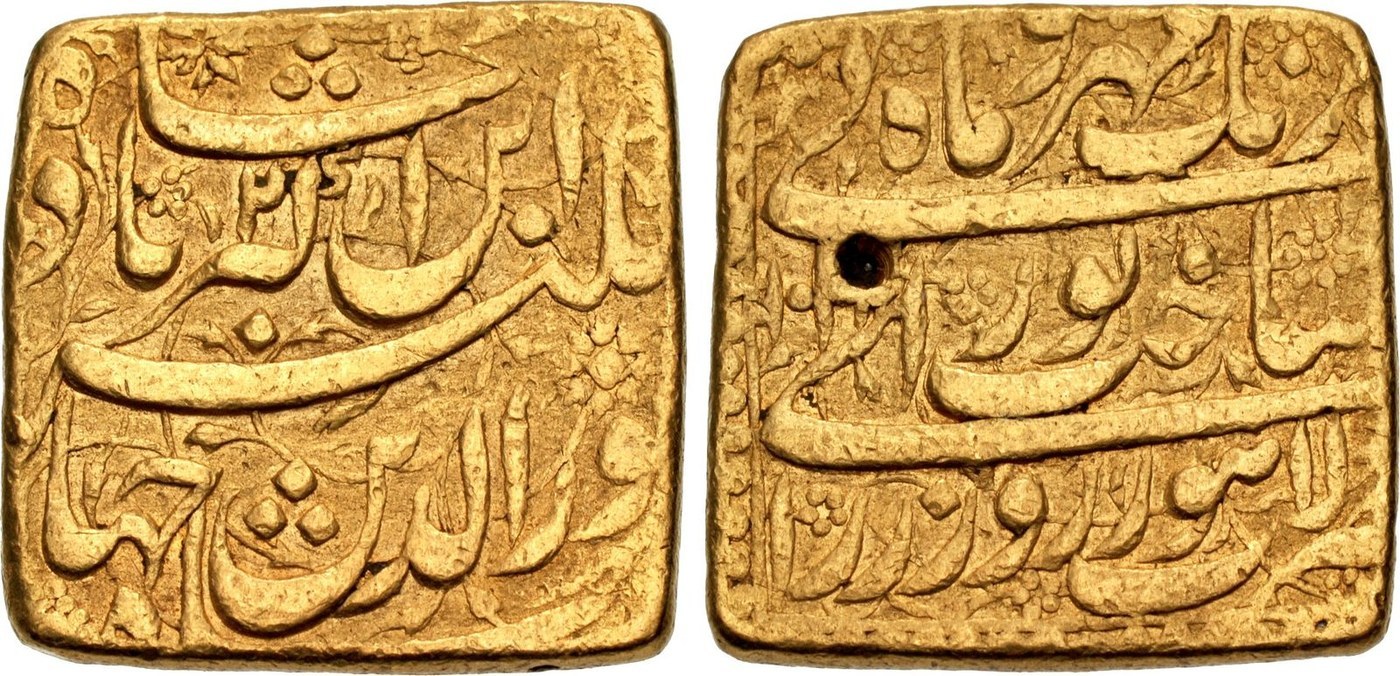
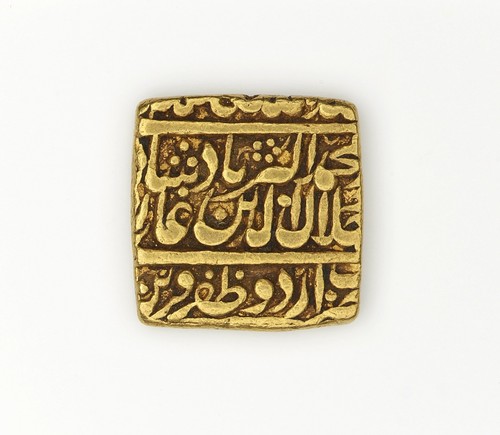
Gold Square Mohur of Jahangir
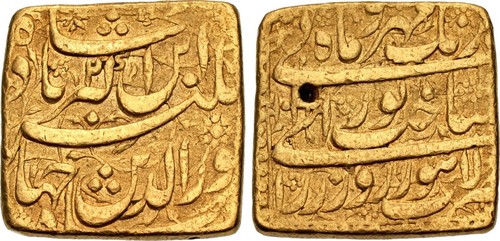
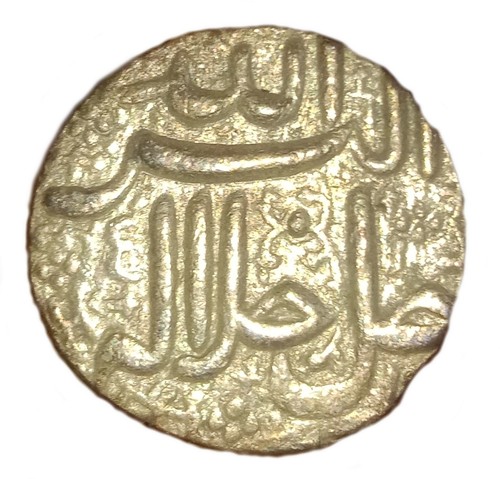
A square gold mohur of the Mughal emperor Jahangir, bearing Persian calligraphy, the Lahore mint, and regnal-year dating.
- Country
- India
- Denomination
- Square Mohur
- Metal
- Gold
Got a coin like this?
Identify any coin from a photo, free.
Overview
The Gold Square Mohur of Jahangir is a high-purity gold coin struck under the fourth Mughal emperor, Nur al-Din Muhammad Jahangir (reigned 1605-1627). Unlike the more common round mohur, this piece uses the distinctive square (Persian murabba) format that Mughal mints employed for prestige gold issues. The example described here carries Persian inscriptions naming the emperor on the obverse and the Lahore mint with the date AH 1015 and regnal year 2 on the reverse.
The mohur was the principal gold denomination of the Mughal monetary system, roughly matched in weight to the standard tola and struck to a very high fineness. Square mohurs of Jahangir are prized by collectors of Islamic and South Asian coinage for their bold calligraphy and clean geometric planchets.
History & Background
Jahangir succeeded his father Akbar in 1605 and ruled a wealthy, expansive empire from northern India. His reign is noted for refined court arts, and this taste extended to the coinage: he issued elegant Persian couplets, experimented with weights and formats, and later produced the celebrated zodiac and portrait mohurs. Square gold and silver issues sit within this tradition of visually distinctive Mughal money.
Lahore was one of the empire's most important mints and a frequent seat of the court, so gold struck there circulated among the highest tiers of trade and tribute. The AH 1015 / regnal-year-2 dating on this coin places its striking very early in the reign, around 1606-1607 CE, when Jahangir's mints were consolidating his royal titulature in metal.
Mughal coins are dated in two overlapping systems that appear on this type: the Hijri (AH) year of the Islamic calendar and the regnal year (RY) counted from the emperor's accession. Both being present is characteristic of Jahangir-era gold and helps anchor an individual coin to a specific year of issue.
How to Identify
The defining trait is the shape: a square gold planchet rather than a round one, with the inscriptions arranged to fill the four-sided field. The obverse carries the emperor's name and titles in Persian, reading as Nur al-Din Muhammad Jahangir, typically with royal epithets. Calligraphy is deeply and cleanly struck in the Mughal Nastaliq/Naskh style.
The reverse identifies the mint and date. On this example that is the Lahore mint mark together with the Hijri year AH 1015 and the regnal year 2 (RY 2). Look for the mint name spelled out in Persian and the two date figures rather than a portrait or heraldic device.
In hand the coin should read as high-karat gold: a warm, deep yellow color, substantial heft for its size, and no magnetic response. The metal surface on genuine strikes shows crisp field-to-legend transitions consistent with hand-struck dies on a hammered planchet.
Value & Collectibility
Authentic Mughal gold mohurs of Jahangir are scarce, and the square format adds desirability, so genuine examples generally command strong prices in the collector market well above their gold-melt value. Actual figures vary widely with mint, date, calligraphic quality, strike, and preservation, and are best confirmed through recent auction records for the specific mint-and-year combination rather than a single quoted number.
Condition and eye appeal drive value: full square flans with complete, sharply legible legends and no mounting or tooling bring the highest results, while clipped, bent, or ex-jewelry pieces trade for considerably less. Because forgeries and modern fantasy pieces exist, verified provenance and third-party attribution materially affect what a coin realizes.
Any value estimate here is general context, not an appraisal. For insurance, sale, or purchase decisions, seek an in-hand assessment from a specialist in Mughal or Islamic coinage.
Frequently asked questions
What makes this coin a 'square' mohur?
The planchet itself is square (murabba) rather than the usual round shape, with the Persian legends laid out to fill the four-sided field. Mughal mints used this prestige format for select gold and silver issues.
What do AH 1015 and RY 2 mean?
AH 1015 is the Hijri (Islamic-calendar) year, about 1606-1607 CE, and RY 2 is the regnal year counted from Jahangir's 1605 accession. Both dating systems commonly appear together on his gold.
Where was it struck?
This example names the Lahore mint, one of the most important Mughal mints and a frequent seat of the court. Jahangir's mohurs were also struck at Agra, Ahmadabad, and other cities.
Is it made of pure gold?
Mughal mohurs were struck to a very high fineness, close to pure gold, and weigh roughly a standard tola. The coin should be non-magnetic with a deep yellow color and notable heft for its size.
How rare is it?
Genuine Jahangir gold mohurs are scarce, and the square format is especially sought after. Individual rarity depends on the specific mint and year, so comparable auction records are the best guide.
Gold Square Mohur of Jahangir guides
In-depth guides for identifying, valuing, and collecting Gold Square Mohur of Jahangir.
Other coins you may enjoy
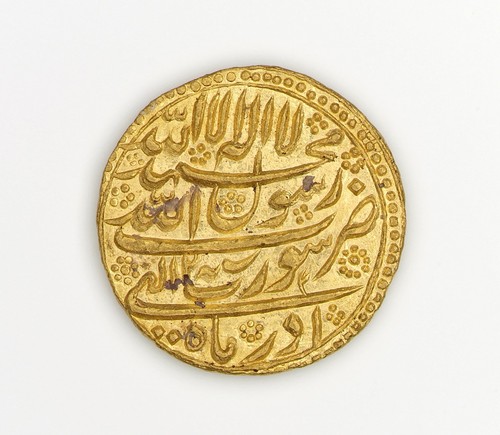
Gold Mohur of Shah Jahan
1628-1658
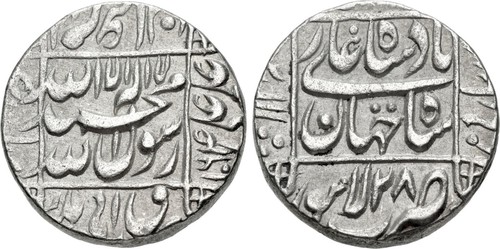
Shah Jahan Rupee
AH 1064 (AD 1653-1654)
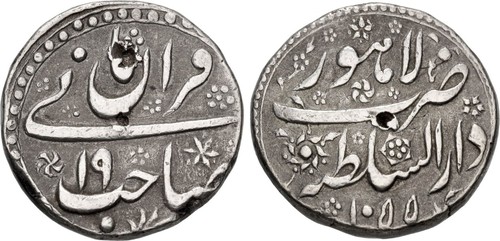
Shah Jahan Half Rupee
AH 1055 (AD 1647)
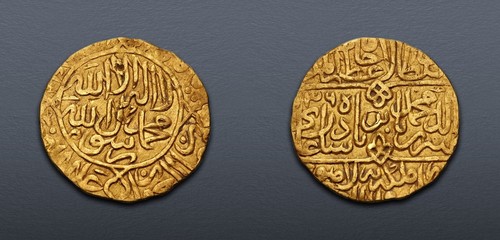
Mithqal (Tilla) of Babur
AH 932–937 (AD 1526–1530)
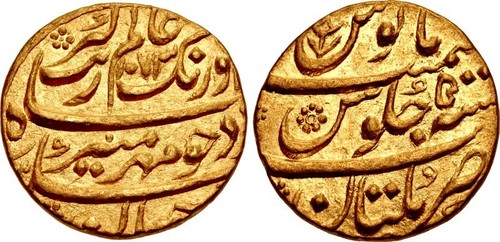
Gold Mohur of Akbar
1556-1605
Gold Mohur of Aurangzeb
1618-1707
Silver Rupee of Ahmadabad
Reign of Akbar, 1556-1605 CE (this coin dated Regnal/Ilahi Year 47, c. 1602-03 CE)