
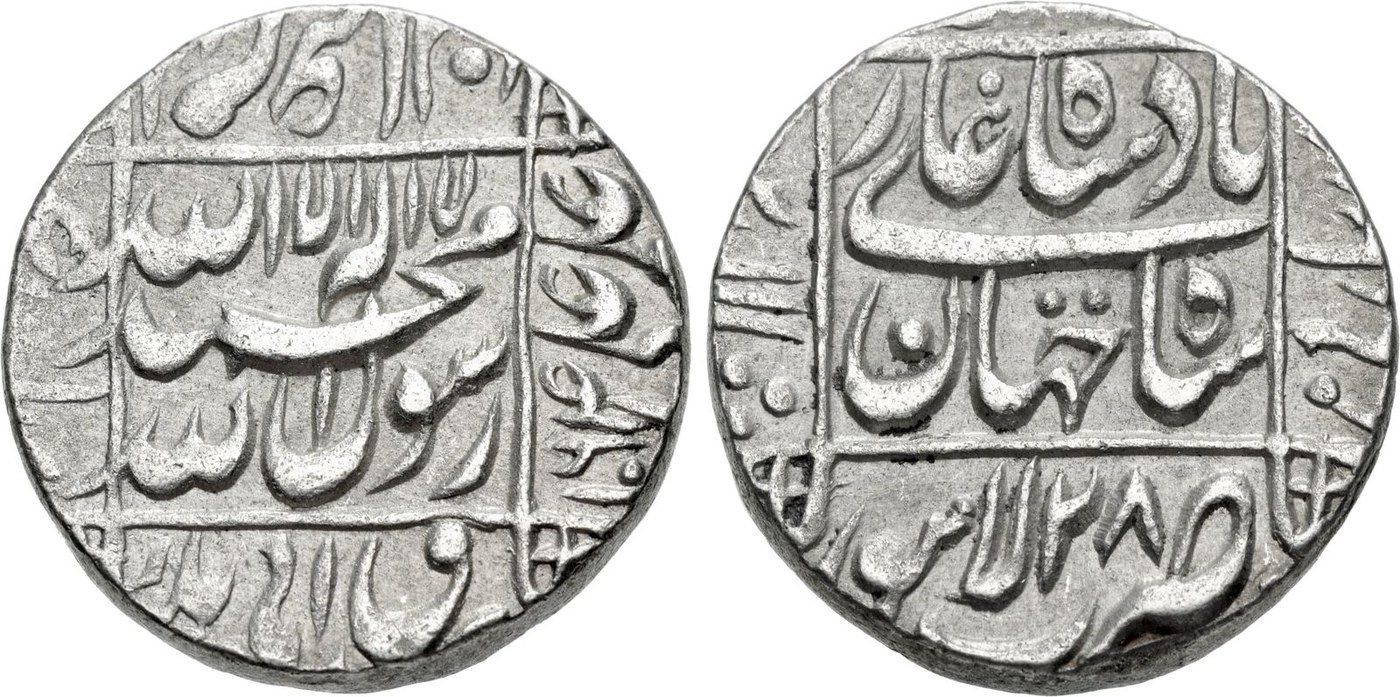
Shah Jahan Rupee
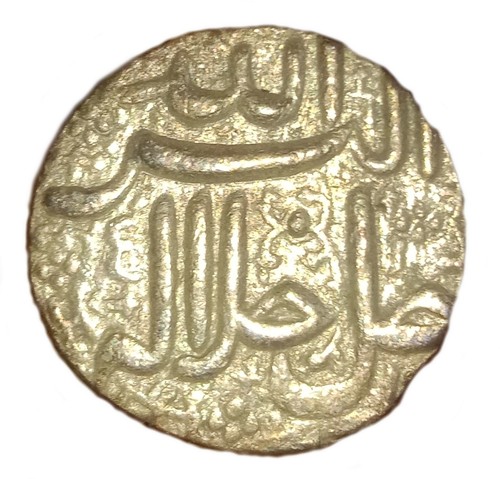
Hand-struck silver rupee of Mughal emperor Shah Jahan, all-Persian calligraphy in ornate cartouches, dated AH 1064 (AD 1653-1654).
- Country
- India
- Denomination
- Rupee
- Metal
- Silver
Got a coin like this?
Identify any coin from a photo, free.
Overview
The Shah Jahan Rupee is a hand-struck silver coin issued during the reign of the fifth Mughal emperor, Shah Jahan (ruled AD 1628-1658), builder of the Taj Mahal. The example shown carries the Islamic (Hijri) date AH 1064, corresponding to AD 1653-1654, near the later years of his rule.
Like other Mughal rupees, it bears no portrait or image. Both faces are filled entirely with flowing Persian (Nastaliq) calligraphy, framed here by decorative cartouches and ornamental design elements. The obverse typically carries the Islamic declaration of faith (the kalima), while the reverse gives the emperor's name and titles together with the mint name and date.
The rupee was the backbone of the Mughal silver currency and circulated widely across the empire. Struck by hammer between hand-engraved dies, each coin is slightly individual in shape and centering.
History & Background
Shah Jahan inherited and refined a monetary system standardized under his grandfather Akbar. The silver rupee had become the principal trade and revenue coin of the Mughal state, and it continued to be produced in large numbers at mints across northern and central India during his reign.
A rupee dated AH 1064 falls in the closing phase of Shah Jahan's active rule. His reign ended in 1658 when he was deposed by his son Aurangzeb and confined at Agra. Coins of this period were struck at numerous imperial mints, and the specific mint name would appear within the reverse legend.
Because the type was produced over three decades and at many mints, Shah Jahan rupees survive in considerable numbers today, making them among the more accessible Mughal silver coins for collectors.
How to Identify
Look first for an all-calligraphic silver coin with no figures or portrait, roughly the size and heft of a Mughal rupee (broadly in the region of 11 to 11.7 grams and about 19 to 24 mm across, though hand-struck flans vary). The dense Persian script arranged within cartouches and decorative borders is the signature look.
The date AH 1064 places this piece squarely in Shah Jahan's reign. Mughal coins carry the Hijri (AH) year and often a regnal (julus) year; the ruler's name and honorific titles appear in the legend rather than as an image. The obverse commonly shows the kalima, and the four Rightly Guided Caliphs may be named in the surrounding margin on related issues.
Reading the Persian legend is the surest identification, but the combination of pure calligraphy, cartouche framing, silver metal, hand-struck irregular flan, and an AH date in the 1030s-1060s range strongly points to a Shah Jahan rupee.
Value & Collectibility
Shah Jahan rupees are relatively common as a class, so most circulated examples trade close to their silver content plus a modest numismatic premium. Well-centered coins with sharp, complete calligraphy and a clear mint name and date command more than worn or off-center pieces.
Value is driven mainly by mint, date, strike quality, and eye appeal rather than by rarity of the ruler. Scarcer mints, unusual couplets, or exceptionally crisp calligraphy can lift a coin above the general run. Ranges vary widely with the market and condition, so treat any single figure with caution.
For a specific valuation, identify the mint name in the legend and have the coin assessed by a dealer or specialist in Mughal coinage rather than relying on metal weight alone.
Frequently asked questions
Why does this coin have no picture of the emperor?
Mughal silver coinage followed Islamic aniconic convention, so rupees carry religious and royal inscriptions in Persian calligraphy instead of a portrait. The emperor is named in the legend, not shown in image.
What does the date AH 1064 mean?
AH refers to the Islamic Hijri calendar. AH 1064 converts to about AD 1653-1654, placing this rupee in the later years of Shah Jahan's reign (1628-1658).
Is a Shah Jahan rupee valuable?
Most are common and trade near silver value plus a modest premium. Sharper strikes, scarcer mints, and clearly legible legends are worth more. A specialist can appraise a particular piece.
How much silver does it contain?
Mughal rupees of this era were struck in high-purity silver at a weight broadly around 11 to 11.7 grams, though hand-struck coins vary slightly in weight and shape.
Which mint struck this coin?
Shah Jahan rupees were made at many imperial mints. The mint name is written within the reverse Persian legend, so reading that legend is the way to determine origin.
Shah Jahan Rupee guides
In-depth guides for identifying, valuing, and collecting Shah Jahan Rupee.
Other coins you may enjoy
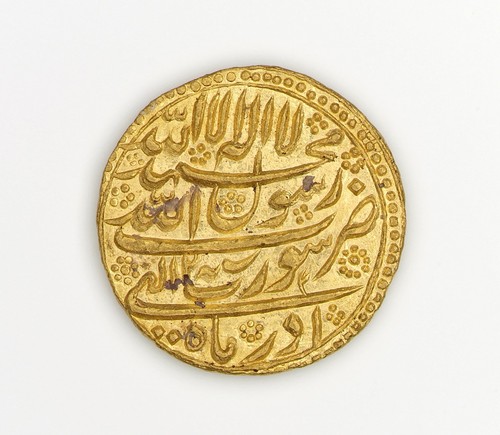
Gold Mohur of Shah Jahan
1628-1658
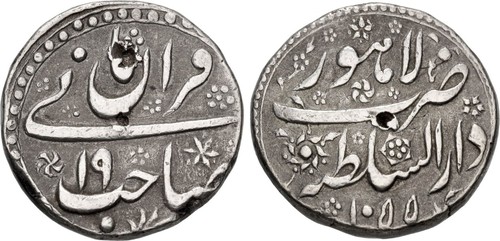
Shah Jahan Half Rupee
AH 1055 (AD 1647)
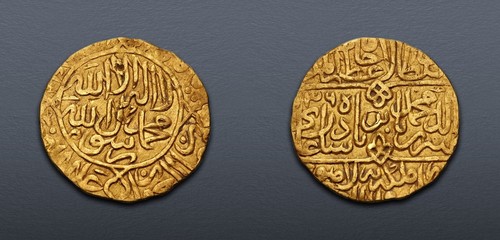
Mithqal (Tilla) of Babur
AH 932–937 (AD 1526–1530)
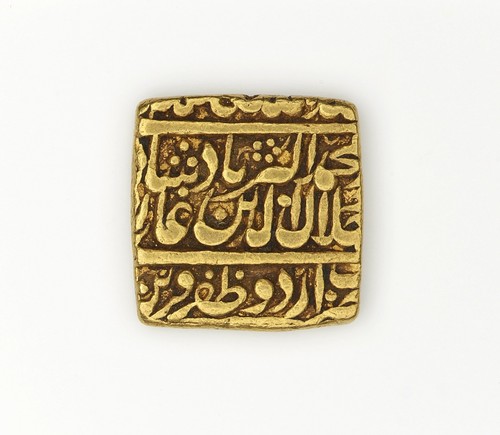
Gold Mohur of Akbar
1556-1605
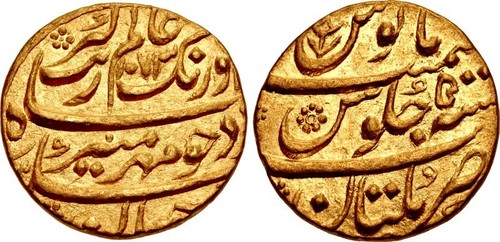
Gold Mohur of Aurangzeb
1618-1707
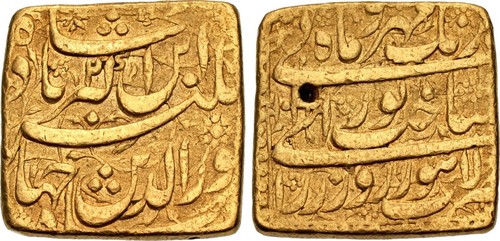
Gold Square Mohur of Jahangir
1605-1627
Silver Rupee of Ahmadabad
Reign of Akbar, 1556-1605 CE (this coin dated Regnal/Ilahi Year 47, c. 1602-03 CE)