
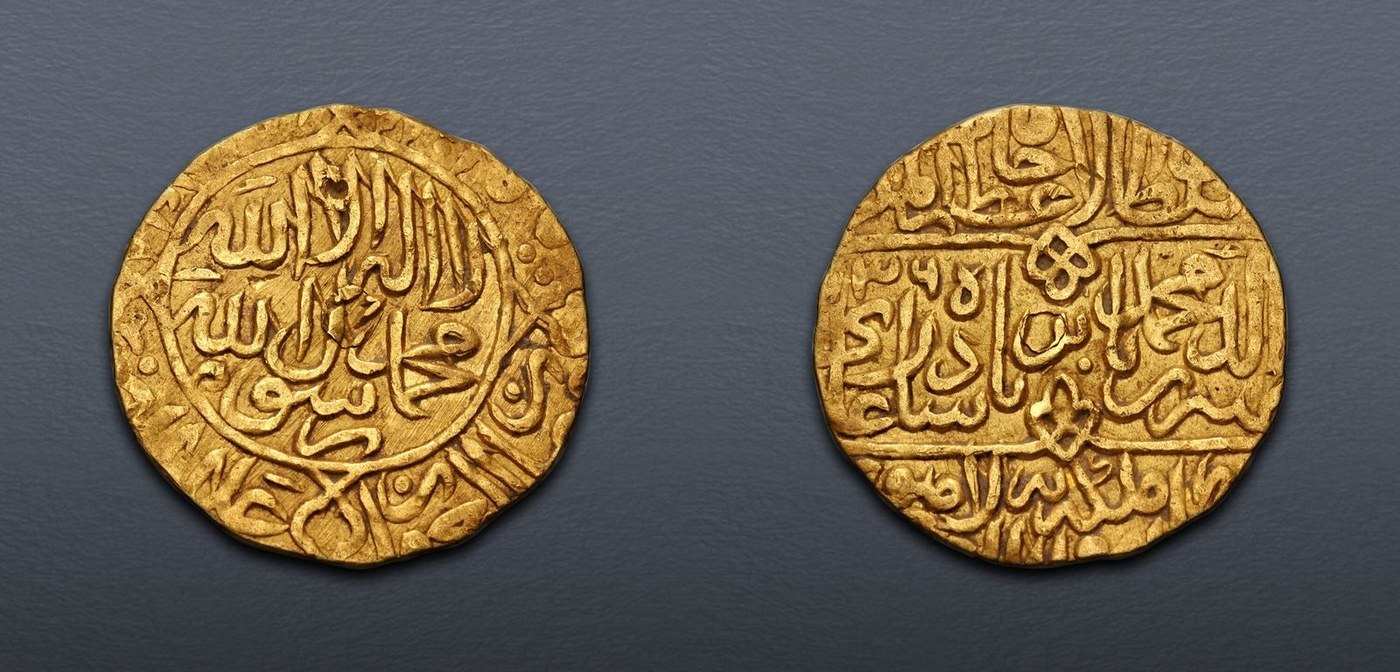
Mithqal (Tilla) of Babur
A hand-struck gold mithqal (tilla) of Babur, founder of the Mughal Empire, carrying his ruler titles in Persian and the mint-and-date on the reverse.
- Country
- India (Mughal Empire)
- Denomination
- Mithqal/Tilla
- Metal
- Gold
Got a coin like this?
Identify any coin from a photo, free.
Overview
The mithqal, or tilla, of Babur is a hand-struck gold coin issued by Zahir-ud-din Muhammad Babur, the founder of the Mughal Empire in India. The example shown carries Mughal inscriptions naming the ruler and his titles on the obverse, with mint and date information rendered in Persian script on the reverse, dated within AH 932–937 (AD 1526–1530).
Like other coins of the early Mughal and wider Timurid tradition, it is entirely aniconic — it bears no portrait or figural image, only Arabic-script Persian and religious calligraphy. Its identity as a Babur issue rests on the ruler's name and titles worked into the obverse legend, while the reverse records where and when the piece was struck.
Because Babur reigned in India for only about four years before his death in 1530, gold coins in his name are far scarcer than those of his long-reigning successors, and they are prized as coinage of the dynasty's founder.
History & Background
Zahir-ud-din Muhammad Babur (1483–1530) was a Timurid prince descended from Timur on his father's side and Genghis Khan on his mother's. After years of struggle in Central Asia, he invaded northern India and defeated the Delhi Sultanate ruler Ibrahim Lodi at the First Battle of Panipat in 1526, an event that founded the Mughal dynasty.
Babur's short Indian reign, from AH 932 to his death in AH 937 (AD 1526–1530), left him little time to fully reorganize coinage, and his monetary system carried forward Central Asian traditions. The gold mithqal or tilla stood at the top of his coinage, above silver and copper, and follows the weight and calligraphic conventions of the Timurid world from which he came.
His gold coins were struck in limited numbers over just a few years, and the dynasty's later monetary reforms — including the standardized mohur and rupee under his grandson Akbar — belong to a later period. As issues of the empire's founder, Babur's mithqals occupy an important place at the very beginning of the Mughal series.
How to Identify
A mithqal or tilla of Babur is a hand-struck gold coin, roughly circular but often slightly irregular, since it was struck from dies larger than the flan. The result is typically an off-center strike where only part of the full legend is visible — normal for coinage of this period rather than a defect.
The obverse carries Persian and religious calligraphy together with Babur's name and ruler titles; reading that name in the legend is the surest way to attribute the coin to Babur rather than to a later Mughal emperor or a contemporary Central Asian ruler. The reverse gives the mint-and-date formula in Persian script, naming the mint city and the year, here within AH 932–937 (AD 1526–1530).
There is no portrait, coat of arms, or Latin lettering — only Arabic-script calligraphy. The gold metal, the mithqal weight standard, and the presence of Babur's name and titles distinguish it from the silver shahrukhi and copper issues of the same era, and from the mohurs of later Mughal rulers.
Value & Collectibility
Gold coins of Babur are genuinely scarce. His Indian reign lasted only about four years, gold was struck in limited quantity, and surviving mithqals are far fewer than the plentiful silver and gold issues of later emperors. As founder's coinage in a precious metal, they attract strong specialist interest.
Value is driven by the metal content, the specific mint and date, the completeness and sharpness of the legend, and overall condition, as well as by the historical appeal of Babur's name. Well-centered strikes that show the ruler's full titles and a clear, readable mint-and-date command a premium over weakly struck or heavily worn pieces.
Because hand-struck early gold varies widely and the series is closely studied by specialists, precise pricing depends on grade, eye appeal, and secure attribution. Figures for coins like this are best treated as general context rather than fixed values, and a confident reading of the mint and date is central to establishing where an example stands.
Frequently asked questions
Who was Babur and why is his coinage important?
Babur was a Timurid prince who defeated Ibrahim Lodi at Panipat in 1526 and founded the Mughal Empire. Coins in his name, including this gold mithqal dated within AH 932–937, are the earliest coinage of the dynasty.
What is a mithqal or tilla?
Mithqal is a traditional weight standard used for gold coins in the Islamic and Central Asian world, and tilla is a common name for such a gold piece. Babur's gold coinage follows this standard, inherited from his Timurid background.
Is the coin made of real gold?
Yes. The mithqal or tilla was a gold denomination sitting at the top of Babur's coinage, above his silver and copper issues.
Why is there no image of Babur on the coin?
Mughal and Timurid coinage was aniconic, avoiding portraits and figures. The coin instead carries Persian and religious calligraphy, with Babur's name and titles on the obverse and the mint and date on the reverse.
What does AH 932–937 mean?
AH refers to the Islamic Hijri calendar. AH 932–937 corresponds to roughly AD 1526–1530, spanning Babur's reign in India from the founding of the empire to his death.
Mithqal (Tilla) of Babur guides
In-depth guides for identifying, valuing, and collecting Mithqal (Tilla) of Babur.
Other coins you may enjoy
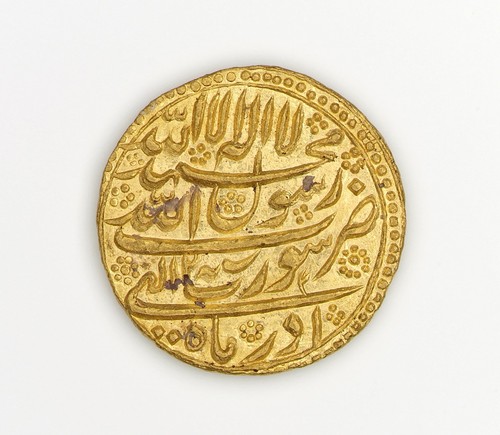
Gold Mohur of Shah Jahan
1628-1658
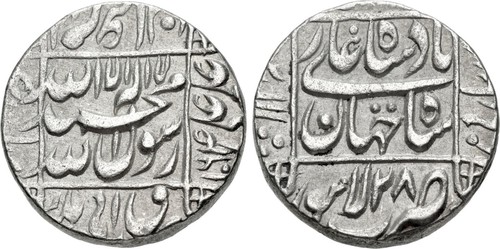
Shah Jahan Rupee
AH 1064 (AD 1653-1654)
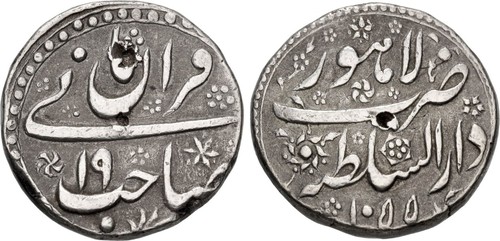
Shah Jahan Half Rupee
AH 1055 (AD 1647)
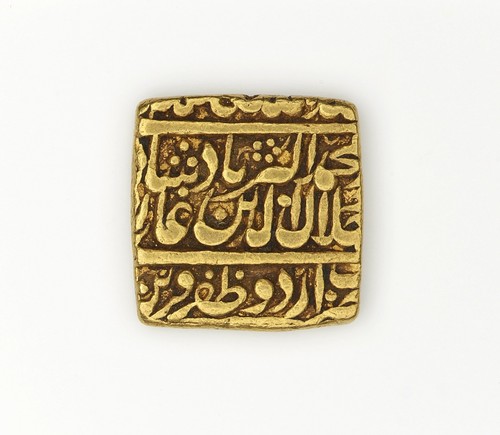
Gold Mohur of Akbar
1556-1605
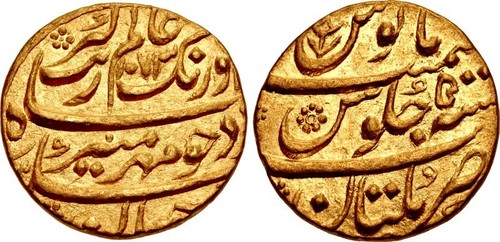
Gold Mohur of Aurangzeb
1618-1707
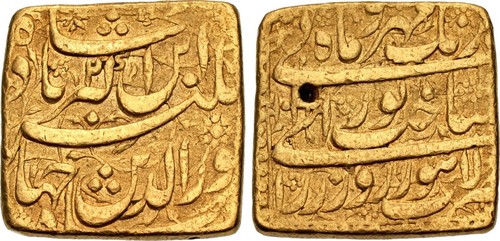
Gold Square Mohur of Jahangir
1605-1627
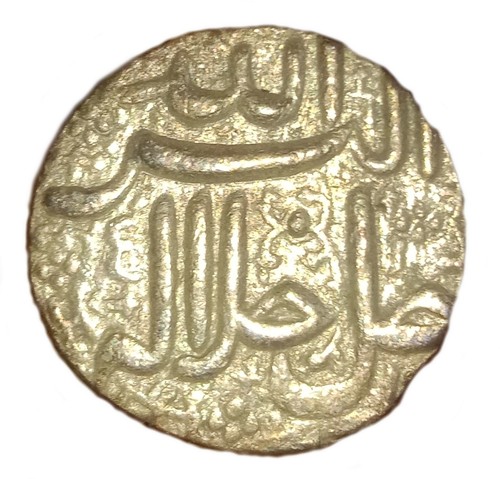
Silver Rupee of Ahmadabad
Reign of Akbar, 1556-1605 CE (this coin dated Regnal/Ilahi Year 47, c. 1602-03 CE)