
How to Identify the Mithqal (Tilla) of Babur
A collector's guide to attributing an early Mughal gold coin to Babur: reading his titles, the mint-and-date formula, metal, and look-alikes.
Read the full Mithqal (Tilla) of Babur encyclopedia entry →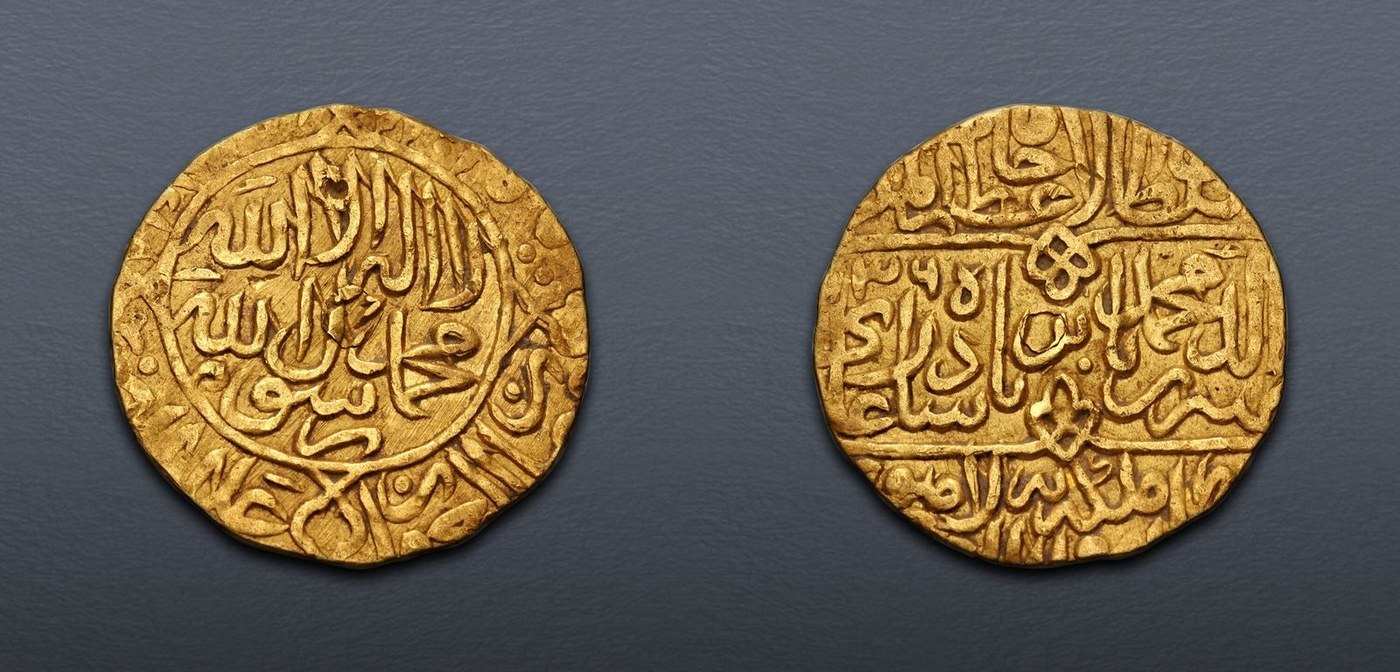
Begin with the metal and the flan. A mithqal or tilla of Babur is a gold coin, roughly circular but frequently a little irregular, struck by hand from dies larger than the blank. Expect an off-center strike where part of the legend runs off the edge — this is characteristic of the period, not a fault. A coin that is base metal, magnetic, or clearly cast rather than struck is a different piece, a replica, or a forgery.
Attribution hinges on the obverse legend. Babur's gold carries Persian and religious calligraphy along with his name and ruler titles. If you can read his name in that legend, you have confirmed the ruler; without it, an old-looking Islamic gold coin should not be assumed to be Babur's. Because his script and format follow the Timurid tradition he came from, the name and titles are the decisive identifier rather than the general layout.
The reverse tells you where and when. Look for the mint-and-date formula in Persian script, naming the mint city and the year — here falling within AH 932–937 (AD 1526–1530). Reading the mint and the date accurately is the most important step for a serious attribution, since these details separate Babur's short Indian reign from later issues and place the coin within his brief window of rule.
Watch for look-alikes. Contemporary Central Asian and later Mughal gold used the same aniconic, all-calligraphic style and can look similar at a glance. The plentiful mohurs of later emperors, in particular, should not be confused with the far scarcer coinage of the founder; only the ruler's name settles the question. Posthumous, imitative, and tribute issues also circulated in the wider region.
Authentication calls for caution because gold and rarity together attract forgery. Genuine coins are struck, so casting seams, air bubbles, a soft or grainy surface, or a mold line around the edge are warning signs. Weigh and measure the coin against the mithqal standard, photograph both faces clearly, and have the Persian legend read by someone familiar with Timurid and early Mughal epigraphy or checked against standard references before treating an example as a genuine Babur gold coin.
Frequently asked questions
How do I tell a Babur gold coin from a later Mughal mohur?
Read the obverse legend for the ruler's name and titles. Babur's gold names him specifically and dates to AH 932–937 (AD 1526–1530); later emperors' gold names them instead and is generally far more common.
Where is the date on the coin?
The reverse carries the mint-and-date formula in Persian script, naming the mint city and the year. On coins of this type the date falls within AH 932–937, about AD 1526–1530.
Why is my coin off-center with part of the writing missing?
That is typical of hand-struck coinage of this era. The dies were larger than the blank, so most pieces show only part of the full legend and are rarely perfectly centered.
How can I check that a Babur gold coin is genuine?
Confirm it is struck rather than cast, weigh and measure it against the mithqal standard, and have the Persian legend verified. Casting seams, bubbles, a grainy surface, wrong weight, or non-gold metal are red flags given how scarce and valuable these coins are.