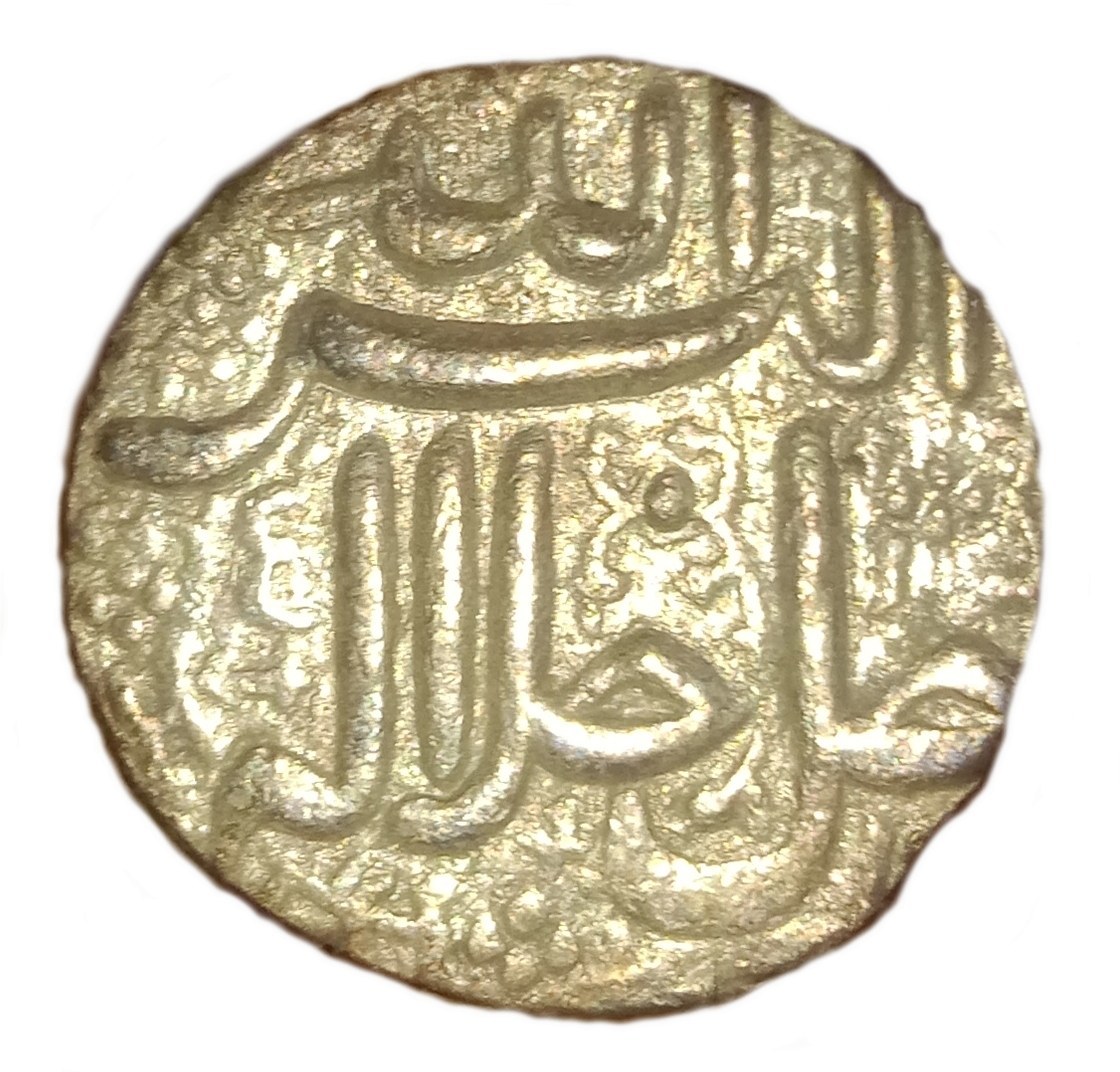
Silver Rupee of Ahmadabad
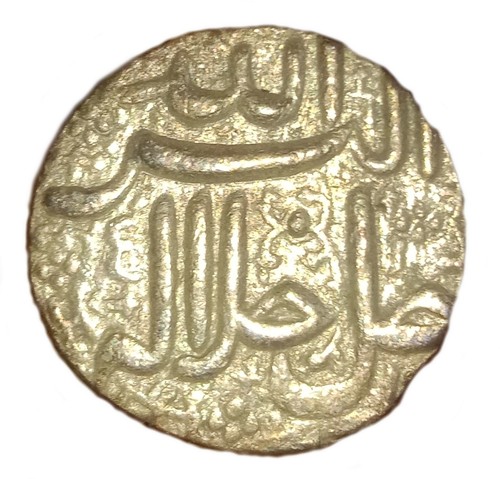
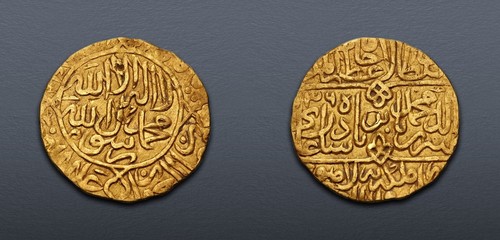
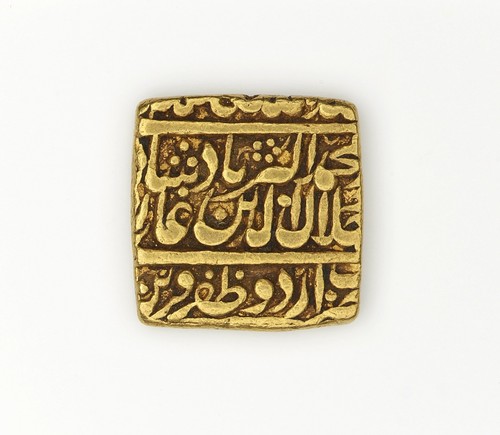
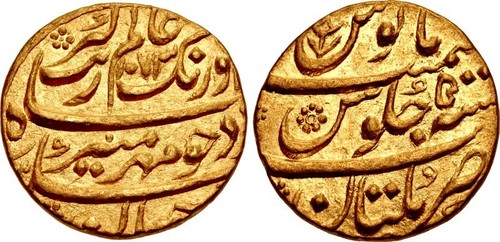
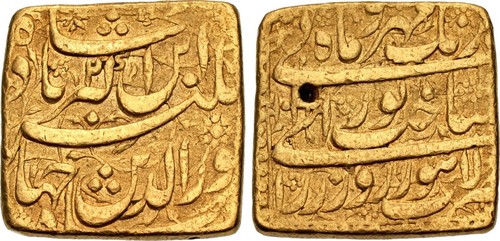
Hand-struck Mughal silver rupee of Emperor Akbar from the Ahmadabad mint in Gujarat, dated Regnal Year 47.
- Country
- India
- Denomination
- Rupee
- Metal
- Silver
Got a coin like this?
Identify any coin from a photo, free.
Overview
The Silver Rupee of Ahmadabad is a hand-struck silver coin issued under the Mughal emperor Jalaluddin Muhammad Akbar (reigned 1556-1605). The example described here is an Ilahi-type rupee bearing Akbar's titles on the obverse and the Ahmadabad mint name on the reverse, dated Regnal Year 47 of his reign. Ahmadabad, in the province of Gujarat, became one of the most productive imperial mints after Akbar annexed the region in the 1570s.
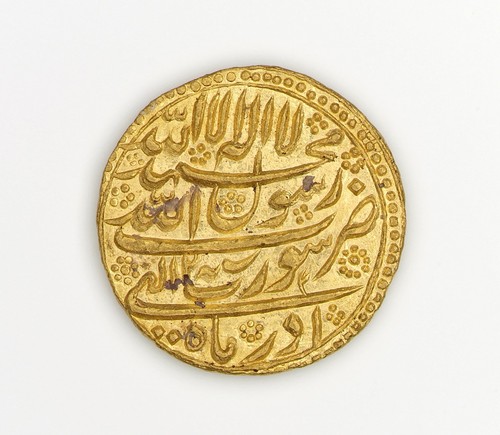
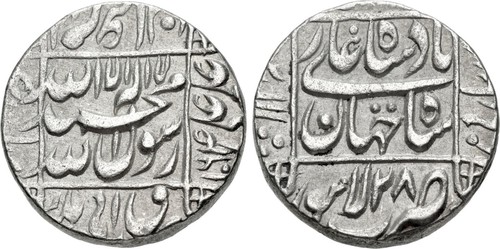
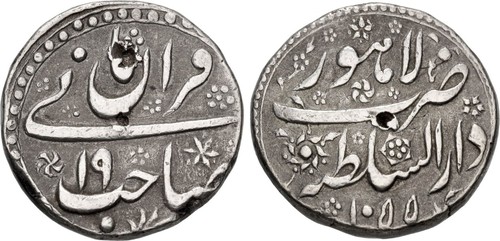
Like other Mughal rupees of the period, the coin is a broad, thick disc of high-purity silver struck between hand-held dies. It circulated as a standard unit of the Mughal monetary system, alongside the gold mohur and the copper dam. Its inscriptions are in Persian, rendered in a flowing Arabic script, and there is no portrait or pictorial device.
History & Background
Akbar inherited and refined the silver rupee standard that had been established by Sher Shah Suri in the 1540s. Over his long reign the Mughal mints produced rupees in enormous quantity, and Akbar experimented with coin types, legends, and calendar systems. Late in his reign he introduced the Ilahi ("Divine") era, a solar dating system counted from his accession in 1556; coins of this later period, including many Ahmadabad issues, carry regnal or Ilahi year dates and sometimes the Ilahi month names.
Ahmadabad had been the capital of the independent Sultanate of Gujarat before Akbar's conquest of the province around 1572-1573. Once absorbed into the empire it functioned as a major provincial and commercial center, and its mint struck large volumes of gold, silver, and copper. A rupee dated Regnal Year 47 belongs to the final years of Akbar's reign, around 1602-1603 CE.
These coins remained in commerce well beyond Akbar's death, as later Mughal rulers largely maintained the rupee's weight and fineness. Surviving specimens are relatively common today because so many were produced, though condition, clarity of legend, and full visible dates vary widely.
How to Identify
The obverse (the side seen here) carries Akbar's name and titles in Persian: forms of "Jalal al-din Muhammad Akbar" together with royal styling such as Badshah/Padshah Ghazi, and, on Ilahi-type issues, era and month references. The reverse bears the mint statement naming Ahmadabad ("zarb Ahmadabad," struck at Ahmadabad) along with dating elements. No image or portrait appears; the design is entirely calligraphic.
The coin is silver, roughly circular but often slightly irregular from hand striking, and typically weighs on the order of 11 to 11.7 grams, close to the standard Mughal rupee weight of about 178 grains. Diameter is usually in the low-to-mid 20s of millimeters, with a fairly thick flan. Because the dies were larger than the blank, legends are frequently off-center and part of the inscription may run off the edge.
Attribution rests on reading the Persian legends: the ruler's name identifies Akbar, the mint word identifies Ahmadabad, and the numerals or month name give the year. Specialists confirm exact types and varieties by comparison with standard references on Mughal coinage.
Value & Collectibility
Akbar's silver rupees were struck in great numbers, so ordinary Ahmadabad specimens are among the more affordable Mughal silver coins and trade in a modest collector range. Value is driven mainly by the sharpness of the strike, how much of the legend and date is clearly on the flan, overall wear, and eye appeal rather than by the metal content alone.
Well-centered coins with a fully legible mint name and complete date command a premium over pieces where inscriptions run off the edge, and scarce type or month varieties can be worth considerably more to specialists. Damaged, cleaned, bent, or holed examples sell for less.
As with all hand-struck Islamic and Mughal coinage, prices vary with the market and with individual quality, so ranges are only a guide. For a specific coin, compare recent auction results for the same ruler, mint, and year and, where the price warrants it, seek an expert opinion.
Frequently asked questions
Which emperor issued this rupee?
It was issued under Jalaluddin Muhammad Akbar, the third Mughal emperor, who reigned from 1556 to 1605. The obverse carries his name and titles in Persian.
What does Regnal Year 47 mean?
It counts the years of Akbar's reign (or the Ilahi era he based on his accession). Year 47 places the coin near the end of his reign, around 1602-1603 CE.
Where is the Ahmadabad mint?
Ahmadabad is a city in Gujarat, western India. It was a major Mughal provincial mint after Akbar annexed Gujarat in the 1570s, and its name appears on the coin's reverse.
Is the coin pure silver?
Mughal rupees of this period were struck in high-purity silver at a standard of roughly 11 to 11.7 grams. Exact fineness varied slightly by mint and issue.
Are these rupees rare?
No. Akbar's silver rupees were produced in large quantities and survive in numbers, so common examples are affordable. Rarity comes from specific mints, dates, varieties, and high grade.
Silver Rupee of Ahmadabad guides
In-depth guides for identifying, valuing, and collecting Silver Rupee of Ahmadabad.