
How to Identify the Silver Rupee of Ahmadabad
A collector's guide to attributing Akbar's hand-struck silver rupee from the Ahmadabad mint by legend, weight, and date.
Read the full Silver Rupee of Ahmadabad encyclopedia entry →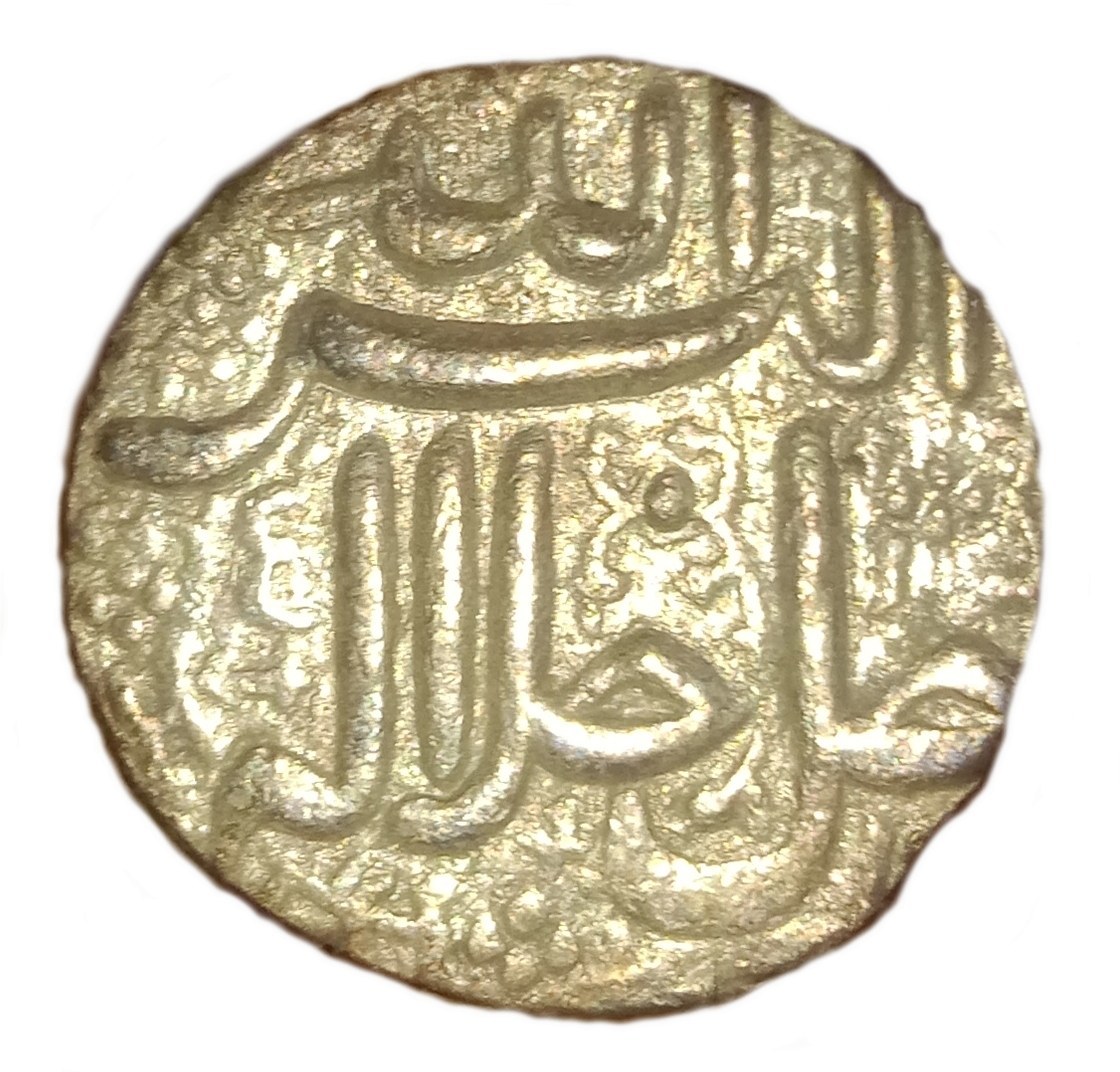
Start with the metal and fabric. This is a hand-struck silver coin, broad and fairly thick, usually weighing about 11 to 11.7 grams and measuring in the low-to-mid 20s of millimeters. The flan is often slightly irregular and the strike off-center, which is normal for the period. A perfectly round, machine-sharp coin of this type should raise suspicion.
Read the legends rather than looking for pictures, because Mughal rupees carry no portrait. The obverse should show Akbar's name and titles in Persian script (forms of "Jalal al-din Muhammad Akbar" with royal styling); the presence of Ilahi-era or month references marks the later Ilahi-type issue seen here. The reverse should contain the mint phrase naming Ahmadabad ("zarb Ahmadabad") together with the year. Confirming the mint word is the single most important step in attribution.
Locate the date carefully. This example is Regnal/Ilahi Year 47, placing it around 1602-1603 CE, late in Akbar's reign. Because the dies were larger than the blanks, the numerals or month name are frequently partly off the flan, so you may need to piece the date together from what is visible or match it against a reference plate.
Beware of look-alikes and traps. Rupees of the same broad style were struck at many mints and by later Mughal rulers who kept the same weight standard, so an unread or misread mint word can lead to a wrong attribution. Cast copies, tooled legends, and modern fantasy pieces exist; genuine coins show crisp die-struck lettering, honest wear, and correct weight. When a coin is valuable or uncertain, weigh it precisely, compare it with published Akbar/Ahmadabad types, and seek a specialist's opinion before buying.
Frequently asked questions
How do I tell an Ahmadabad rupee from another mint?
Read the mint phrase on the reverse. Only the word naming Ahmadabad confirms the mint; the ruler's name and overall style are shared across many Mughal mints.
What weight should a genuine coin be?
Expect roughly 11 to 11.7 grams, near the standard Mughal rupee of about 178 grains. A weight far outside this range is a warning sign.
Why is part of the inscription missing?
The engraved dies were larger than the silver blanks, so legends often run off the edge. This is normal and does not by itself indicate a fake.
How can I spot a fake or cast copy?
Look for soft or bubbly detail, seams, wrong weight, and lettering that looks drawn rather than struck. Genuine pieces show sharp die-struck calligraphy and natural wear; get expert help when in doubt.