
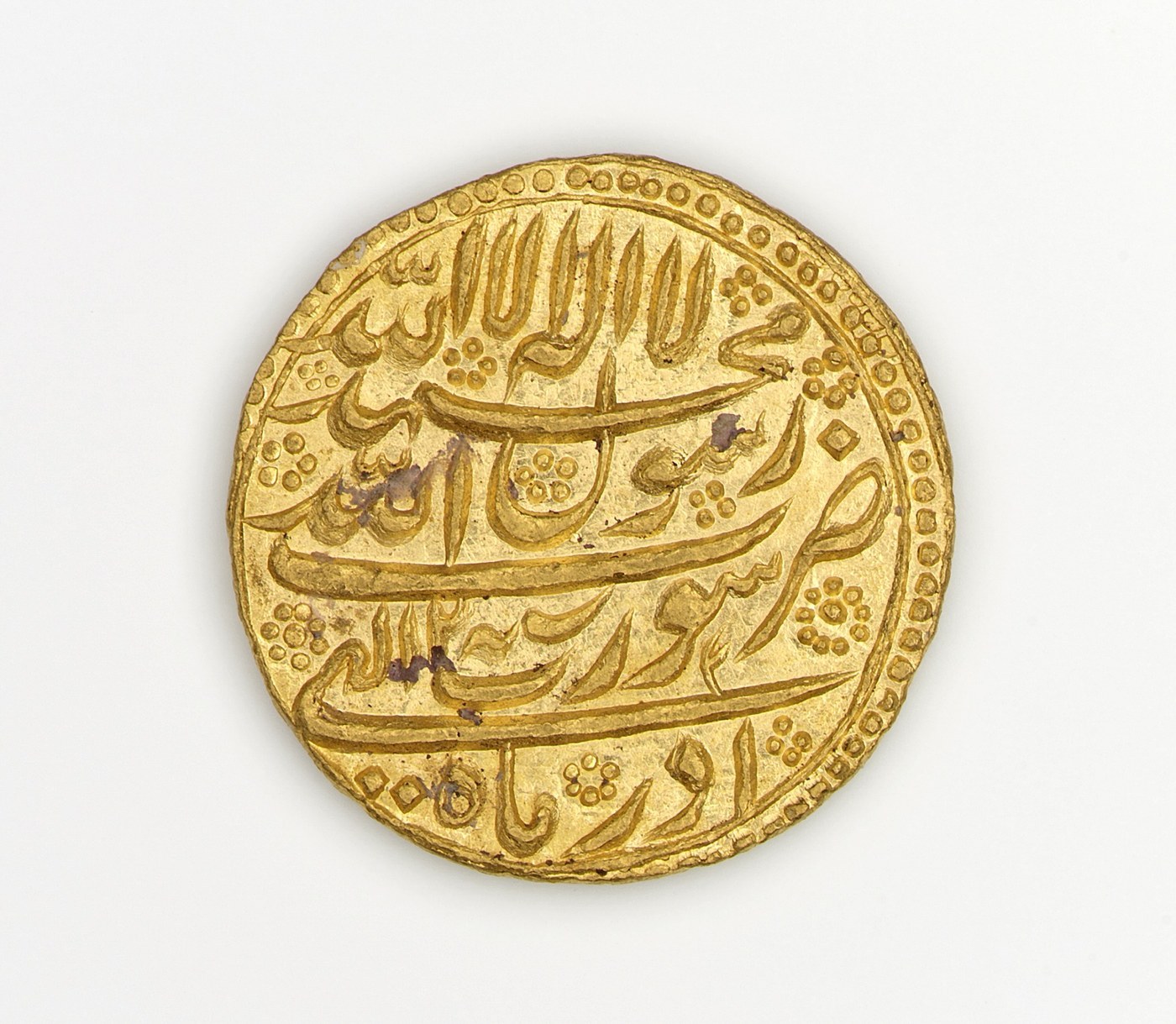
Gold Mohur of Shah Jahan
High-purity gold mohur struck under Mughal emperor Shah Jahan (1628-1658), bearing Persian imperial titles; this example carries the Balkh mint mark.
- Country
- India
- Denomination
- Mohur
- Metal
- Gold
Got a coin like this?
Identify any coin from a photo, free.
Overview
The gold mohur was the principal gold coin of the Mughal Empire, and examples struck during the reign of Shah Jahan (1628-1658) are among the most sought-after of the series. The mohur was a high-purity gold piece, and its designs are entirely calligraphic: instead of a portrait, both faces carry flowing Persian inscriptions naming the emperor, giving his titles, and recording the mint and date.
This particular coin is a mohur of Shah Jahan struck at the mint of Balkh, a city in what is today northern Afghanistan. The obverse presents the imperial titles of Shah Jahan in Persian, while the reverse carries further Persian legend together with the Balkh mint name. Because Mughal control of Balkh was brief, mohurs bearing this mint are of particular interest to collectors of the series.
History & Background
Shah Jahan, the fifth Mughal emperor, ruled from 1628 to 1658 and is best remembered as the builder of the Taj Mahal. His reign is often regarded as a high point of Mughal wealth and craftsmanship, and this is reflected in his gold coinage, which maintained a consistent, high standard of fineness and elegant calligraphic dies.
The Balkh mint mark on this coin ties it to the Mughal campaign into Central Asia. In the mid-1640s Mughal forces occupied Balkh and Badakhshan for a short period before withdrawing, and coins were struck at Balkh during this brief occupation. Mohurs from this mint therefore document a specific and short-lived episode of Mughal territorial expansion beyond the traditional heartland of the empire.
Mughal gold coins of this era typically record the Islamic (Hijri) year and, on many issues, the regnal year of the emperor. The inscriptions frequently include religious formulae and the ruler's grand titles, following the calligraphic tradition established by earlier Mughal emperors rather than the figural designs seen on European coinage of the period.
How to Identify
A Shah Jahan mohur is a gold coin with no portrait or figural imagery. Both sides are filled with Persian (Perso-Arabic) inscriptions arranged in neat lines or a circular legend. The obverse of this example carries the imperial titles of Shah Jahan; the reverse carries additional legend along with the mint name Balkh and a date. Reading the mint name in the legend is the key to attributing the coin to Balkh specifically.
Mughal mohurs are struck in high-fineness gold and were made to a standard weight in the region of roughly 10.9 to 11 grams, though individual pieces vary. Most are round, though Shah Jahan also issued some square (nazarana or presentation-style) pieces. The flans are often slightly irregular and hand-struck, so full inscriptions are not always centered, and part of the legend may run off the edge.
To confirm an identification, look for the ruler's name and titles in the legend, the word for the mint (Balkh), and a Hijri year. The absence of any bust, animal, or Latin lettering, combined with dense Persian calligraphy on both faces, distinguishes a Mughal mohur from Western gold coins of similar size.
Value & Collectibility
As a high-purity gold coin of roughly one-third troy ounce, a Shah Jahan mohur carries a substantial intrinsic gold value as a baseline, and desirable examples trade well above their bullion content. Value is driven by the mint, the sharpness of the calligraphy, the completeness of the inscriptions, weight, and overall preservation.
Mohurs from common mints of Shah Jahan are relatively more available, while pieces from scarcer or short-lived mints such as Balkh generally command higher premiums because of their limited window of production and historical interest. Well-struck, fully legible examples with clear mint and date are worth considerably more than worn or clipped pieces.
Because Mughal gold has been widely reproduced and forged, authenticated examples, ideally certified by a recognized grading service or accompanied by reputable auction provenance, are worth significantly more than uncertified coins, and buyers should treat unverified pieces with caution.
Frequently asked questions
What is a mohur?
The mohur was the standard gold coin of the Mughal Empire, a high-purity piece weighing in the region of 10.9 to 11 grams. It carried Persian inscriptions rather than a portrait.
Why does this coin have no portrait?
Mughal coinage followed an Islamic calligraphic tradition. Instead of a ruler's image, the dies are filled with Persian inscriptions giving the emperor's name and titles, the mint, and the date.
What is special about the Balkh mint?
Balkh, in present-day northern Afghanistan, was held by the Mughals only briefly during a mid-1640s campaign into Central Asia. Coins struck there document that short-lived occupation and are of particular interest to collectors.
How can I tell it is a coin of Shah Jahan and not another emperor?
The obverse legend names Shah Jahan and gives his imperial titles in Persian. Confirming the ruler's name in the inscription, along with the Hijri date, is the reliable way to attribute the coin.
Is a Shah Jahan gold mohur valuable?
Yes. It has a strong baseline value from its gold content, and authenticated, well-preserved examples, especially from scarcer mints like Balkh, sell for meaningful premiums above bullion.
Gold Mohur of Shah Jahan guides
In-depth guides for identifying, valuing, and collecting Gold Mohur of Shah Jahan.
Other coins you may enjoy
Shah Jahan Rupee
AH 1064 (AD 1653-1654)
Shah Jahan Half Rupee
AH 1055 (AD 1647)
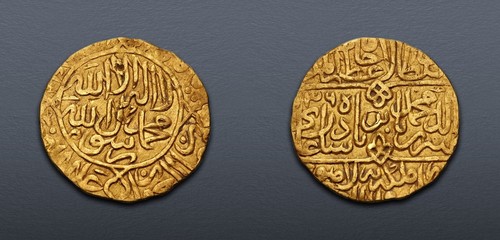
Mithqal (Tilla) of Babur
AH 932–937 (AD 1526–1530)
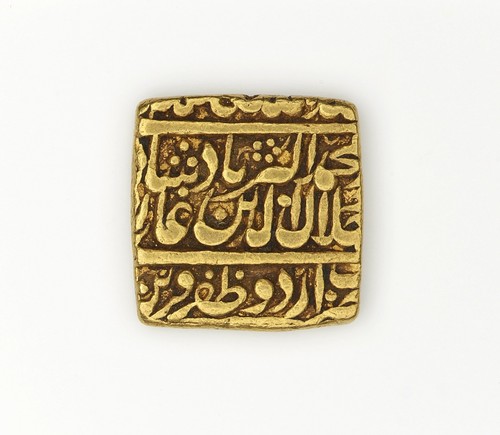
Gold Mohur of Akbar
1556-1605
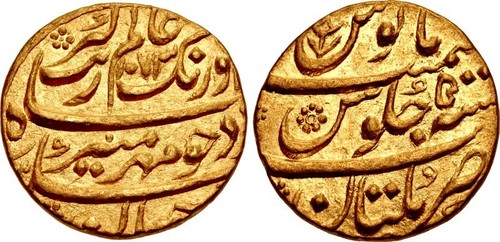
Gold Mohur of Aurangzeb
1618-1707
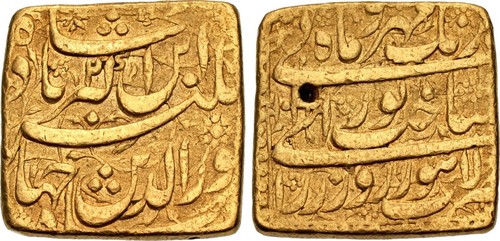
Gold Square Mohur of Jahangir
1605-1627
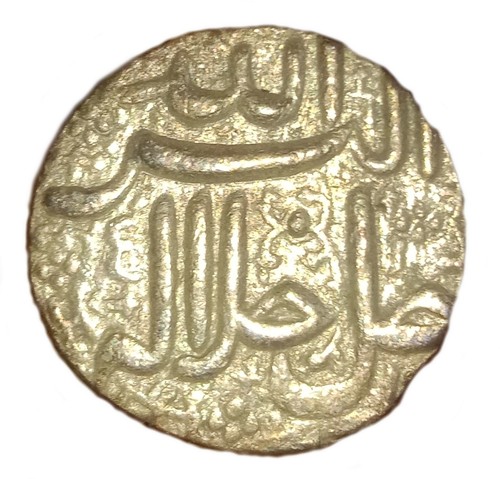
Silver Rupee of Ahmadabad
Reign of Akbar, 1556-1605 CE (this coin dated Regnal/Ilahi Year 47, c. 1602-03 CE)