
How to Identify the Gold Mohur of Shah Jahan
A collector's guide to recognizing a Shah Jahan gold mohur, reading its Persian legends, confirming the Balkh mint, and spotting forgeries.
Read the full Gold Mohur of Shah Jahan encyclopedia entry →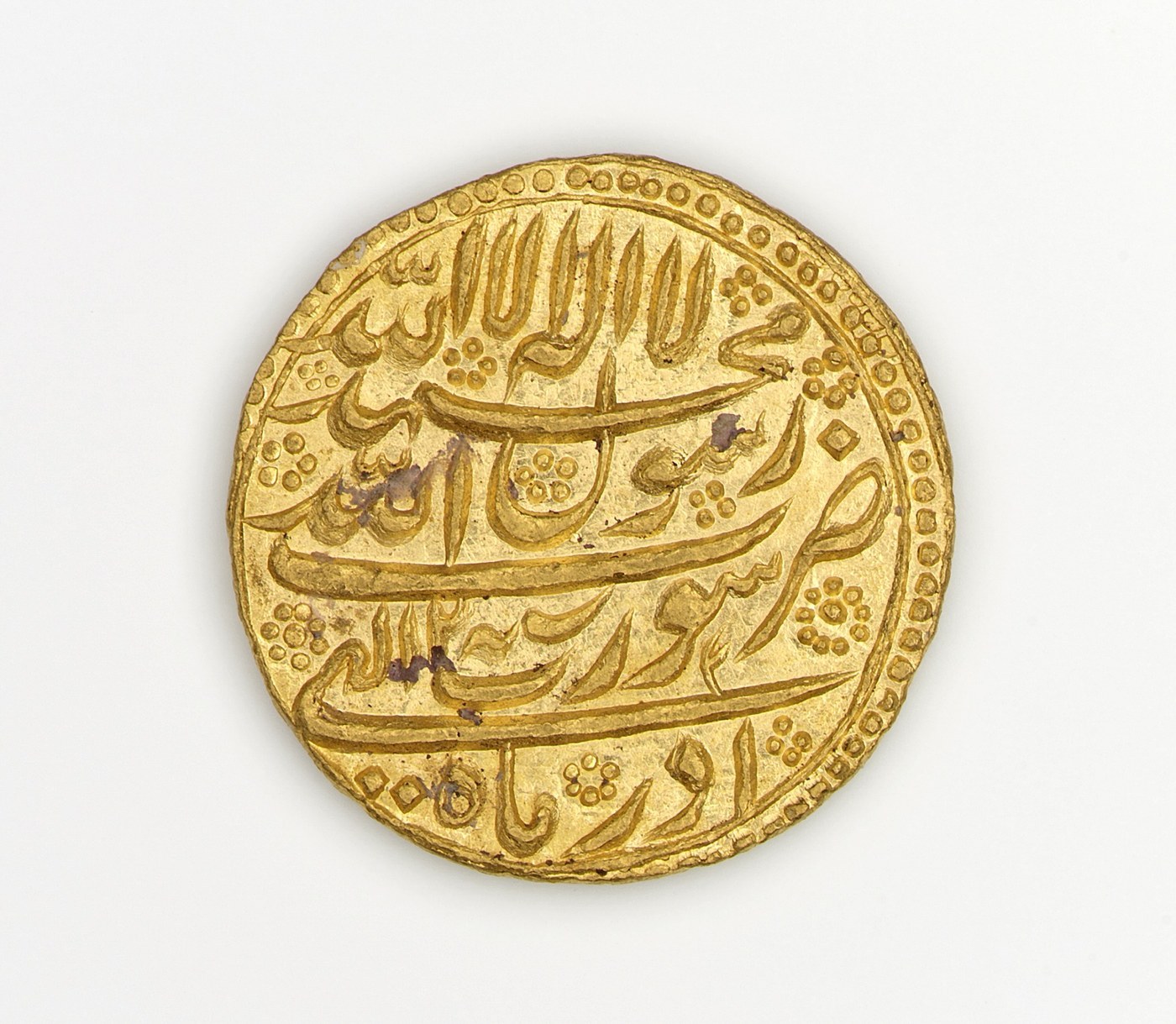
Start with the basics of metal and format. A genuine Shah Jahan mohur is a rich yellow, high-fineness gold coin, typically round, with a hand-struck appearance and a weight in the region of 10.9 to 11 grams. There is no portrait, animal, shield, or Latin lettering anywhere on it. Both faces are covered in Persian (Perso-Arabic) calligraphy. If you see a bust or European-style design, it is not a Mughal mohur.
Read the legends for three things: the ruler's name and titles, the mint name, and the date. The obverse of this type carries the imperial titles of Shah Jahan, so confirming his name in the inscription establishes the emperor. The reverse carries further legend along with the mint name. To attribute this coin to Balkh specifically, you need to locate and read the word for Balkh in the reverse legend; the date is normally given as a Hijri (Islamic) year, and many issues also cite a regnal year.
Expect striking irregularities. These coins were struck by hand on slightly uneven flans, so the legend is frequently off-center and part of it may run off the edge. That is normal and not by itself a sign of a problem. What matters for grade and value is how much of the inscription, mint name, and date remain clearly legible. A coin where the mint and date are fully readable is far more desirable than one where they are lost to weakness or wear.
Watch for look-alikes and adjacent types. Mohurs of other Mughal emperors, such as Jahangir, Shah Jahan's successor Aurangzeb, or later rulers, share the same calligraphic style and similar size, so the distinction comes down to reading the name in the legend rather than the overall appearance. Square or presentation-style pieces also exist and should not be assumed fake simply because of their shape, though they warrant extra scrutiny.
Be cautious about authenticity. Mughal gold is heavily forged and includes both cast copies and modern struck fakes, sometimes made in gold of the wrong fineness or weight. Check that the weight is consistent with the standard, look for casting seams, bubbles, or a soft, greasy surface texture, and be wary of coins with suspiciously perfect, machine-crisp lettering. For any significant purchase, favor examples certified by a recognized grading service or backed by credible auction provenance, and have questionable pieces examined by a specialist in Mughal coinage before buying.
Frequently asked questions
How do I read the mint name to confirm it is Balkh?
The mint name appears within the reverse Persian legend. Attribution to Balkh depends on locating and reading that word in the inscription, so reference images or a specialist in Mughal coins are helpful if you cannot read Perso-Arabic script.
Should an off-center or partly missing legend worry me?
Not on its own. These coins were hand-struck on irregular flans, so off-center strikes and legends running off the edge are common. It affects how much detail is legible, and therefore value, but it is normal for the type.
What are the biggest red flags for a fake?
Wrong weight or fineness, visible casting seams or surface bubbles, a soft or greasy texture, and lettering that looks unnaturally crisp and machine-made. Uncertified gold with no provenance should be treated with caution.
Can I distinguish it from a mohur of another emperor by sight alone?
Usually not from style alone, because Mughal mohurs share the same calligraphic look and size. The reliable method is to read the emperor's name in the obverse legend rather than judging by overall appearance.