
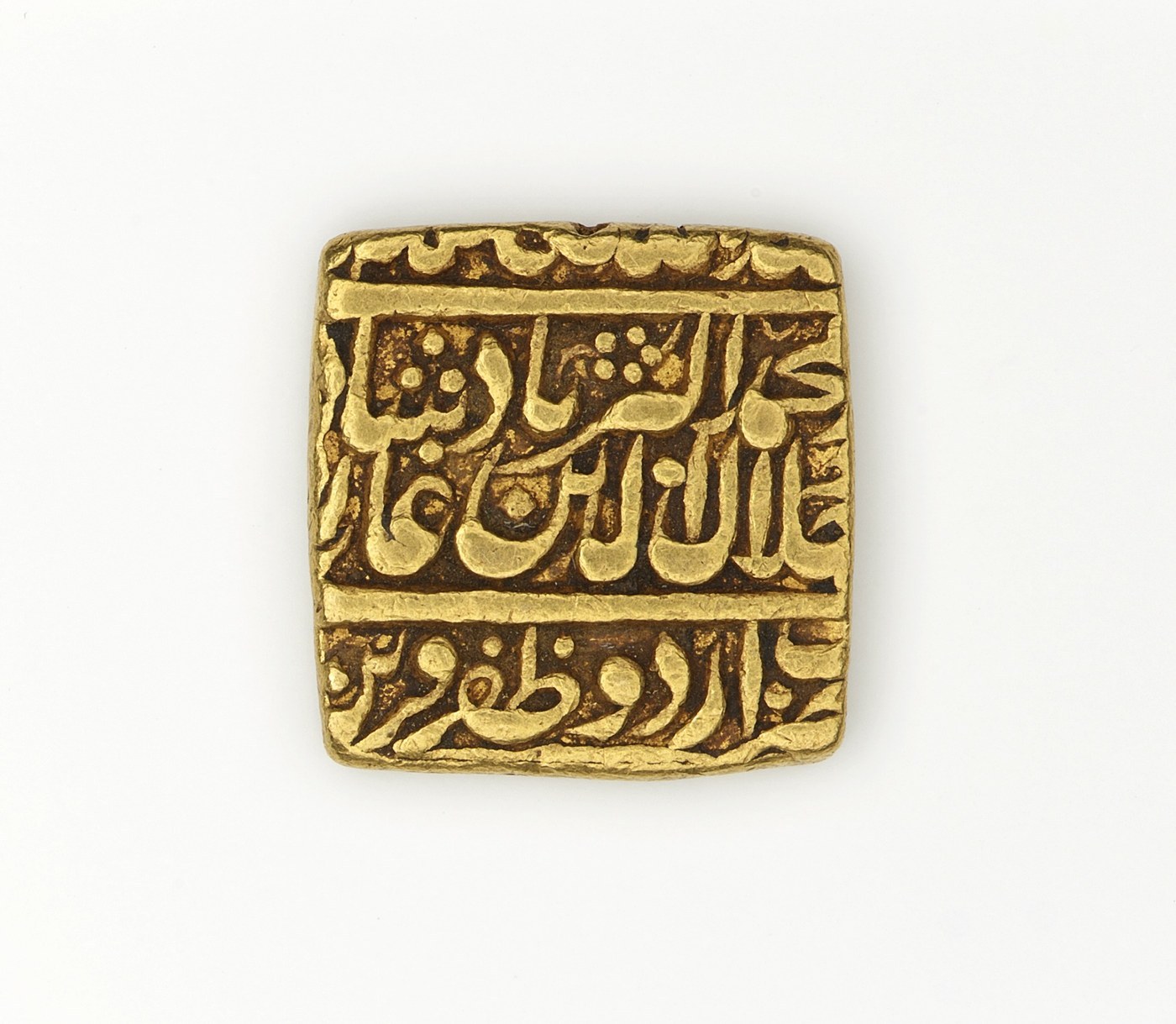
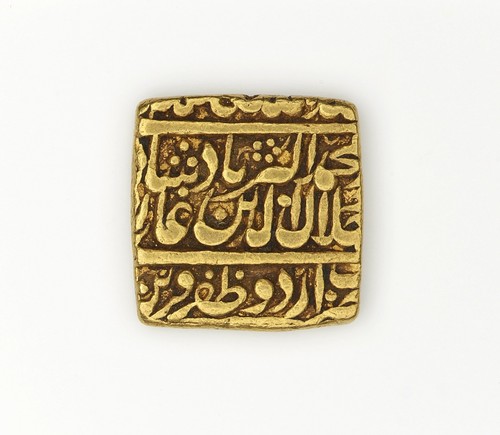
Gold Mohur of Akbar
Aniconic gold coin of Mughal emperor Akbar (1556-1605), struck in Persian calligraphy in the Ilahi coinage style.
- Country
- India
- Denomination
- Mohur
- Metal
- Gold
Got a coin like this?
Identify any coin from a photo, free.
Overview
The Gold Mohur of Akbar is the principal gold coin of Jalaluddin Muhammad Akbar, the third Mughal emperor, who ruled from 1556 to 1605. Like nearly all Islamic-era coinage of the period, it is aniconic: it carries no portrait or figural image, only Persian and Arabic inscriptions rendered in fine calligraphy. The specimen photographed here (a LACMA example) shows the flowing Persian legends and the distinctive Ilahi coinage style associated with Akbar's later reign.
The mohur was a high-value gold denomination used for large payments, gifts, and stores of wealth rather than everyday trade, which was carried out in silver rupees and copper dams. Akbar's mints produced mohurs in remarkable variety, including both round and square (mihrabi) flans, from a network of mints across the empire.
History & Background
Akbar inherited and then thoroughly reformed the Mughal monetary system. Building on standards set under his father Humayun and the earlier Sur administration, he established the trimetallic framework of the gold mohur, silver rupee, and copper dam that would endure for the rest of the empire's coinage.
A defining feature of Akbar's later coinage is the Ilahi era. Around 1584 Akbar introduced the Tarikh-i-Ilahi ('Divine Era'), dated from his 1556 accession and using Persian solar month names in place of the standard Islamic Hijri calendar. Coins of this phase reflect his religious experimentation, and some issues replace or reduce the usual Islamic declaration of faith (kalima). The phrase 'Allahu Akbar' appears on many coins, carrying a double meaning of 'God is Great' and an allusion to the emperor's own name.
Mohurs were struck at numerous mints during his roughly half-century reign, including Agra, Lahore, Ahmadabad, Delhi, Fatehpur, and Kabul, so surviving coins vary considerably in legend, layout, and date.
How to Identify
Look first for an all-calligraphic design with no portrait or figure. Genuine Akbar mohurs are struck in gold and carry Persian and Arabic inscriptions naming the emperor, invoking God, and typically citing a mint and a year. The Ilahi-style issues use Persian solar month names and an Ilahi regnal year rather than a Hijri date.
A full-standard Mughal gold mohur weighs in the neighborhood of about 10.7 to 11 grams, though special heavy presentation and multiple-mohur pieces exist and are far rarer. Flans may be round or square; the square 'mihrabi' format is a recognizable Akbar feature. Because dies were hand-cut and struck by hand, expect variation in centering, legend arrangement, and calligraphic detail from coin to coin.
Attribution to a specific mint and year depends on reading the Persian legends, so cataloguing usually requires reference works on Mughal coinage or specialist help.
Value & Collectibility
Value depends heavily on mint, date, type (round vs. square), metal quality, and preservation, so figures should be treated as broad context rather than fixed prices. More common round mohurs of Akbar in collectible grade typically trade in the mid four figures to low five figures in US dollars, while scarce mints, unusual Ilahi legends, exceptional calligraphy, or heavy presentation pieces can command substantially more at auction.
Because this is a high-value gold coin of a celebrated ruler, it is frequently faked and its inscriptions are frequently misread. Provenance, expert attribution, and where possible third-party authentication have a large effect on realizable value. Treat any single quoted price as indicative; comparable auction records for the same mint and type are the best guide.
Frequently asked questions
Does the Gold Mohur of Akbar have a portrait of the emperor?
No. Akbar's mohurs are aniconic, carrying only Persian and Arabic calligraphy with no portrait or figural image. Portrait mohurs in the Mughal series belong to later rulers such as Jahangir, not Akbar.
What is the Ilahi style seen on these coins?
It refers to coinage tied to Akbar's Tarikh-i-Ilahi or 'Divine Era,' introduced around 1584, which dated coins from his 1556 accession and used Persian solar month names instead of the standard Hijri calendar.
How much does an Akbar gold mohur weigh?
A full-standard Mughal gold mohur weighs roughly 10.7 to 11 grams. Rare heavy presentation and multiple-mohur pieces exist but are exceptional.
Why do Akbar mohurs look so different from one another?
They were struck by hand at many mints across a nearly 50-year reign, with different legends, dates, and both round and square flans, so type, layout, and calligraphy vary widely.
Are these coins commonly counterfeited?
Yes. As a high-value gold coin of a famous emperor, the Akbar mohur is frequently faked. Expert attribution and third-party authentication are strongly advised before purchase.
Gold Mohur of Akbar guides
In-depth guides for identifying, valuing, and collecting Gold Mohur of Akbar.
Other coins you may enjoy
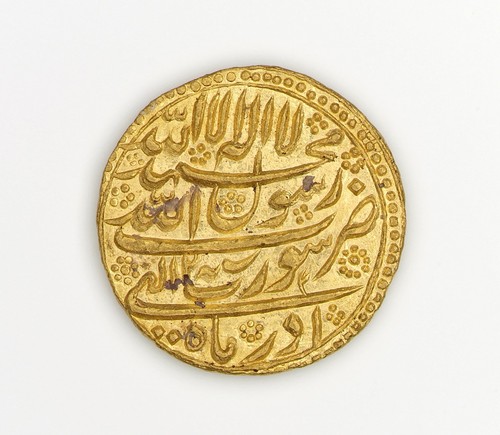
Gold Mohur of Shah Jahan
1628-1658
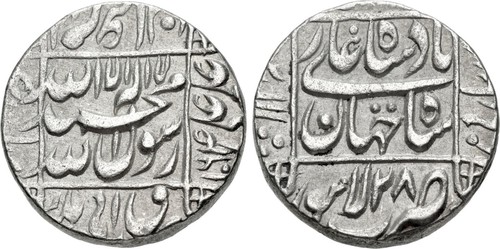
Shah Jahan Rupee
AH 1064 (AD 1653-1654)
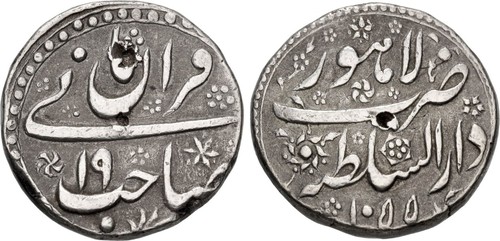
Shah Jahan Half Rupee
AH 1055 (AD 1647)
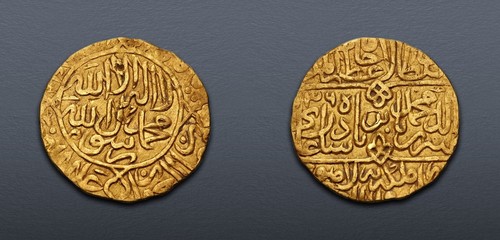
Mithqal (Tilla) of Babur
AH 932–937 (AD 1526–1530)
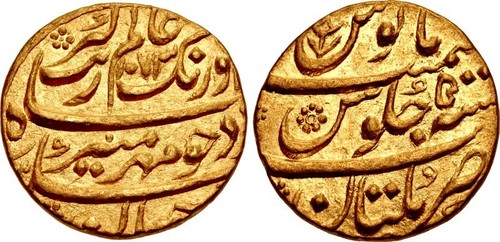
Gold Mohur of Aurangzeb
1618-1707
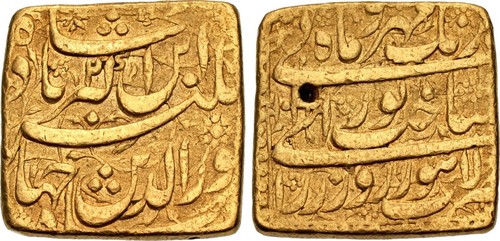
Gold Square Mohur of Jahangir
1605-1627
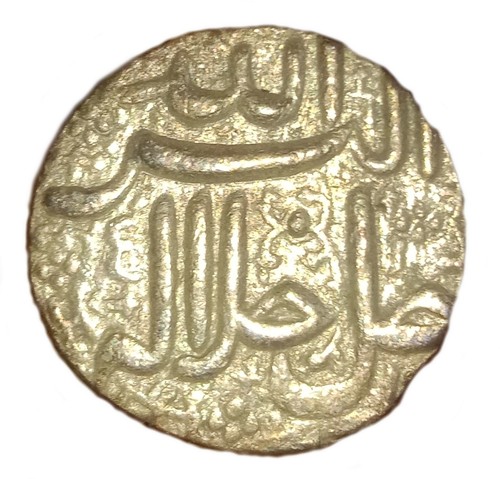
Silver Rupee of Ahmadabad
Reign of Akbar, 1556-1605 CE (this coin dated Regnal/Ilahi Year 47, c. 1602-03 CE)