
How to Identify the Gold Mohur of Akbar
A collector's guide to recognizing Akbar's aniconic gold mohur by legends, Ilahi dating, weight, flan shape, and look-alikes.
Read the full Gold Mohur of Akbar encyclopedia entry →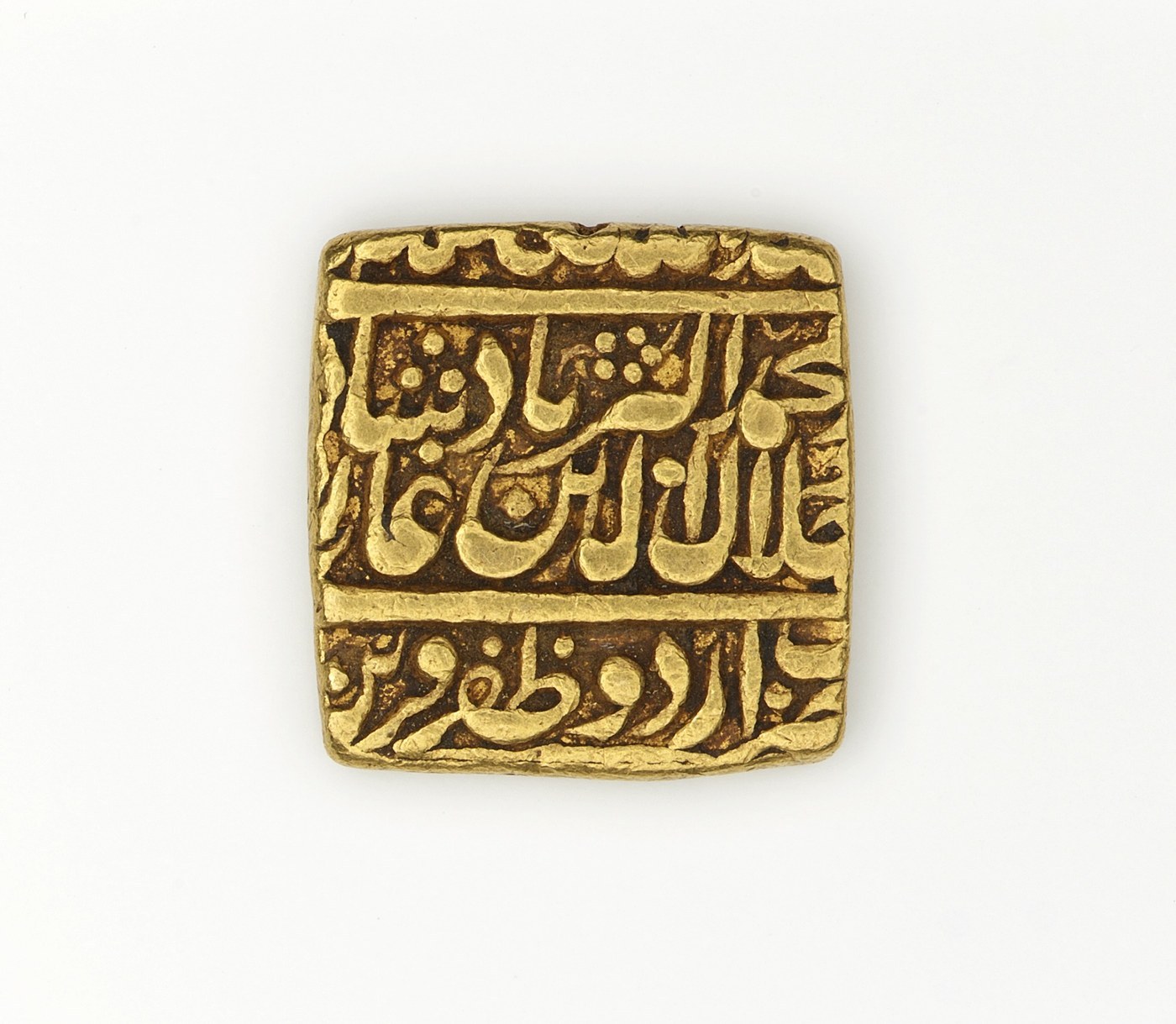
Start with the basics of format. An Akbar mohur is solid gold and entirely calligraphic, with Persian and Arabic legends on both faces and no image of any kind. If a coin attributed to Akbar shows a portrait, an animal, or a zodiac figure, it is not an Akbar issue; those belong to later Mughal rulers or are fantasy pieces.
Examine the inscriptions and dating. Look for the emperor's name and titles alongside religious formulas, and for Ilahi-style issues expect Persian solar month names and an Ilahi regnal year counted from 1556 rather than a Hijri date. The phrase 'Allahu Akbar' appears on many issues and is a genuine Akbar feature. Reading the legend also reveals the mint name, which is essential for cataloguing; use a standard Mughal coinage reference or a specialist to translate the Persian.
Check size, weight, and shape. A full-standard mohur sits near 10.7 to 11 grams of high-purity gold; a coin that is markedly light, base, or magnetic is suspect. Note whether the flan is round or square, since Akbar struck both, and the square 'mihrabi' type is a recognizable diagnostic. Hand-struck production means uneven centering and off-flan legends are normal and not by themselves signs of a fake.
Watch for look-alikes and traps. Mohurs of Akbar are confused with those of Humayun, Jahangir, and Shah Jahan, and modern gold-plated or cast copies circulate widely; casting seams, soft mushy lettering, and incorrect weight are warning signs. Because the coin is valuable and its Persian legends are easy to misread, confirm attribution against published examples of the same mint and type, and favor coins with provenance or third-party authentication.
Frequently asked questions
How can I tell an Akbar mohur from a Jahangir mohur?
Akbar issues are purely calligraphic and aniconic. Jahangir introduced portrait and zodiac mohurs, so any figural design rules out Akbar. Reading the ruler's name in the legend confirms the attribution.
What quick checks help spot a fake?
Verify the weight is near 10.7 to 11 grams, confirm the piece is solid high-purity gold rather than plated, and look for casting seams or soft, blurry lettering that indicate a cast copy rather than a struck coin.
Do I need to read Persian to identify one?
Basic recognition does not require it, but confirming the mint, date, and exact type does. Use a Mughal coinage catalogue or a specialist to translate the legends for a full attribution.
Is square shape a reliable sign of Akbar?
Square (mihrabi) mohurs are a recognizable Akbar format, but he also struck round mohurs, and other rulers used squares too. Treat shape as one clue alongside the legends, weight, and metal.