
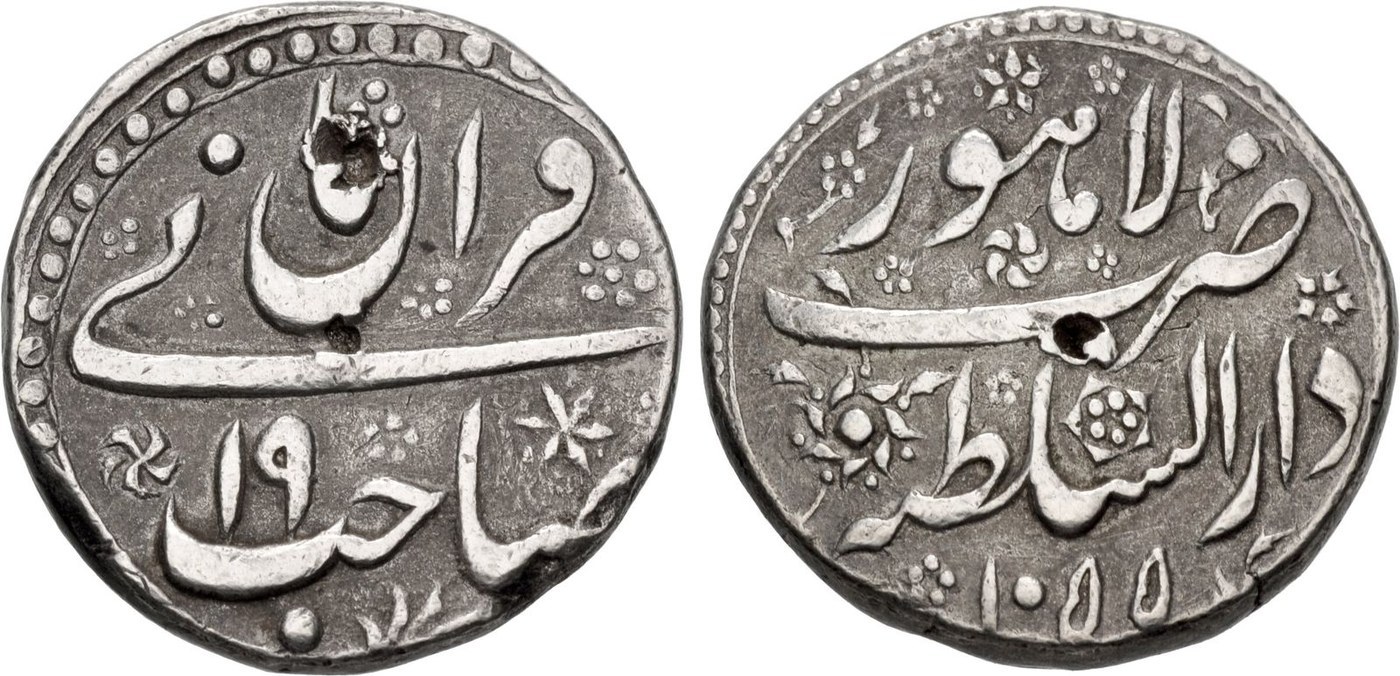
Shah Jahan Half Rupee
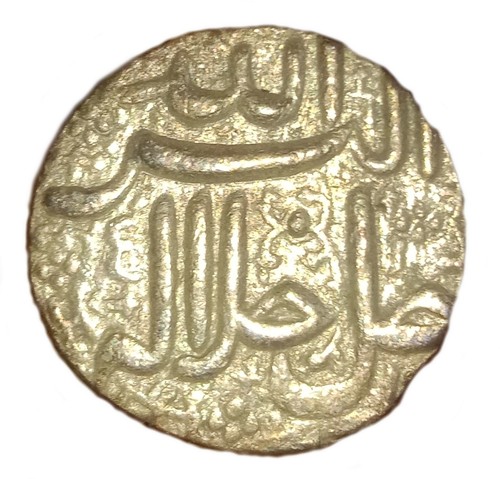
Silver half rupee of Mughal emperor Shah Jahan, dated AH 1055, carrying Persian-script inscriptions and ornamental borders instead of any portrait.
- Country
- India
- Denomination
- Half Rupee
- Metal
- Silver
Got a coin like this?
Identify any coin from a photo, free.
Overview
The Shah Jahan Half Rupee is a silver coin from Mughal India, struck during the reign of the emperor Shah Jahan (ruled 1628–1658), the builder of the Taj Mahal. It is a half denomination of the standard Mughal silver rupee, and like all Mughal coinage of this era it is aniconic: it bears no royal portrait, only flowing Arabic and Persian religious and dynastic inscriptions framed by decorative and floral border elements.
The example described here is dated AH 1055 (AD 1647) and shows Persian-script legends on both faces—a devotional formula on one side and the emperor's titles, mint, and date on the other. Collectors value these pieces both as historical artifacts of one of the wealthiest phases of the Mughal Empire and as accessible examples of Islamic calligraphic coinage.
History & Background
Shah Jahan came to the throne in 1628 and presided over a period often described as the golden age of Mughal art and architecture. His mints across northern and central India produced a large and carefully regulated silver coinage in three main denominations—the rupee, the half rupee, and the quarter rupee—alongside gold mohurs and copper dams.
The silver rupee weighed roughly 11.4 grams, so a half rupee such as this piece was struck at about half that weight. Coins were dated in the Islamic Hijri (AH) calendar and typically also carried the emperor's regnal year, allowing individual issues to be placed precisely within his reign. Shah Jahan's coins were struck at many mints, including Akbarabad (Agra), Shahjahanabad (Delhi), Lahore, Surat, and Patna, and the specific mint name is part of the reverse legend.
The Mughal silver standard set under Akbar and continued by Shah Jahan proved remarkably durable and influenced Indian coinage long after the dynasty's decline. Because the coinage was purely inscriptional, each emperor is identified through the calligraphic content of the legends rather than through images.
How to Identify
This is a small, round silver coin, noticeably smaller and lighter than a full Mughal rupee (a half rupee sits near 5.5–5.8 grams). Both faces are filled entirely with Arabic and Persian script; there is no bust, animal, or scene. One face carries a religious inscription—commonly the Kalima (the Islamic declaration of faith) with, in the margins, the names of the four early caliphs—while the other carries the emperor's name and titles together with the mint name and the AH date.
On this coin the visible date is AH 1055 (AD 1647). Decorative touches such as ornamental dividers and small floral or dotted border motifs frame the legends; these are characteristic die-engraving flourishes of Shah Jahan-era silver rather than a separate design. The legends are often larger than the flan, so part of the inscription can run off the edge—this is normal for hand-struck Mughal coinage and not a defect.
Attributing the exact issue depends on reading the mint name and titles in the Persian legend, which can require reference works or specialist help, since dozens of mints operated under Shah Jahan.
Value & Collectibility
Shah Jahan silver coins survive in reasonable numbers, and common half rupees are among the more affordable Mughal silver pieces, typically trading in the modest-to-moderate range for well-preserved, clearly legible examples. Full rupees of the emperor are more frequently encountered than the half denomination, so a genuine half rupee can attract slightly more collector interest.
Value is driven mainly by the mint, the completeness and sharpness of the legends, the date and regnal year, and overall condition. Pieces from scarce mints, or with unusually full and crisp inscriptions, can command significant premiums, while worn, clipped, or partially struck coins sit at the lower end. As with all hand-struck coinage, ranges are broad and any specific figure should be checked against recent auction and dealer records rather than treated as fixed.
Frequently asked questions
Why does the Shah Jahan Half Rupee have no portrait?
Mughal coinage followed Islamic aniconic tradition, so instead of a ruler's image the coin carries calligraphic inscriptions—religious formulas on one side and the emperor's titles, mint, and date on the other.
What does the AH 1055 date mean?
AH refers to the Islamic Hijri calendar. AH 1055 corresponds to around AD 1645–1647, placing the coin within Shah Jahan's reign; many of his coins also add a regnal year alongside the Hijri date.
How is a half rupee different from a full Mughal rupee?
The half rupee is struck at about half the weight of the standard silver rupee—roughly 5.5–5.8 grams versus about 11.4 grams—so it is smaller and lighter while using the same style of inscriptions.
Is this coin rare?
Shah Jahan's silver is not rare overall, but half rupees are seen less often than full rupees, and value depends heavily on the mint, date, and how complete and legible the inscriptions are.
Shah Jahan Half Rupee guides
In-depth guides for identifying, valuing, and collecting Shah Jahan Half Rupee.
Other coins you may enjoy
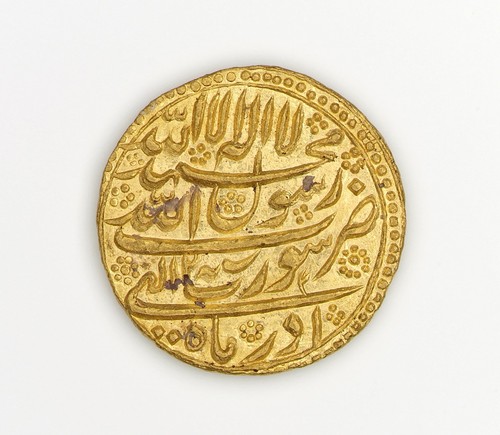
Gold Mohur of Shah Jahan
1628-1658
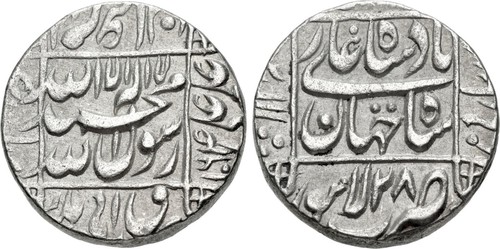
Shah Jahan Rupee
AH 1064 (AD 1653-1654)
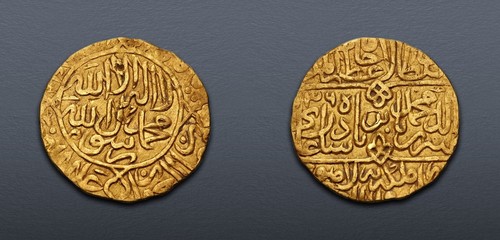
Mithqal (Tilla) of Babur
AH 932–937 (AD 1526–1530)
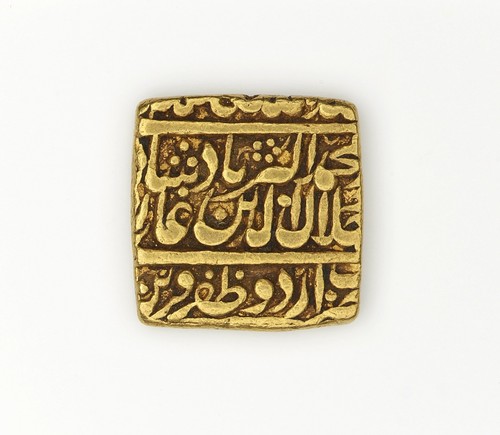
Gold Mohur of Akbar
1556-1605
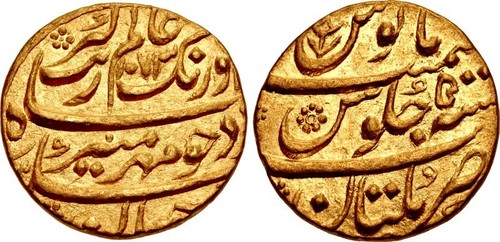
Gold Mohur of Aurangzeb
1618-1707
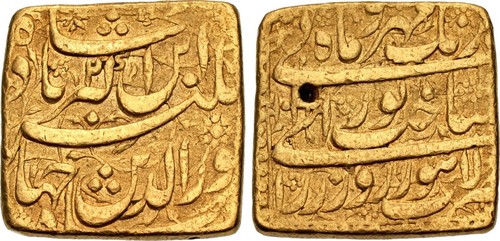
Gold Square Mohur of Jahangir
1605-1627
Silver Rupee of Ahmadabad
Reign of Akbar, 1556-1605 CE (this coin dated Regnal/Ilahi Year 47, c. 1602-03 CE)