
How to Identify the Shah Jahan Half Rupee
A collector's walkthrough for confirming a Mughal silver half rupee of Shah Jahan—weight, script, mint and date reading, and authentication cautions.
Read the full Shah Jahan Half Rupee encyclopedia entry →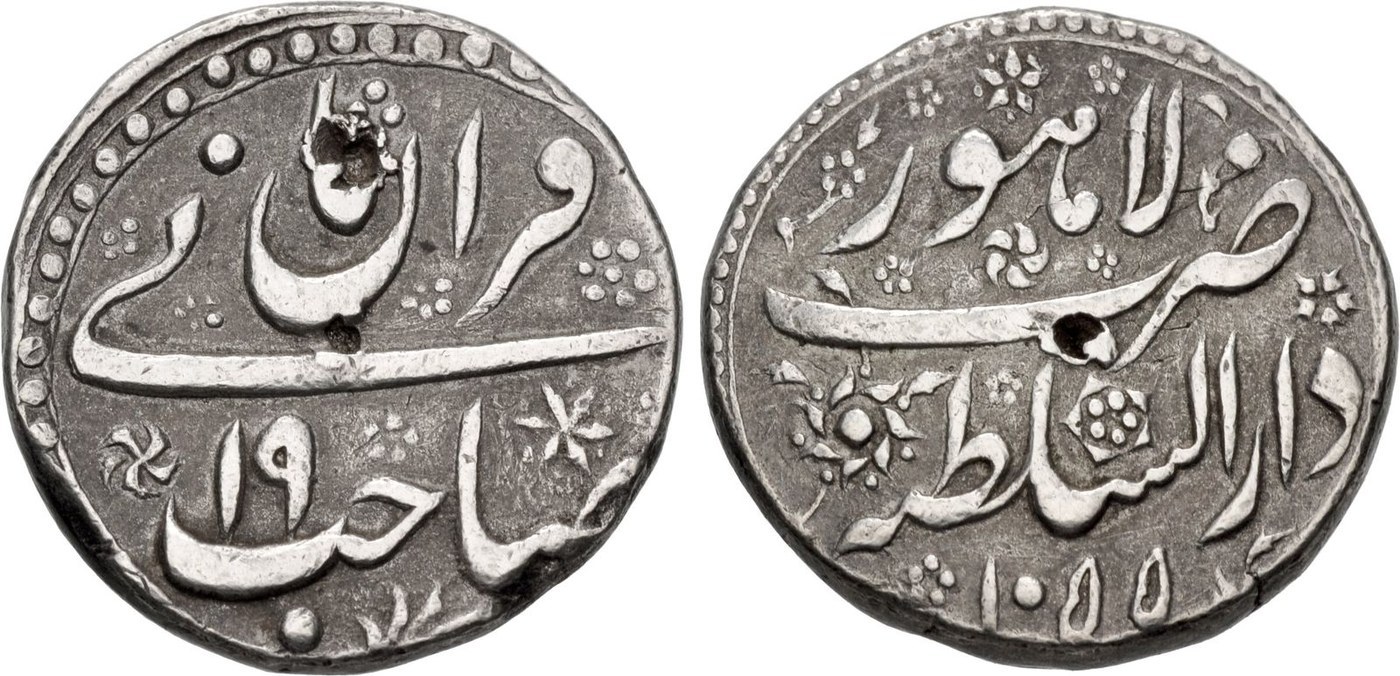
Start With Size, Metal, and Weight
Begin by confirming you have a half denomination. A Shah Jahan half rupee is a round silver coin weighing roughly 5.5–5.8 grams—about half the weight of a full Mughal rupee (near 11.4 grams) and clearly heavier than a quarter rupee. Genuine silver has a soft grey sheen and a light ring; a suspiciously light, orange-toned, or overly bright piece deserves scrutiny. Because these coins were struck by hand, expect slightly uneven, non-milled edges and an irregular flan rather than a perfectly circular machine-made blank.
Read the Two Faces
Both sides are covered entirely in Arabic and Persian script with no portrait or scene. One face typically bears a religious inscription—often the Kalima—sometimes with the names of the four early caliphs in the margins. The other face carries the emperor's name and titles along with the mint name and the AH date. The presence of ornamental dividers and small floral or dotted border motifs is normal for Shah Jahan silver and helps confirm the era.
Confirm the Date and Mint
Look for the Hijri (AH) date in the legend—on this type, AH 1055 (AD 1647)—and, where present, a regnal year. The mint name is embedded in the reverse legend and is the key to precise attribution, since Shah Jahan operated many mints such as Akbarabad, Shahjahanabad, Lahore, Surat, and Patna. It is common for the die to be larger than the coin blank, so part of the inscription may run off the edge; a partial legend is expected and does not by itself indicate a problem.
Watch for Look-Alikes
Mughal silver of Jahangir, Aurangzeb, and later emperors shares the same aniconic, inscription-only format, so a coin can easily be misattributed without reading the ruler's name and titles. Later Indian princely-state and Durrani issues also imitate Mughal styling. When the script is worn or off-flan, attribution should rest on whatever legend elements survive rather than on shape or size alone.
Authentication Cautions
Cast copies, tourist replicas, and modern fantasy pieces exist. Warning signs include seams or bubbles from casting, mushy or doubled lettering, incorrect weight, and edges that look filed or too smooth. Hand-struck originals show crisp, individually engraved characters and honest wear consistent with age. For a valuable or uncertain example, weigh and measure it, compare the legends against published references, and when in doubt seek an opinion from a dealer or specialist in Mughal coinage.
Frequently asked questions
How can I tell a half rupee from a full rupee or a quarter?
Weigh it. A half rupee is near 5.5–5.8 grams, roughly half a full rupee (about 11.4 grams) and about double a quarter rupee, while all three share the same inscription-only design.
I can only read part of the inscription—is the coin damaged?
Not necessarily. Mughal dies were often larger than the coin blank, so legends frequently run off the edge. A partial legend is typical of hand-struck coinage and does not mean the coin is fake or damaged.
How do I know it is Shah Jahan and not another Mughal emperor?
Attribution depends on reading the emperor's name and titles in the Persian legend, since Jahangir, Aurangzeb, and others used the same aniconic style. The mint name and AH date help pin down the exact issue.
What are the clearest signs of a fake?
Casting seams or bubbles, soft or doubled lettering, wrong weight, and filed or unnaturally smooth edges. Genuine coins show sharply engraved characters and wear consistent with age.