
How to Identify the Gold Square Mohur of Jahangir
A collector's checklist for spotting a genuine square gold mohur of Jahangir: shape, legends, Lahore mint, dating, and authentication cautions.
Read the full Gold Square Mohur of Jahangir encyclopedia entry →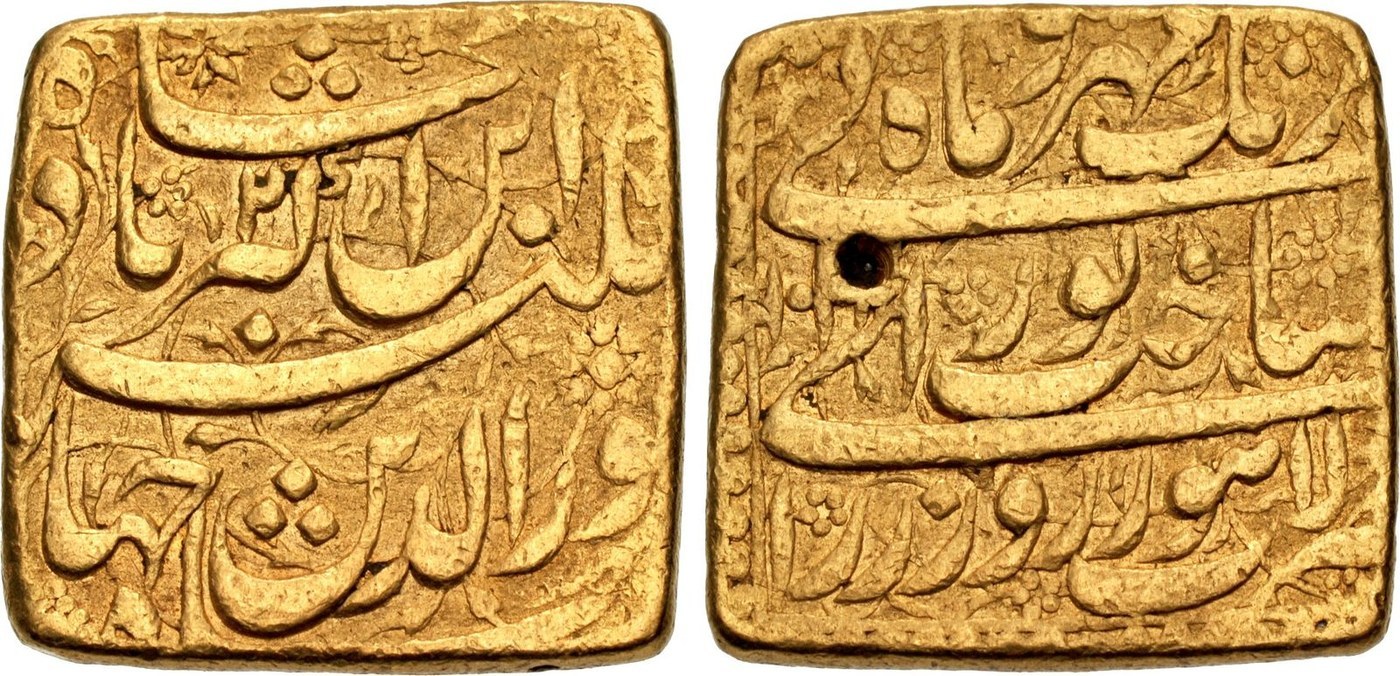
Start with the two features that set this type apart: the square gold planchet and the Persian legends filling its four-sided field. If the coin is round, it is a different mohur variety; the murabba (square) format is the first diagnostic. Confirm the metal reads as high-karat gold, warm deep yellow, dense in the hand, and completely non-magnetic.
Read the obverse for the emperor's name and titles: Nur al-Din Muhammad Jahangir in Mughal Persian script, usually with royal epithets. The lettering on a genuine hand-struck coin is crisp and well-modeled, with clean transitions between the raised legend and the flat field. Weak, mushy, or uniformly grainy lettering is a warning sign of a cast copy.
Turn to the reverse for the mint-and-date block. On this issue you are looking for the Lahore mint named in Persian, the Hijri year AH 1015, and the regnal year 2 (RY 2). Verifying that the mint name and both date figures are consistent with a known Jahangir Lahore issue is central to attribution, since mint-plus-year combinations are how these coins are catalogued.
Weigh and measure the coin. A mohur should sit near a standard tola in weight; a piece that is markedly light, clipped, or trimmed on one or more sides has lost metal and value. Note any signs of mounting, a soldered loop, filed edges, or a solder shadow, which indicate former jewelry use and affect both authenticity assessment and price.
Be cautious of look-alikes and fabrications. Modern fantasy square mohurs, tourist replicas, and cast forgeries circulate widely; casting seams, bubbles, off-color gold, and lettering that does not match published die styles are red flags. Because so much rides on the exact inscriptions, have any candidate coin confirmed by a specialist in Mughal or Islamic coinage or a reputable grading service before buying or selling.
Frequently asked questions
What is the quickest way to tell a genuine square mohur from a replica?
Check the shape, metal, and lettering together: a true square planchet, non-magnetic high-karat gold near a tola in weight, and crisp hand-struck Persian calligraphy. Casting seams, bubbles, or soft mushy legends point to a copy.
How do I confirm the mint and date?
Locate the reverse mint-and-date block and match it to a catalogued Jahangir issue, here the Lahore mint with AH 1015 and regnal year 2. Cross-referencing the exact mint-plus-year against reference works or auction records is the reliable check.
Does a mounting hole or loop matter?
Yes. Ex-jewelry pieces with holes, soldered loops, or filed edges have altered metal and reduced collector value, and the added metal can also mask original surfaces, so inspect the edges carefully.
Should I clean the coin before identifying it?
No. Cleaning gold coins can leave hairlines and destroy original surface, lowering value. Identify and authenticate it as-is, and leave any conservation to a specialist.