
Coin Encyclopedia
Search and identify coins from around the world — with country, denomination, metal, mint, history, and how to tell them apart.
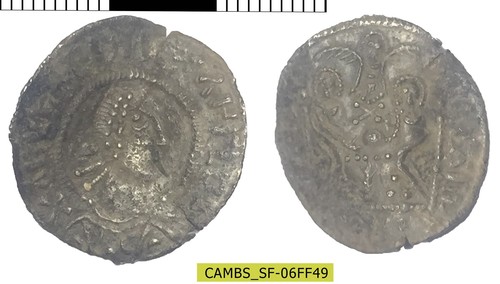
Penny of Alfred the Great
Hand-struck silver penny of Alfred the Great of Wessex, showing a right-facing royal bust and a cross-based reverse with a moneyer's inscription.
Medieval Coins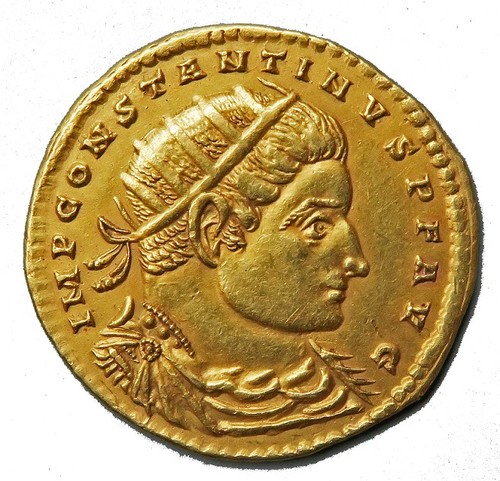
Aureus of Constantine I the Great
A Roman gold aureus struck for Constantine I the Great, showing his laureate portrait, from the era of his rise to sole power around AD 313.
Ancient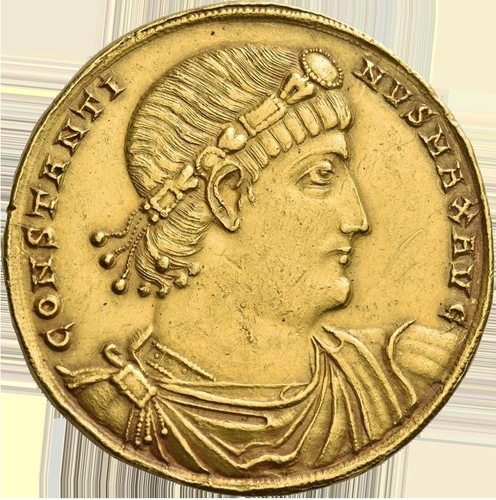
Solidus of Constantine I the Great
Constantine the Great's gold solidus, a high-purity coin struck from about AD 309 that became the standard of late Roman and Byzantine gold.
Ancient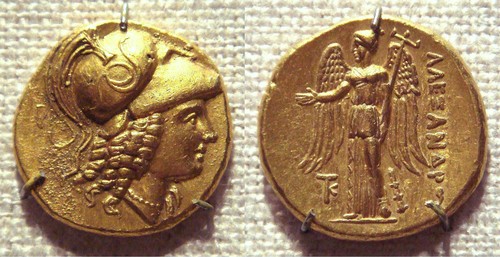
Alexander the Great Gold Stater
Gold stater struck in the name of Alexander the Great, with a helmeted Athena obverse and Nike holding a wreath on the reverse; this example c. 323-315 BC.
Ancient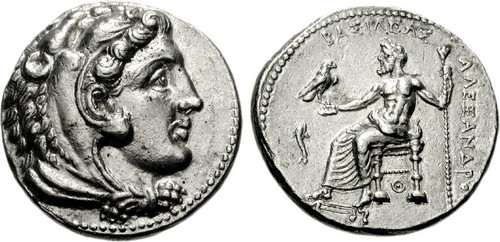
Alexander the Great Tetradrachm
Silver tetradrachm of Alexander III of Macedon with the head of Heracles in a lion skin and an enthroned deity holding an eagle on the reverse.
Ancient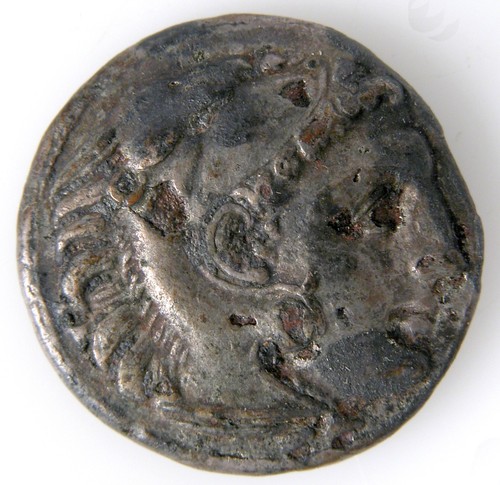
Alexander the Great Silver Drachm
Silver drachm in the name of Alexander the Great, with the head of young Herakles in a lion skin and Zeus enthroned on the reverse.
Ancient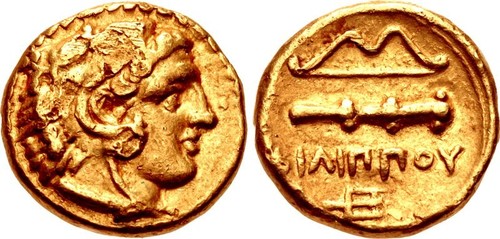
Alexander the Great Gold Quarter Stater
A small gold fraction of the Alexander the Great coinage, showing the head of Heracles and an eagle perched on a thunderbolt, the attributes of Zeus.
Ancient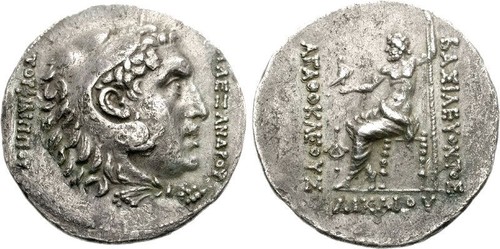
Agathokles Commemorative Tetradrachm for Alexander the Great
Silver tetradrachm of Agathokles of Syracuse, c. 310-300 BC, struck in the Alexander tradition with a bearded head and an enthroned deity reverse.
Ancient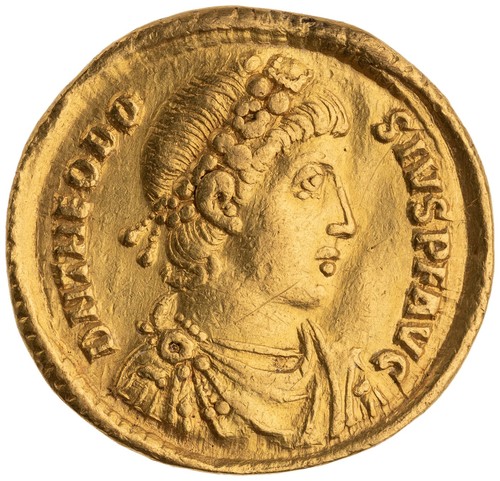
Solidus of Theodosius I
A late Roman gold solidus struck for the emperor Theodosius I (AD 379-395), showing his diademed portrait and the legend D N THEODOSIVS AVG.
Ancient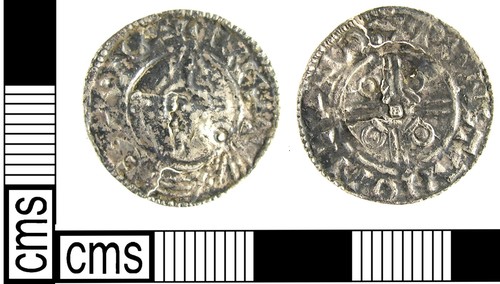
Penny of Cnut
Anglo-Saxon silver penny of King Cnut (Canute), showing a diademed bust facing left with a cross-and-pellets reverse, struck c.1024-1030.
Medieval Coins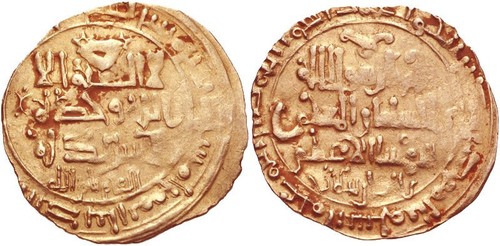
Gold Dinar of Alp Arslan
A hand-struck Islamic gold coin of the Great Seljuk sultan Alp Arslan, covered in concentric Arabic inscriptions naming the ruler and caliph, AH 455–465.
Islamic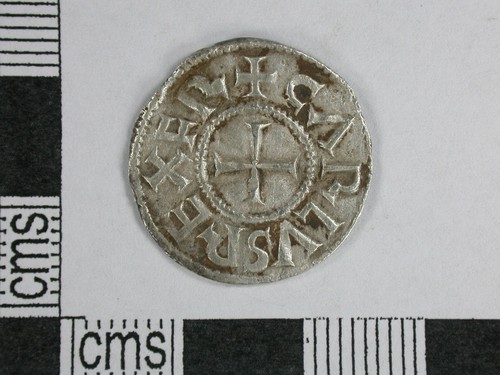
Denier of Charlemagne
A hand-struck silver denier of Charlemagne, king of the Franks: a central cross ringed by the CARLVS REX FR legend, with a royal monogram design on the reverse.
Medieval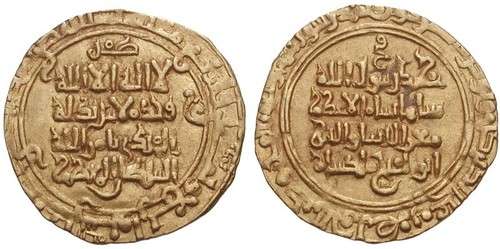
Gold Dinar of Malik Shah I
A hand-struck Seljuk gold dinar naming Malik Shah I (r. 1072–1092), covered in Arabic inscriptions with the ruler's titles and genealogy and an ornamental cartouche.
Islamic (Medieval)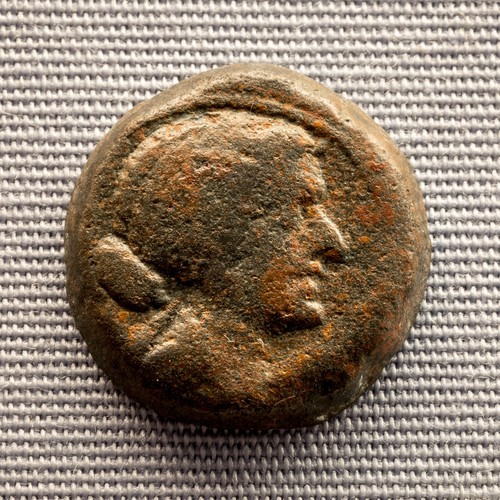
Bronze Coin of Cleopatra VII
Ptolemaic bronze coin of Cleopatra VII of Egypt, 51-30 BC, showing her draped diademed bust in profile as sole named female ruler of the dynasty.
Ancient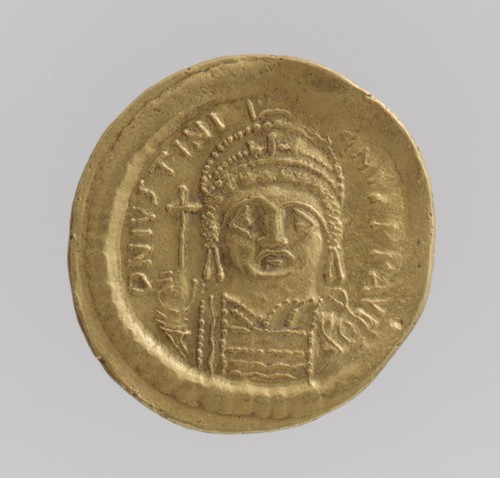
Solidus of Justinian I
Byzantine gold solidus of Emperor Justinian I (527-565 AD), showing his crowned imperial bust with a seated figure on the reverse.
Ancient Coins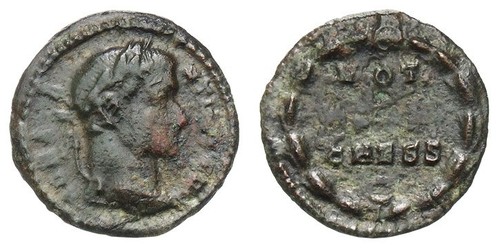
Nummus of Constantine I
Small late Roman bronze nummus (follis) of Constantine I the Great (306-337 CE), identified by his right-facing imperial portrait on the obverse.
Ancient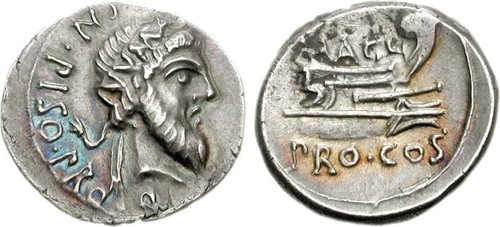
Denarius of Cn. Pompeius Magnus
Silver Roman Republican denarius of the Pompeian party (46–45 BC), with a bearded portrait of Pompey the Great and a galley reverse reading PRO COS.
Ancient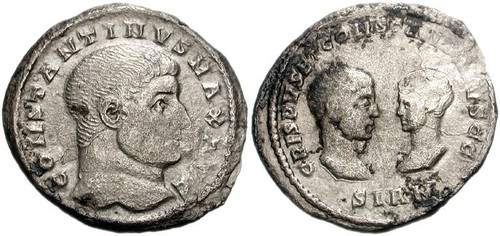
Follis of Constantine I and Crispus
A late-Roman bronze follis linking Constantine the Great to his son Crispus, with the emperor's right-facing portrait and a paired father-and-son bust reverse.
Ancient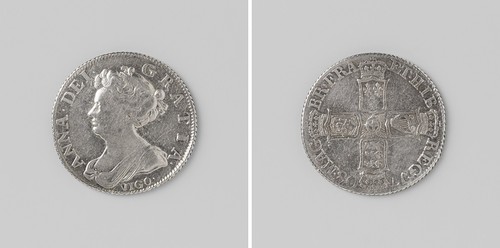
Shilling of Anne
A machine-struck silver shilling of Queen Anne, with her draped bust facing right and a reverse of crowned shields bearing the royal arms in a cross.
Milled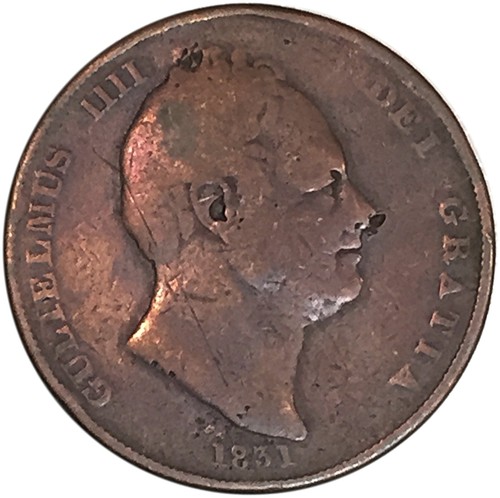
Penny of William IV
A large copper penny of King William IV, struck in the 1830s, with the king's right-facing head and the Latin legend GULIELMUS IIII D:G.
Milled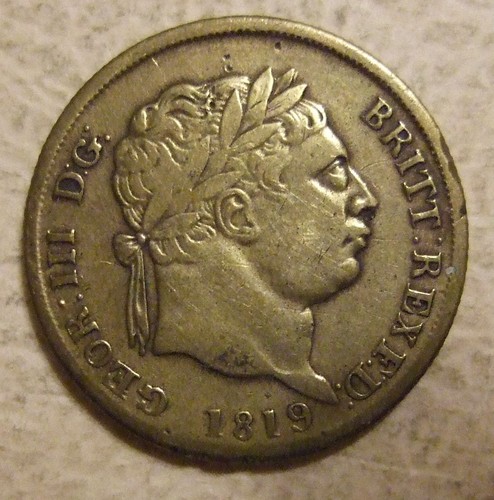
Shilling of George III
A milled silver shilling of George III from the Great Recoinage, with his laureate bust facing right and a crowned quartered royal shield within the Garter.
Milled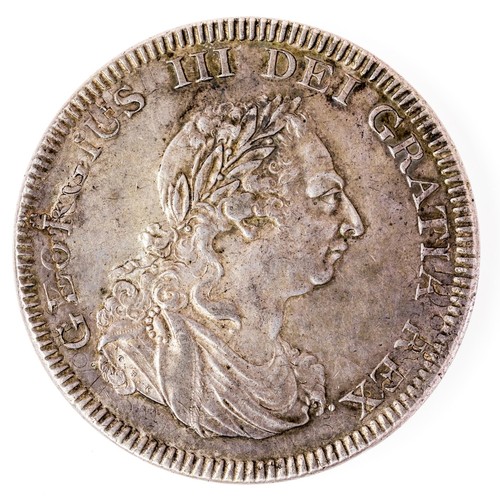
Bank of England Dollar
A George III silver dollar issued by the Bank of England in 1804, struck over Spanish eight-reales coins, with a laureate bust and a crowned shield reverse.
Milled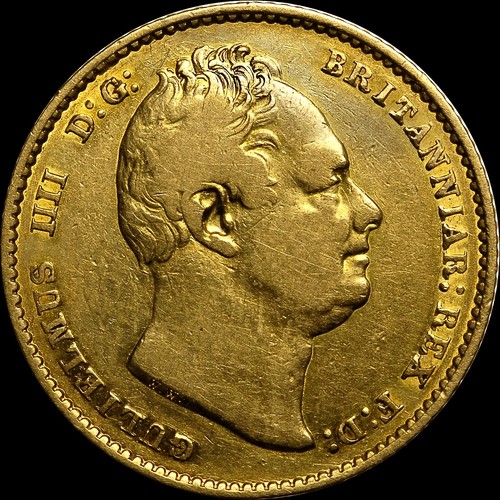
Sovereign of William IV
A 22-carat gold sovereign of William IV, with the king's bare head facing right and a crowned royal shield of arms on the reverse.
Milled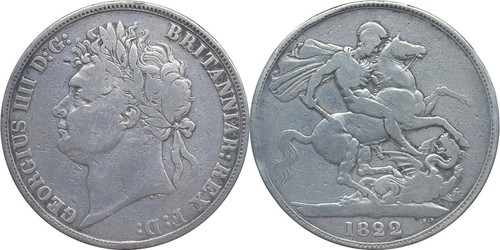
Crown of George IV
A milled silver crown of George IV, with a laureate head facing left and Pistrucci's St George and the dragon on the reverse; the photographed piece is dated 1822.
Milled