
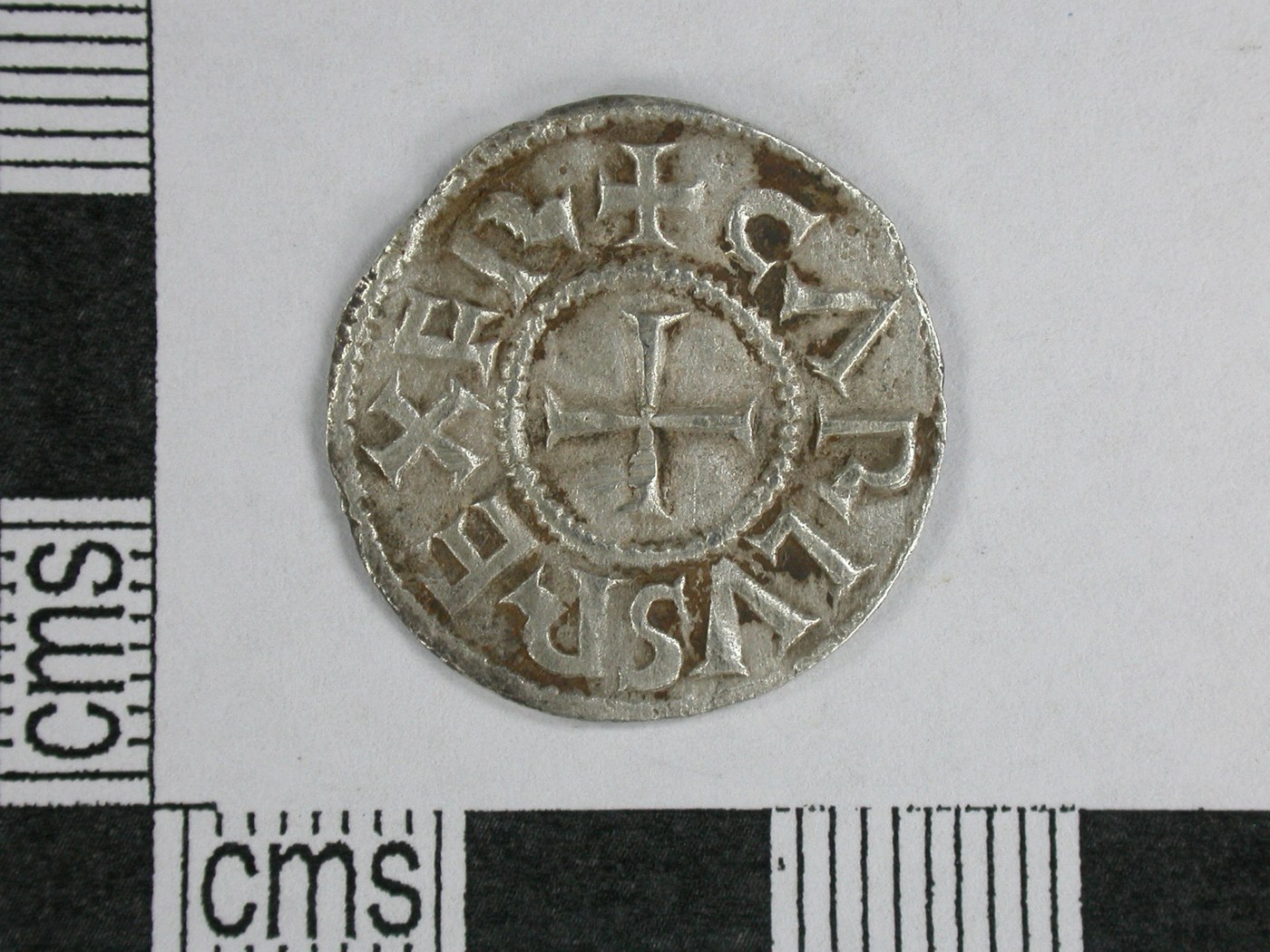
Denier of Charlemagne
A hand-struck silver denier of Charlemagne, king of the Franks: a central cross ringed by the CARLVS REX FR legend, with a royal monogram design on the reverse.
- Country
- Carolingian Empire
- Denomination
- Denier
- Metal
- Silver
Got a coin like this?
Identify any coin from a photo, free.
Overview
This is a silver denier of Charlemagne (Charles the Great), the coin at the heart of the Carolingian monetary system. The photographed piece shows the classic reform type: a small cross set within a beaded inner circle on one face, encircled by the legend reading CARLVS REX FR—Carolus Rex Francorum, "Charles, King of the Franks." The other face carries a device built from the royal name, the pattern of a royal issue rather than any modern coin.
Struck by hand on a thin, slightly irregular silver flan, the denier (Latin denarius, French denier) was for most of Charlemagne's reign the only denomination actually minted; larger units like the libra (pound) and solidus (shilling) existed only as money of account. That makes this small coin the everyday silver of the Frankish world around 800 AD.
History & Background
Charlemagne ruled the Franks from 768 and was crowned emperor in 800. Early in his reign he inherited a debased and varied coinage, and around 793–794 he carried through a sweeping monetary reform: a heavier, better-silver denier struck to a common standard across his realm, with tightly controlled designs and legends. The cross-and-legend type seen here, naming him REX Francorum, belongs to that reformed coinage of roughly the 790s onward.
The reform fixed the relationship of 12 deniers to a solidus and 240 deniers to a libra—an accounting system that outlived the Carolingians and shaped European coinage for a thousand years, echoed in the later British pounds-shillings-pence. Because the denier was the workhorse coin, it was struck at many mints across Francia, each sometimes named on the reverse in place of or alongside the royal monogram.
Late in his reign, after the imperial coronation, some issues adopt imperial styling and, on rare types, a laureate portrait bust in the Roman manner paired with a temple and the legend CHRISTIANA RELIGIO. The great majority of surviving Charlemagne deniers, however, are the cross-and-monogram royal type rather than the scarce portrait pieces.
How to Identify
The decisive clue is the legend. On the photographed coin the obverse reads around the rim as CARLVS REX FR (or CAROLVS REX F/FR), the Latinized name and title of Charlemagne as King of the Franks, encircling a small equal-armed cross set inside a beaded (pearled) ring. That combination—central cross, inner beaded circle, and the CARLVS REX legend—is the signature of the reformed royal denier.
The reverse typically carries the royal name worked into a compact design: a monogram formed from the letters of KAROLVS (the so-called KRLS monogram), or a mint name spelled across the field. On worn examples this dense central device can be mistaken for a small bust or head; read the individual letters before concluding it is a portrait, since true portrait deniers are rare and pair with a temple reverse.
The fabric is diagnostic too: a thin, small silver flan roughly 19–21 mm across and light in weight (on the order of 1.5–1.8 g on the reform standard), struck by hand so that centering, edges and lettering are uneven. The metal is good silver, showing as gray to lightly toned rather than bright white. Off-center strikes, flat spots and partial legends are entirely normal for the type.
Value & Collectibility
Genuine Charlemagne deniers are historically important and steadily sought after, so even worn, common examples carry a meaningful premium over ordinary medieval silver. Value hinges on the specific type, the mint named, how much of the legend is legible, and overall condition and eye appeal—there is no single fixed price for the coin.
Broadly, an authenticated, moderately worn cross-and-monogram royal denier tends to sit in the mid-to-upper range for early medieval silver, with sharply struck coins, clearly readable mint signatures, or the rare imperial portrait types commanding substantially more. Corroded, clipped or barely legible pieces sell for much less.
Because Carolingian coins are both valuable and frequently faked, attribution drives price and authenticity drives everything. Treat any figure as a range tied to a specific mint and grade, and have a coin of consequence examined against trusted references or by a specialist before buying or selling.
Frequently asked questions
What does the CARLVS REX FR legend mean?
It is Latin for Carolus Rex Francorum, "Charles, King of the Franks"—the royal title of Charlemagne. Reading this legend around the central cross is the surest way to identify the coin as one of his deniers.
What is a denier?
The denier (Latin denarius) was the standard silver penny of the Carolingian world and, for most of Charlemagne's reign, the only coin actually struck. Twelve deniers made a solidus and 240 made a libra—an accounting system that shaped later European currency.
Is there a portrait of Charlemagne on the coin?
Usually not. Most surviving deniers show a cross and the royal name or a KAROLVS monogram, not a face. A dense central monogram can look like a small bust when worn. True portrait deniers, showing a laureate imperial bust, are rare late-reign types.
How big and heavy is it?
It is a small, thin, hand-struck silver coin—roughly 19–21 mm across and light in weight, on the order of 1.5–1.8 grams on the reformed standard. Slight irregularity in shape, centering and edges is normal.
Are Charlemagne deniers often forged?
Yes. Because they are valuable and famous, they are frequently counterfeited. Genuine coins show hand-struck irregularity, correct weight and silver, and period-consistent lettering; verify anything important against references or with a specialist.
Denier of Charlemagne guides
In-depth guides for identifying, valuing, and collecting Denier of Charlemagne.
Other coins you may enjoy
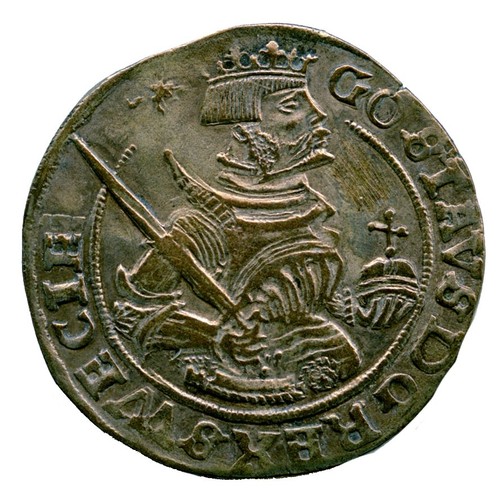
Gustav I Silver Coin
c. 1521–1560
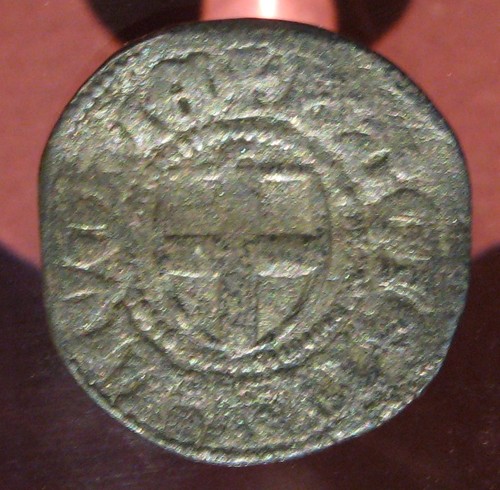
Livonian Order Schilling
c. 1410–1415
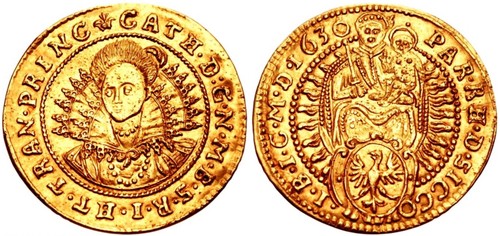
Transylvanian Ducat of Catherine of Brandenburg
1630
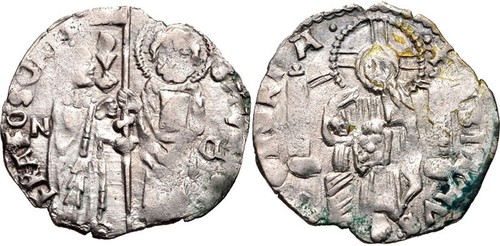
Venetian Grosso (Matapan)
c. 1193–1350s (13th–14th century)
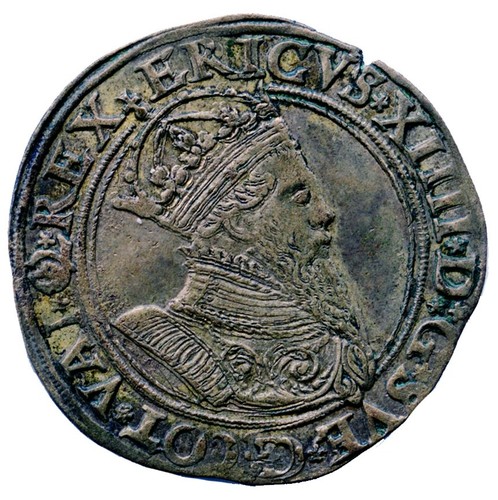
Eric XIV Silver Coin
c. 1560–1568 (this example c. 1565)
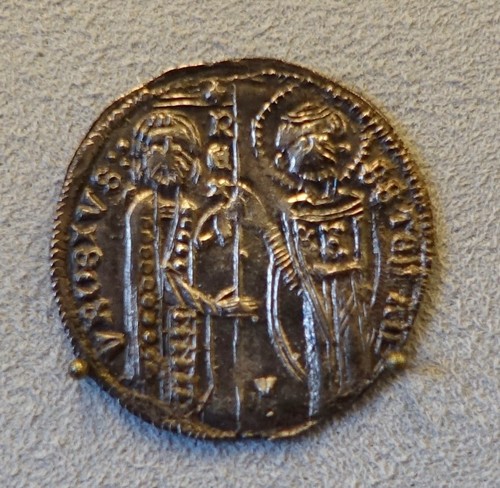
Matapan (Serbian imitation)
1243-1276
Real (Medieval)
13th–14th century
Hryvnia
Medieval (c. 11th-13th century)
Byzantine Follis
641 AD
Akçe
Late 14th-Early 15th century
Venetian Ducat
Medieval (c. 1284 onward)
Denier of Charles the Bald
c. 840–877