
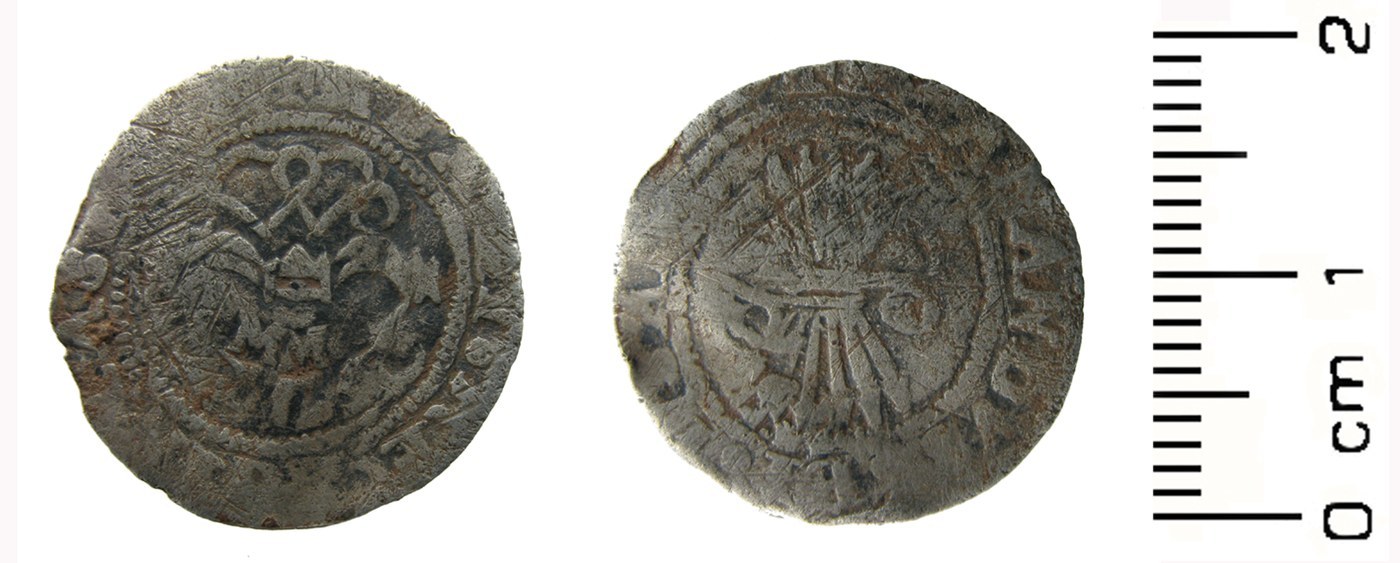
Real (Medieval)
A medieval Spanish silver real carrying the heraldic arms of the Iberian kingdoms — a lion for León paired with a castle or cross design.
- Country
- Spain
- Denomination
- Real
- Metal
- Silver
Got a coin like this?
Identify any coin from a photo, free.
Overview
The medieval real is a silver coin of the Iberian kingdoms, and the example shown here displays the heraldic imagery that defines the type: a rampant or standing lion on one face and a cross or shield motif on the other. The lion is the emblem of the kingdom of León, while the cross and castle devices tie the coinage to Castile, the two crowns whose union shaped much of medieval Spanish money.
The word real means "royal," and the denomination became one of the foundational silver coins of the Iberian Peninsula. In its medieval form it circulated as a hand-struck piece whose designs proclaimed royal authority through heraldry rather than a ruler's portrait, a common practice in 13th- and 14th-century Christian Spain.
Collectors prize the medieval real as a tangible link to the era of the Reconquista, when the kingdoms of Castile and León were consolidating their power. Its bold armorial designs make it one of the more visually recognizable medieval Iberian silver coins.
History & Background
The silver real emerged in medieval Castile-León as part of a broader Iberian coinage tradition that leaned heavily on heraldry — the castle of Castile and the lion of León — to signal the issuing crown. These devices had been used on Iberian pennies (dineros) and larger silver pieces for generations before the real was formalized as a distinct royal denomination.
The real is most often associated with Peter I of Castile in the mid-14th century, who established it as a substantial silver coin, though heraldic silver of this lion-and-cross character was produced under several 13th- and 14th-century Castilian and Leonese monarchs. Because the coins were struck by hand at royal mints across the peninsula, individual pieces vary in centering, weight, and the exact arrangement of the arms.
Over time the real became the backbone of Spanish silver money, and its later descendants — the reales of the unified Spanish monarchy and the famous "pieces of eight" — carried the name across the globe. The medieval coin shown here represents an early, purely heraldic stage of that long lineage, before Renaissance-era portraiture and dated legends became standard.
How to Identify
Look first at the heraldic devices. One face shows a lion — the arms of León — typically standing or rampant, while the opposite face carries a cross, a castle, or a quartered shield combining both emblems. Surrounding Latin or abbreviated legends name the king and kingdom, often worn or only partly legible on circulated pieces. The strike is hand-hammered, so the flan is often slightly irregular and the design may be off-center.
The coin is silver, generally a small-to-medium hand-struck piece a few grams in weight, with the exact diameter and mass varying by reign and mint. Unlike modern coins there is no machined edge, no date in Arabic numerals, and no portrait; identification rests on the heraldry and the surrounding legend rather than a printed denomination.
Because many medieval Iberian silver coins share the castle-and-lion vocabulary, precise attribution to a specific king, mint, or exact denomination usually requires matching the legend, weight, and style against a specialist reference. The combination of a heraldic lion with a cross or shield, hand-struck fabric, and medieval Iberian legends is the core signature of the type.
Value & Collectibility
Medieval Iberian silver reales and related heraldic silver coins are collectible in a wide range of grades, with value driven mainly by legibility, the specific king and mint, weight, and overall preservation. Common, well-worn examples with partly readable legends are relatively affordable, while sharp coins with full heraldry and clear inscriptions command higher prices.
Scarcer issues tied to particular monarchs or mints, and pieces in exceptional condition for a hand-struck medieval coin, are worth considerably more to specialists. Exact figures move with the market and with attribution, so recent auction records for the matching king and mint give the most reliable guide.
As genuine medieval silver, these coins carry historical appeal beyond their modest bullion content. Because the type is imitated and because attribution can be tricky, authenticated, correctly identified examples are the most desirable.
Frequently asked questions
What do the lion and cross on this coin mean?
The lion is the heraldic emblem of the kingdom of León, and the cross, castle, or shield ties the coin to Castile — the two crowns behind medieval Spanish silver coinage.
What does the name 'real' mean?
Real means 'royal' in Spanish. It became a foundational silver denomination of the Iberian kingdoms and later of the wider Spanish monarchy.
What is the coin made of?
It is silver, struck by hand as a small-to-medium coin whose exact weight and diameter vary by reign and mint.
Why is there no date or portrait on it?
Medieval Iberian coins proclaimed royal authority through heraldry and Latin legends rather than portraits or numeric dates, which only became standard on Spanish coins in later centuries.
How old is this type of coin?
This heraldic silver belongs to the medieval Iberian tradition of the 13th and 14th centuries, an era shaped by the Reconquista and the growth of Castile and León.
Real (Medieval) guides
In-depth guides for identifying, valuing, and collecting Real (Medieval).
Other coins you may enjoy
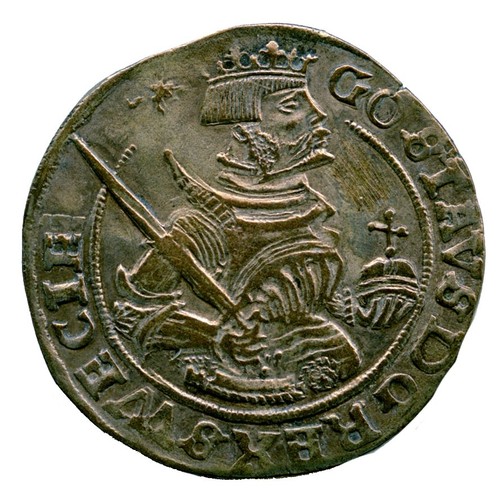
Gustav I Silver Coin
c. 1521–1560
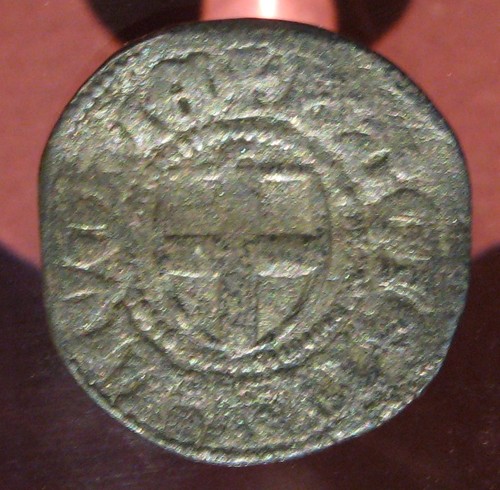
Livonian Order Schilling
c. 1410–1415
Transylvanian Ducat of Catherine of Brandenburg
1630
Venetian Grosso (Matapan)
c. 1193–1350s (13th–14th century)
Eric XIV Silver Coin
c. 1560–1568 (this example c. 1565)
Matapan (Serbian imitation)
1243-1276
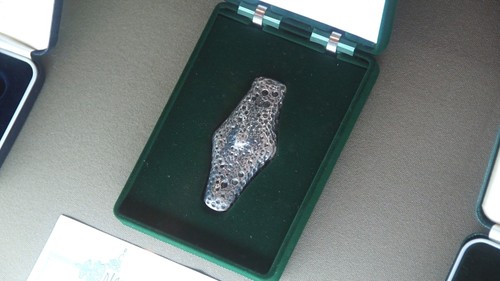
Hryvnia
Medieval (c. 11th-13th century)
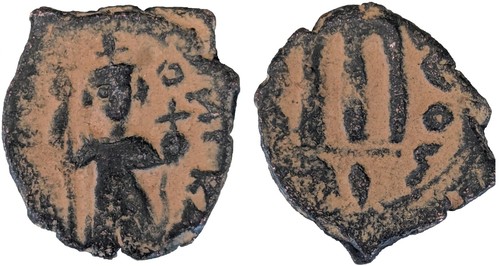
Byzantine Follis
641 AD
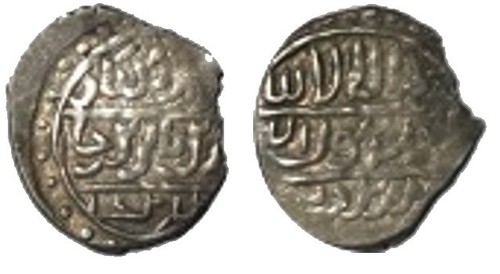
Akçe
Late 14th-Early 15th century
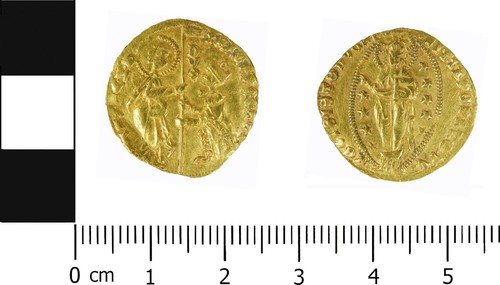
Venetian Ducat
Medieval (c. 1284 onward)
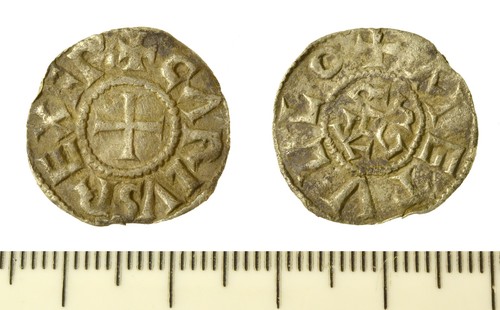
Denier of Charles the Bald
c. 840–877
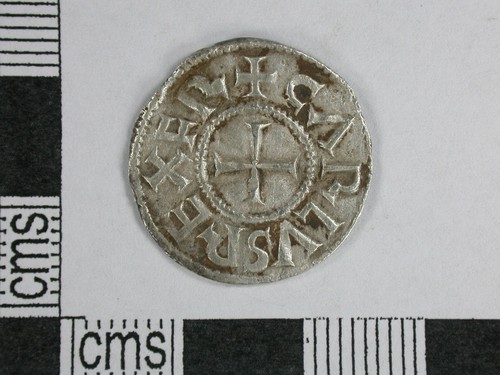
Denier of Charlemagne
c. 790–814 AD